National Parks Prepare Measures for Monks' Forest Pilgrimage
Thailand's national parks and wildlife sanctuaries are coordinating with Buddhist authorities to manage the annual tudong season, when monks undertake forest pilgrimages in protected areas like Huai Kha Khaeng and Thung Yai Naresuan from January to February 2027. Officials are establishing clear entry procedures, route guidelines, and fire prevention measures to protect both the monks and the environment, while preventing illegal activities such as poaching and logging.
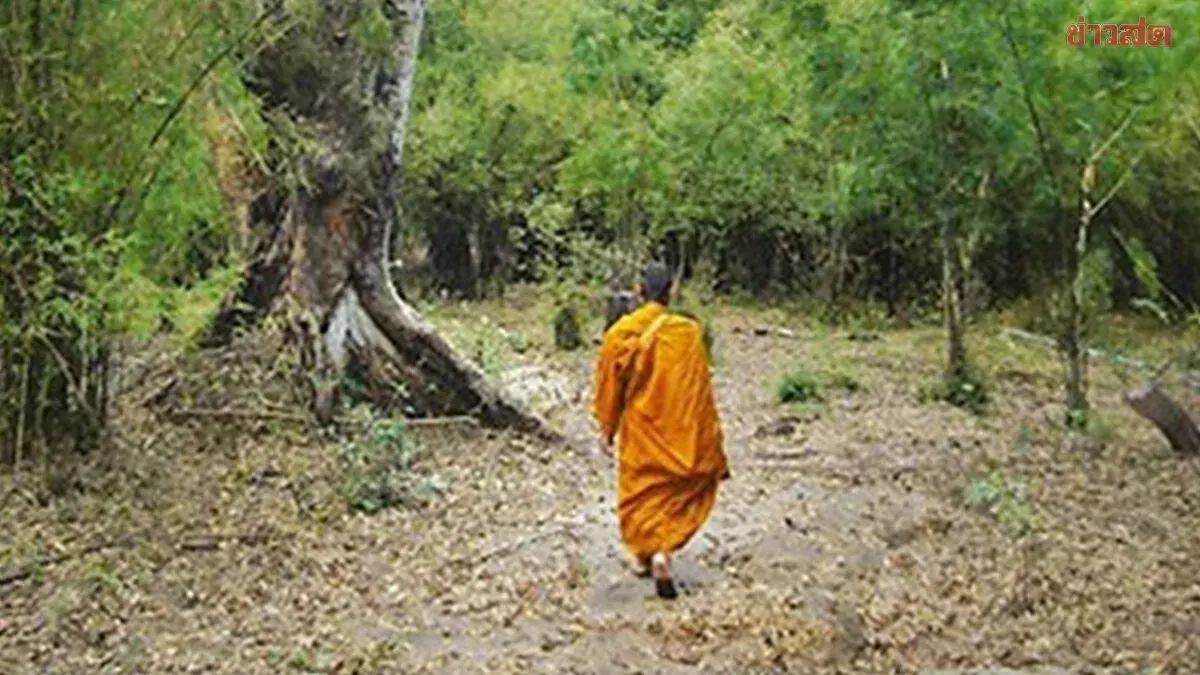
National parks and wildlife sanctuaries are tightening measures to manage monks undertaking tudong (forest pilgrimages) in protected forest areas, including Huai Kha Khaeng Wildlife Sanctuary, Thung Yai Naresuan East and West Wildlife Sanctuaries, Umphang Wildlife Sanctuary, and nearby conserved forests. The pilgrimage period is scheduled from January 10 to February 10, 2027.
Chayaporn Amradit, Director of the 12th Protected Areas Administration Office, convened representatives from Huai Kha Khaeng Wildlife Sanctuary, Mae Wong National Park, Khlong Lan National Park, and Khlong Wang Chao National Park, along with Rachan Buatri, Director of the 3rd Protected Areas Administration Office, Panachak Phothibandit, Director of the 14th Protected Areas Administration Office, and field unit heads and relevant staff. The meeting aimed to establish clear, correct, and area-appropriate guidelines for entry and permission procedures.
The joint session considered operational guidelines for monks wishing to undertake tudong in conserved forests, emphasizing coordination and prior permission from responsible agencies so officials can provide guidance, supervision, and suitable route planning. This also helps prevent individuals from infiltrating these routes for wildlife poaching or illegal logging.
Authorities also stressed wildfire prevention from activities or fire-making in the area, as well as route and zone selection to avoid disturbing wildlife habitats and to reduce risks to the monks during their pilgrimage. There is a need to build mutual understanding and systematic joint procedures.
Relevant agencies will jointly publicize correct procedures for entering conserved forests, report data on monks entering the areas to their superiors, and coordinate with the Office of National Buddhism to facilitate proper, appropriate, and regulation-compliant permission processes.
Tudong is a Buddhist religious activity deserving respect and understanding. Simultaneously, entering conserved forests through proper procedures is crucial for all parties to follow. Beyond ensuring monks receive route and safety guidance, it helps prevent impacts on natural resources, reduces wildfire risk, and preserves the natural tranquility of wildlife.
Advance coordination for permission is not merely a matter of regulations or law, but a cooperation that enables religious practice to proceed appropriately alongside forest and wildlife conservation.
Concerns about tudong in national parks and wildlife sanctuaries have arisen repeatedly, with monks losing their way and cases of infiltrators poaching wildlife. Previously in 2020, the Suphannakha Sathit Foundation petitioned the Supreme Sangha Council and the Office of National Buddhism (ONB). The ONB reiterated the Supreme Sangha Council's resolution (No. 226/2002) on tudong issues in wildlife sanctuaries to provincial chief abbots to strictly govern monks and novices.
Additionally, the ONB requested cooperation from provincial governors to assign the Office of National Buddhism...