Northern Thailand Buddhist Centers Open Doors to Showcase Works
Buddhist study centers across eight northern provinces opened their doors to showcase educational programs and moral initiatives aligned with Thailand's cultural development policy at an event in Chiang Mai.
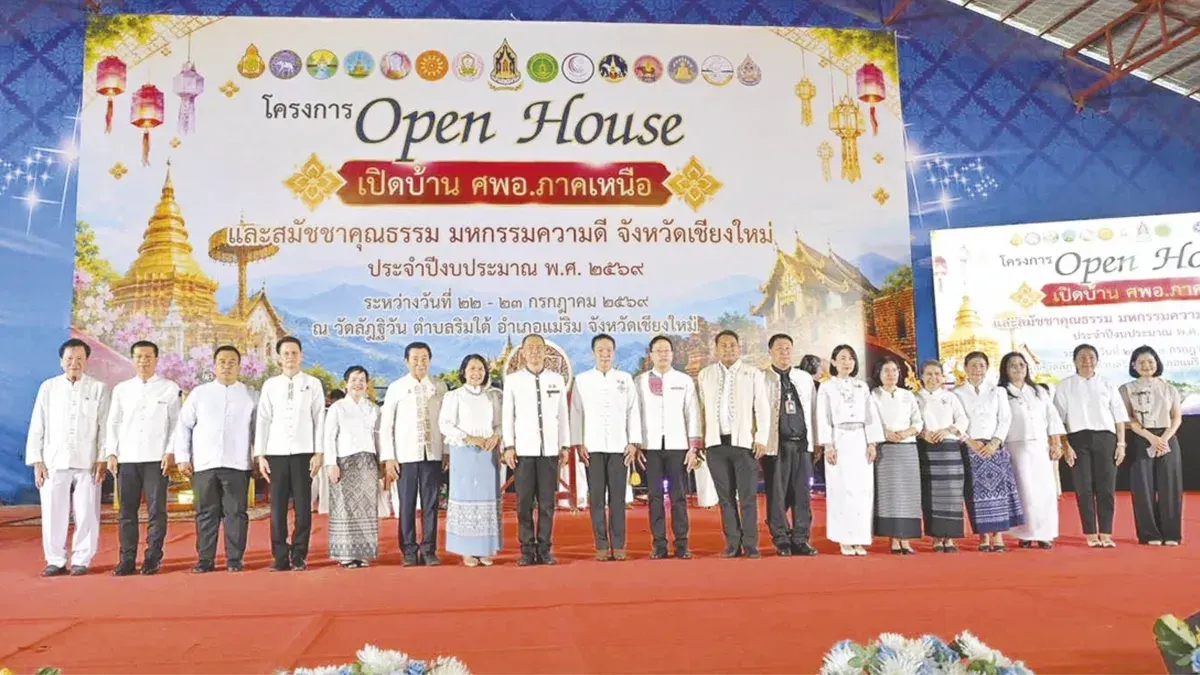
The Department of Religious Affairs recently held the opening ceremony for the 'Open House of Northern Region Buddhist Sunday Study Centers' and the 'Moral Assembly and Goodness Festival in Chiang Mai' for fiscal year 2569 at Wat Latthi Temple in Mae Rim District, Chiang Mai. The event was presided over by senior monks including Phra Teppamangalacharn, the Chiang Mai Provincial Ecclesiastical Chief, and lay officials led by Chaibal Sukkiam, Director-General of the Department of Religious Affairs, along with Deputy Governor Siva Thiamikanont and other provincial representatives and delegates from eight northern provinces' study centers.
The centers' operations aim to align with the Culture Ministry's 5C+1 policy, using religious and cultural dimensions to develop people and society. This includes promoting morality, improving quality of life, channeling cultural capital into creative economy, developing media and soft power, and fostering international recognition of Thai culture. The centers also emphasize community participation and the application of digital technology, artificial intelligence, and data to enhance management and learning efficiency.
According to Chaibal, the 'Open House' and 'Moral Assembly' events, held in late July 2569, serve as platforms to showcase accomplishments, exchange knowledge, and build learning networks among the study centers. The initiatives promote moral and ethical values for children, youth, and the public through the 'Positive Power' mechanism involving homes, temples, schools, and government agencies.
Activities include exhibitions and demonstrations of outstanding work from eight northern provinces' Buddhist study centers representing Phrae, Nan, Phayao, Chiang Mai, Lampang, Lamphun, Chiang Rai, and Mae Hong Son. The program also features cultural performances, awards for outstanding centers, academic seminars on 'Modern Buddhist Study Centers: Contemporary and Ethical, Building Youth Resilience in the Digital Age,' and public speaking competitions to strengthen these important institutions.