Rare Brahmi-Inscribed Gold Ring Unearthed in Phetchaburi
Archaeologists in Phetchaburi unearthed a rare gold ring inscribed with ancient Brahmi script dating back 1,900–2,100 years, suggesting its owner was a merchant with ties to early Indian trade networks in Southeast Asia.
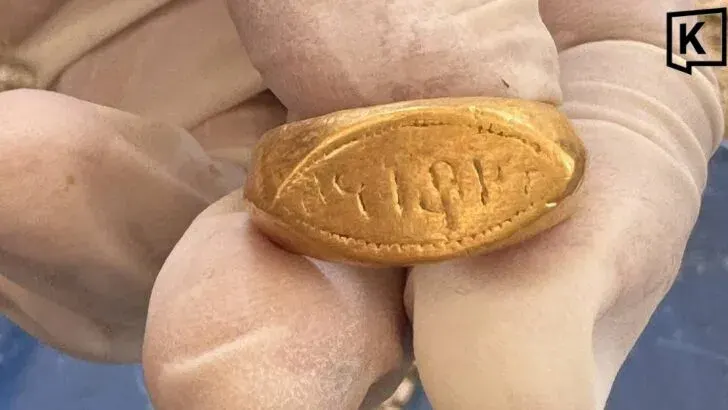
PHETCHABURI — The Fine Arts Department has uncovered two ancient gold rings, including one bearing a rare Brahmi inscription, during excavations at the Don Yai Thong archaeological site. Director-General Phanombut Chantarachot said archaeologists were racing to recover human skeletons and artifacts after rising groundwater, salinity, and seasonal rain threatened to damage the fragile remains.
The two gold rings were discovered alongside Skeleton No. 4. One ring is engraved with an ancient Brahmi inscription believed to have functioned as a signet ring. Experts from Silpakorn University and the Fine Arts Department date the inscription to the 5th–7th Buddhist centuries, approximately 1,900–2,100 years ago.
The inscription reads "Pusrakhitasa," meaning "belonging to Pusrakhita" or "protected by the Pushya star." Archaeologists believe the ring's owner may have belonged to the Vaishya, or merchant, caste. The second gold ring bears no decorative design.
Similar Brahmi inscriptions have been found on seals and jewelry at archaeological sites in Krabi and Chumphon, providing evidence of early trade and cultural connections between the Indian subcontinent and present-day Thailand. Both rings have been transferred to Phra Nakhon Khiri National Museum for conservation and further study.
Excavation work will continue for about a month before the site closes. The Fine Arts Department plans to present preliminary findings in a public exhibition of artifacts recovered from Don Yai Thong.