Anutin Orders GDP Forecast Revision Above 2.1%
Deputy Prime Minister Anutin Charnvirakul has ordered the NESDC to revise Thailand's GDP forecast upward from 2.1%, citing strong foreign investment, export growth, and rising tax revenues. He stated the current projection does not reflect actual economic indicators and instructed a review before consulting private sector bodies. The government is also pursuing trade agreements with major markets and emphasizing competition through human capital and infrastructure rather than low costs.
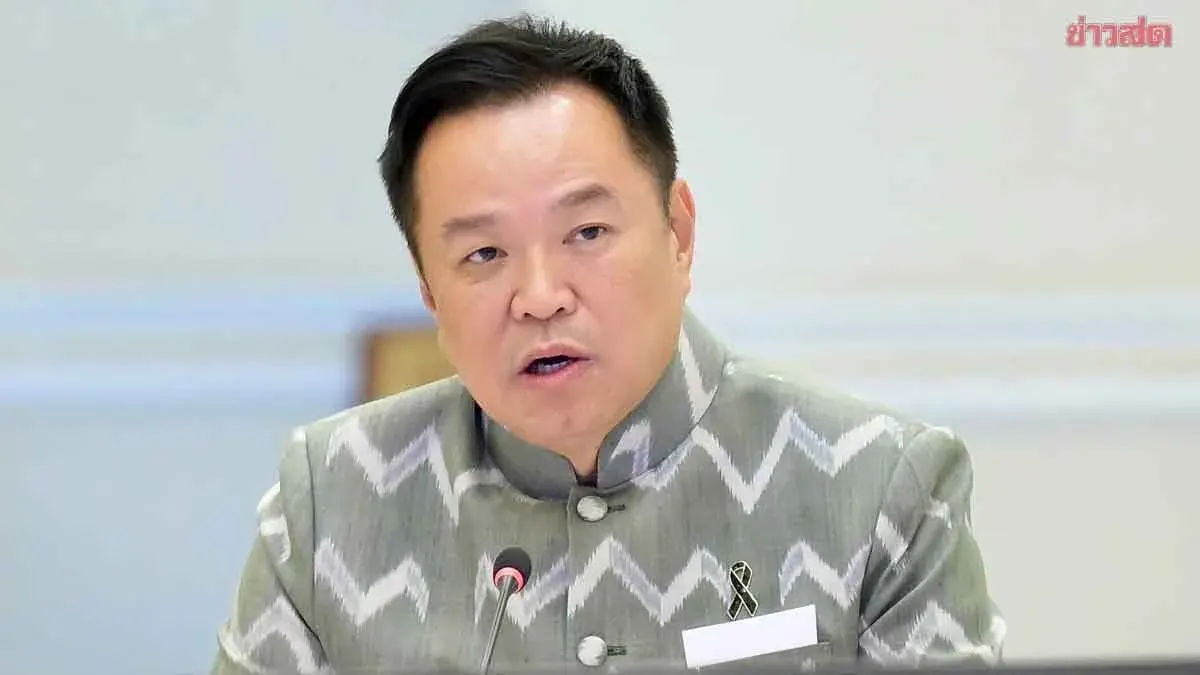
Deputy Prime Minister and Interior Minister Anutin Charnvirakul expressed confidence that Thailand's GDP will grow more than 2.1% this year, ordering the National Economic and Social Development Council (NESDC) to revise its forecast. Speaking on his program "Talk with Minister Anutin" on October 24, 2026, he noted that foreign investment in the first half already exceeded all of last year by about 30%, exports expanded over 20% and nearly reached 25%, and both corporate and personal tax revenues increased. Anutin questioned why the economy was still projected to grow only 2.1% given these indicators, stating firmly that this year's GDP "is definitely not 2.1%." He instructed NESDC to review data and assumptions before consulting the private sector, including the Thai Chamber of Commerce and the Federation of Thai Industries, to assess a more appropriate growth trajectory. Anutin emphasized that GDP figures affect confidence, financing costs, and foreign investment decisions, so the government is accelerating trade and investment expansion through agreements with key markets including the United States, Europe, the United Arab Emirates, and Central Asia. He stressed that Thailand should not compete on cheap labor or electricity but must enhance human capital, transport, and logistics to serve as a hub connecting the ASEAN market of around 700 million people, building on road, rail, air, and maritime infrastructure. Additionally, the government plans to promote household clean energy production for self-use and selling surplus back to the grid, reducing household electricity burdens and increasing supply for industry. Hosting the IMF-World Bank meetings in Bangkok is seen as opening business negotiation opportunities and building confidence in Thailand, which can translate into investment, MICE business, and tourism in the future.