Lanta & News
No. 01 · ENDLESS
National

Anutin: Nothing to Celebrate on Border Conflict Anniversary

PM Anutin said there's nothing to celebrate on the first anniversary of last year's Thai-Cambodian border conflict, assuring the public that security has normalized and China's military sales to Cambodia pose no threat to Thailand.
Anutin: Nothing to Celebrate on Border Conflict Anniversary
24 Jul Khaosod

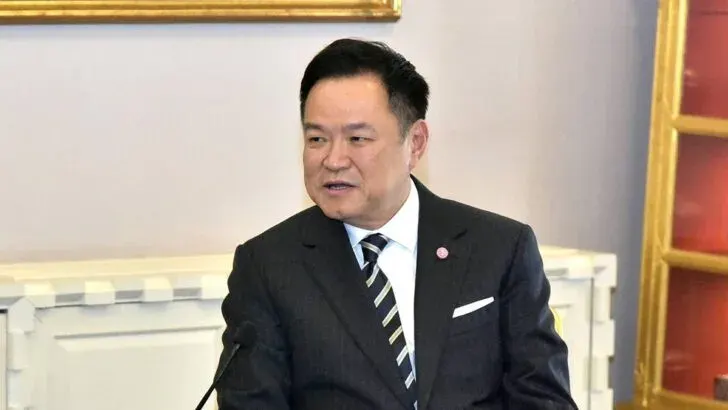
Prime Minister Anutin Charnvirakul said Friday (24 July) there was "nothing to celebrate" on the first anniversary of the Thai-Cambodian border conflict, while assuring the public that the security situation has returned to normal.

Speaking at Government House, Anutin said Thailand remains committed to protecting its sovereignty but stressed there was no reason for public concern over the current situation.

He said he had received assurances from Chinese Defence Minister Admiral Dong Jun during their meeting earlier in the day that Chinese military equipment supplied to Cambodia was part of normal commercial sales and was not intended for use against Thailand.

Anutin said the message was consistent with assurances previously given by Chinese President Xi Jinping during his official visit to Beijing last week.

"There is nothing for the Thai people to worry about," he said, adding that people should continue living and doing business as normal because Thailand was not facing any immediate security threat despite past tensions with its neighbour.

On the prospect of restoring ties with Cambodia, Anutin said future negotiations and the rebuilding of bilateral relations would proceed in accordance with existing agreements, adding that Thailand was not currently suffering any disadvantages from the situation.
No. 01 of Read at source → Next
National

Customs Warns of Cartoon Sticker LSD Drug Disguise

Thai Customs seized 529 pieces of LSD disguised as cartoon-patterned stickers from a shipment originating from Germany, warning that the drug is designed to target youth by appearing as innocent collectibles.

Customs Warns of Cartoon Sticker LSD Drug Disguise
24 Jul Khaosod

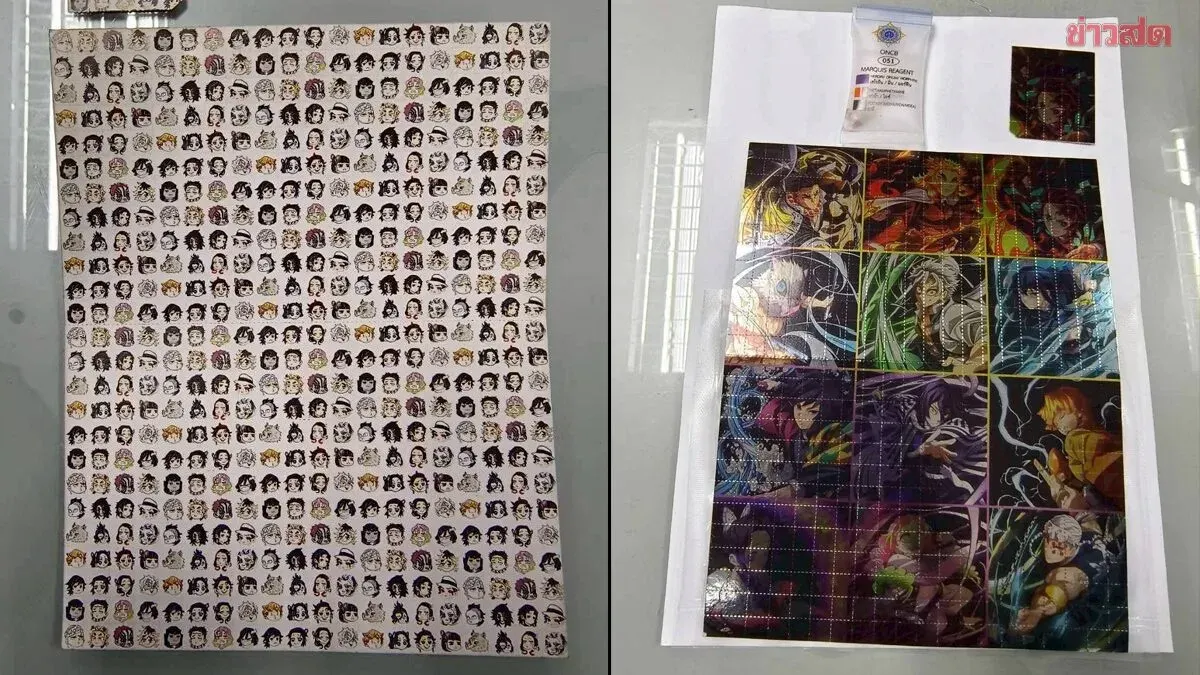
The Thai Customs Department has warned the public about a new form of synthetic drug called "LSD cartoon stamps," which is disguised as cartoon-patterned stickers to evade detection and mislead observers. Ponthong Loikul, director-general of the Customs Department, revealed that officers at the Bangkok Customs Office seized LSD (Lysergic Acid Diethylamide), also known as "cartoon stamps," originating from Germany and attempted to be smuggled into the kingdom. A total of 529 pieces valued at over 200,000 baht were confiscated.

LSD is classified as a potent hallucinogenic synthetic drug typically applied as liquid drops onto water-absorbent paper printed with bright cartoon designs or cute symbols, divided into small square sections resembling stamps. The appearance is designed to evade official scrutiny and look like ordinary candy or collectible toys. When consumed continuously, LSD produces severe neurological effects, causing users to experience hallucinations, distorted perceptions, emotional instability, aggression, and severe paranoia, with risks of accidents, self-harm, or death.

The Customs director-general expressed concern that the most troubling aspect is how the drug has been designed to appear safe and accessible to youth. He urged parents to closely supervise their children and prevent them from becoming victims of deception by cartoon-patterned items from unreliable sources. Authorities also emphasized that "cartoon stamps" are not toys or candy but dangerous drugs that can permanently damage the brain, perception, and future of users.

No. 02 of Read at source → Next
Police

Foreign Resident Dumps Trash, Verbally Assaults Housekeeper in Chonburi

A foreign resident in Chonburi dumped trash at his neighbor's gate, then his son verbally assaulted and attempted to physically attack a Thai housekeeper when she tried to dispose of it, with the incident caught on security camera.

Foreign Resident Dumps Trash, Verbally Assaults Housekeeper in Chonburi
24 Jul Khaosod

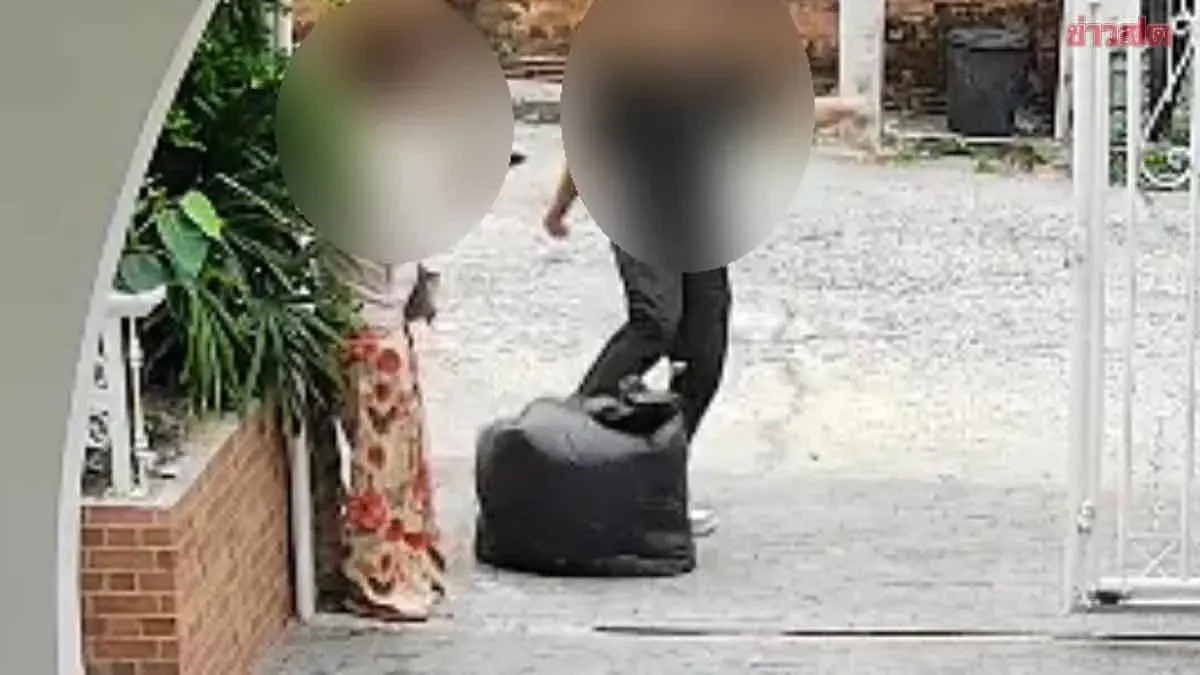
On July 24, 2569, Ms. A (pseudonym), a 39-year-old housekeeper from Lop Buri province, who works for a foreign employer in a residential community in Nong Prue subdistrict, Bang Lamung district, Chonburi province, was confronted and attacked by a foreign neighbor living across the street. The neighbor, along with his son, attempted to assault her while hurling degrading remarks about her being a foreigner and spitting on the ground near her. Security camera footage clearly captured the incident, which occurred on the afternoon of July 20, 2569.

Ms. A explained that on the day of the incident, she and her daughter arrived at her employer's house for their regular twice-weekly cleaning. Upon entering on a motorcycle, she noticed a black garbage bag left at the front gate. Puzzled, she called her employer to check the security camera footage and discovered that an elderly foreign neighbor across the street had placed it there at approximately 1:15 p.m. on July 20, 2569.

After completing the cleaning work, she asked her daughter to wait at the gate while she went to dispose of the garbage bag, intending to do the neighbor a favor. As she was dragging the bag, the elderly foreign neighbor approached and asked if it was his garbage. He admitted it was and added defiantly, "It's my garbage, I can dump it wherever I want," before returning to his house.

Shortly after, the elderly man's son, who speaks Thai fluently, came out and confronted Ms. A, asking what she had said to his father. When she explained the situation, the son became visibly angry and declared, "Do you know who my father is? My father was a special forces soldier." He then launched into a tirade, saying, "You foreigners are just here stealing Thai people's jobs." He spat on the ground inches away from her, kicked the garbage bag, and attempted to physically assault her. After a heated argument lasting several minutes, they separated.

Ms. A then filed a police report with Pattaya City Police, providing the security camera footage as evidence of both the father's and son's behavior. The investigator advised her to call the police if she encountered them again. On one occasion, she spotted both of them at home and contacted the police, but it appeared the officers could not take any legal action. Fearing for her safety on her twice-weekly cleaning visits and frustrated by the lack of justice, Ms. A decided to contact the media in hopes of receiving fair treatment. When reporters visited the scene, the neighbor's house across the street remained silent, with no one coming out to comment.

No. 03 of Read at source → Next
National

Thailand Targets 3-Baht Electricity Rate for 23 Million Households

Thailand's government has approved a major electricity restructuring plan targeting a 3-baht-per-unit rate for residential users' first 200 units of consumption, benefiting over 23 million households nationwide by funding the reduction thro

Thailand Targets 3-Baht Electricity Rate for 23 Million Households
24 Jul Khaosod

High electricity costs have become one of the public's most pressing complaints, affecting low-income families, small businesses, and industries facing continuous rises in energy expenses. The critical question many Thais want answered is whether a 3-baht-per-unit electricity rate is achievable. That question has received a partial answer following the National Energy Policy Committee's approval of one of the country's largest-ever electricity restructuring measures under Prime Minister Anutin Charnvirakul's leadership. Energy Minister Eknath Prom-phund announced a clear goal to reduce electricity costs for the public sustainably, not merely through temporary price suppression tied to automatic fuel adjustment cycles.

The core of this measure is reducing electricity rates for residential users during the first 200 units of consumption to no more than 3 baht per unit, funded through electricity development funds, clawback revenue from excess benefit recovery, and management of accumulated costs held by the Electricity Generating Authority of Thailand, which absorbed 31,268 million baht in fuel costs on behalf of the public during the recent energy crisis.

Who benefits? Residents paying lower electricity bills immediately—covering over 23 million households nationwide, including rental homes, dormitories, and apartments that previously paid higher rates. These consumers will see direct cost-of-living reductions, increased purchasing power, small and medium enterprises will face lower utility costs, and green industries can access clean electricity more affordably, strengthening ESG competitiveness.

Who pays? With current average electricity at roughly 3.95 baht per unit dropping to 3 baht, the government chose to "shift cost burdens" and "improve system efficiency" rather than subsidize directly from the national budget. A major cost being removed from consumer bills is public electricity, such as streetlights and public lighting worth over 18,000 million baht annually—costs previously bundled into all users' base rates but now to be separated and covered by new financial mechanisms. In effect, the public will no longer bear public electricity costs in their traditional form, with the three electricity authorities managing the transition.

Energy Minister Eknath confirmed the approach will not defer debt or use massive permanent subsidies but instead generate revenue through electricity restructuring. Key funding sources include: (1) Reducing costs from expensive power purchase agreements by renegotiating contracts with private producers, especially renewable energy projects receiving special adders. Some contracts currently pay 6-10 baht per unit while actual solar production costs around 2.16 baht per unit; rates should be adjusted to 2.1579 baht per unit reflecting true costs. (2) Regulating data centers, which will become a critical revenue source for the electricity system due to their massive 24-hour power consumption. The entry of global cloud, AI, and digital data center operators makes organizing this sector essential for Thailand's future.

No. 04 of Read at source → Next
National

Bangkok Transport Authority's Green Bond Oversubscribed 1.65 Times

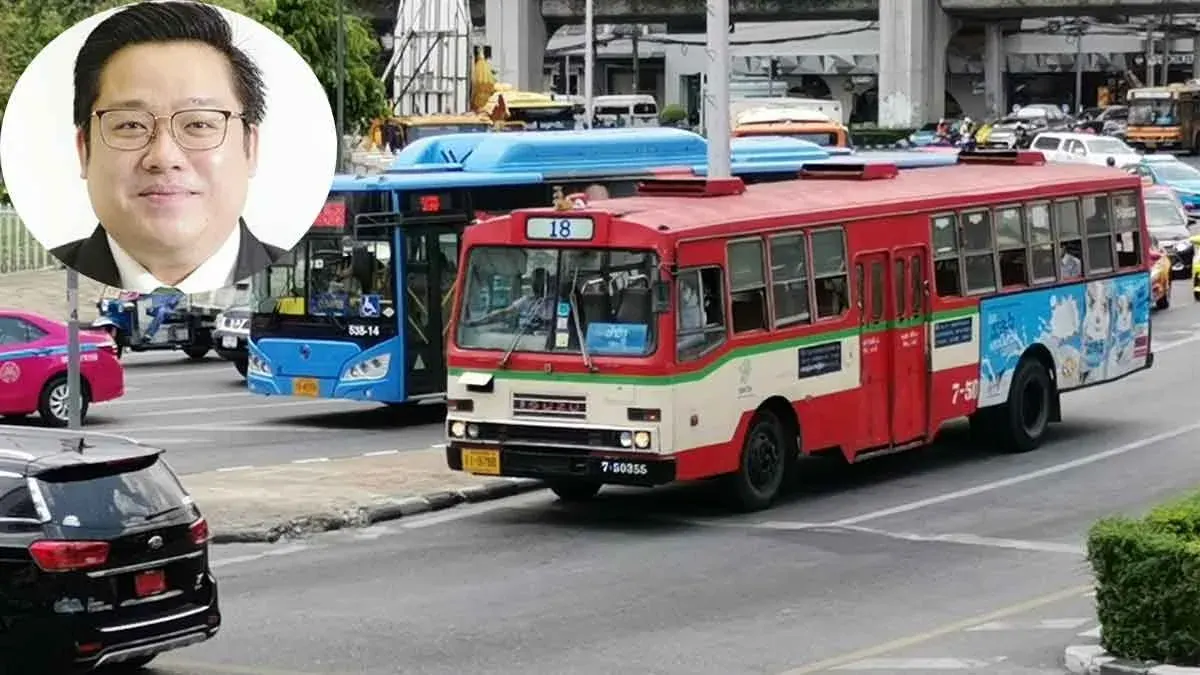
Bangkok's transit authority successfully raised 4.5 billion baht through its first green bond, oversubscribed 1.65 times by investors, with proceeds funding 1,520 electric buses to reduce emissions and air pollution.

Bangkok Transport Authority's Green Bond Oversubscribed 1.65 Times
24 Jul Khaosod

The Bangkok Mass Transit Authority (BMTA) announced on July 24, 2025 that its first sustainability bond issuance has been a major success. BMTA Director Kittikaan Jomdung Charuworppalkul revealed that institutional investors, fund managers, banks, insurance companies, and foundations have overwhelmingly subscribed to the 4.5 billion baht bond offering—with total applications reaching 1.65 times the available amount. The bonds carry a 6-year maturity and 1.74% annual coupon rate, with principal and interest guaranteed by the Ministry of Finance. Kasikornbank and Bangkok Bank have been appointed as lead managers.

The bond issuance marks a historic milestone for the BMTA in its journey toward sustainability. The primary objective is to refinance the BMTA's debt structure for fiscal year 2025 while supporting the procurement of 1,520 electric buses to replace aging vehicles. The bus acquisition has been established as a key performance indicator (KPI) for the bond, reflecting the BMTA's commitment to reducing greenhouse gas emissions and addressing air pollution, particularly PM 2.5 levels.

The success of this funding mechanism is expected to encourage other state enterprises to adopt similar financial tools for sustainable development. By participating in the bond offering, institutional and major investors have become partners in delivering cleaner air to future generations and advancing Thailand's public transportation system toward a sustainable future.

No. 05 of Read at source → Next
National

Parliament Speaker Urges Nation to Break Free of Conflict Trap

Thailand's Parliament Speaker urged the nation to break free of political conflict and build "democracy that works" during a youth civic engagement event, emphasizing that losers must accept electoral defeats to move forward.

Parliament Speaker Urges Nation to Break Free of Conflict Trap
24 Jul Khaosod

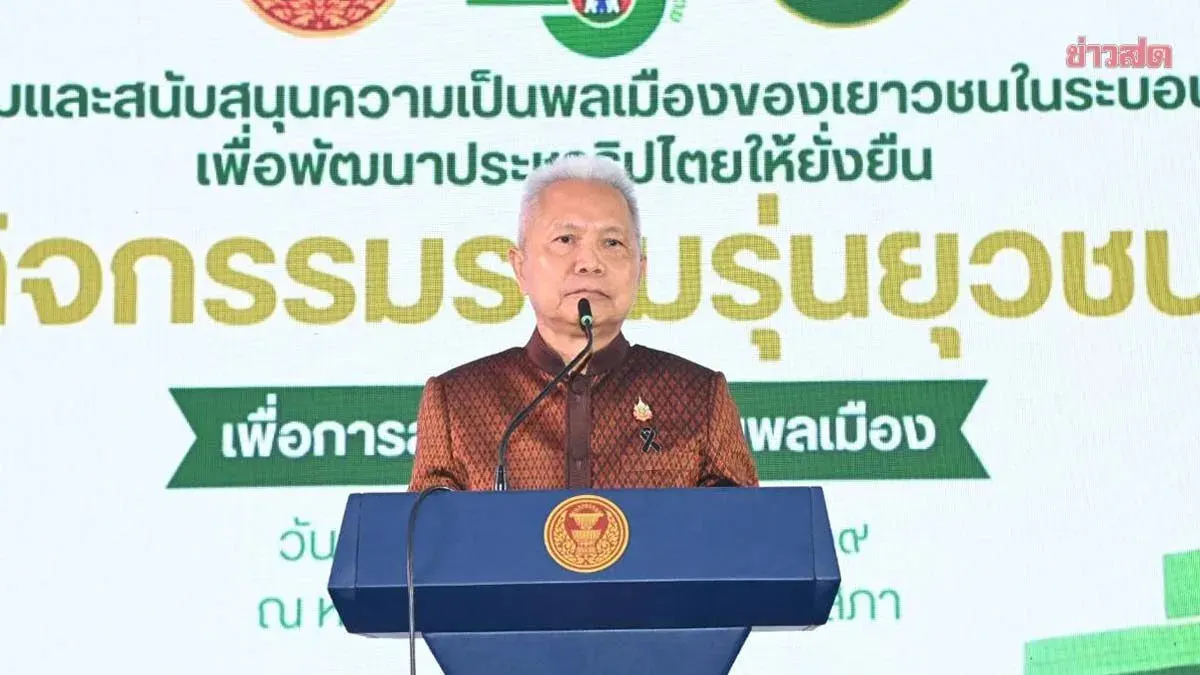
On July 24, 2026, Sophon Saranrom, President of Parliament and Speaker of the House of Representatives, presided over the opening of a program promoting and supporting youth civic participation in democratic systems to develop sustainable democracy. The event included the 2026 youth civic engagement activity and a special lecture titled "Youth Power and Democratic Development in a New Era."

Sophon stated that today's youth are tomorrow's leaders, and he is entrusting the nation to this new generation of 25-year-old democratic youth activists, hoping they will become a driving force for the country. He explained that democracy is government of, by, and for the people, but Thailand upholds a democracy with the King as head of state. This provision is necessary because without a nation, sovereignty, and territory, Thai citizens would have no country to call home. A meaningful life must be rooted in virtue, just as good leaders must be moral and ethical. The challenge lies in preserving the nation amid global conflict and ideological division, which has become a trap for society. Democracy must have boundaries; regardless of the system of governance, the goal is to preserve the nation and ensure citizens live happily.

"I want to see democracy deliver tangible happiness to people—what we call democracy that works," Sophon said. "It must be proven through action, not just words. Differing opinions are normal, but they must be debated in parliament. Good democracy is not just majority rule; it must use reason to persuade those who disagree to see eye-to-eye without voting. That is true democracy. But if persuasion fails, we vote and must accept the result. However, our nation remains stuck here—losers refuse to accept defeats, keeping us trapped in conflict."

Sophon stressed that democracy must be grounded in correctness. He noted that Thailand once possessed compassion, generosity, and mutual understanding, but these qualities are fading. He urged the nation to preserve these virtues and called for respect for human dignity, warning against class divisions.

Natthsakdi Sarika, a 2023 Democratic Youth Representative from Phichit Province, then presented legislative proposals to strengthen civic awareness among democratic youth. He highlighted the drug crisis as a structural problem affecting multiple dimensions of society, from family breakdown to economic losses and loss of life. He called for continued efforts to address drug addiction in Thailand.

The Parliament Speaker affirmed his long-standing commitment to tackling drug issues and pledged to continue these efforts. Certificates were awarded to exemplary Democratic Youth representatives in three categories: promoting democracy and public participation, social and community work, and democratic leadership. The program, marking 25 years of youth civic engagement activities, brought together 400 Democratic Youth participants from all four regions of Thailand to share experiences and build cooperative networks.

No. 06 of Read at source → Next
National

Officials Inspect Religious Goods Shops Ahead of Buddhist Lent

Officials are inspecting religious goods shops ahead of Buddhist Lent on July 29–30 to prevent price gouging on items like alms sets and ceremonial candles. Initial checks in Bangkok show retail prices remain stable despite rising productio

Officials Inspect Religious Goods Shops Ahead of Buddhist Lent
24 Jul Khaosod

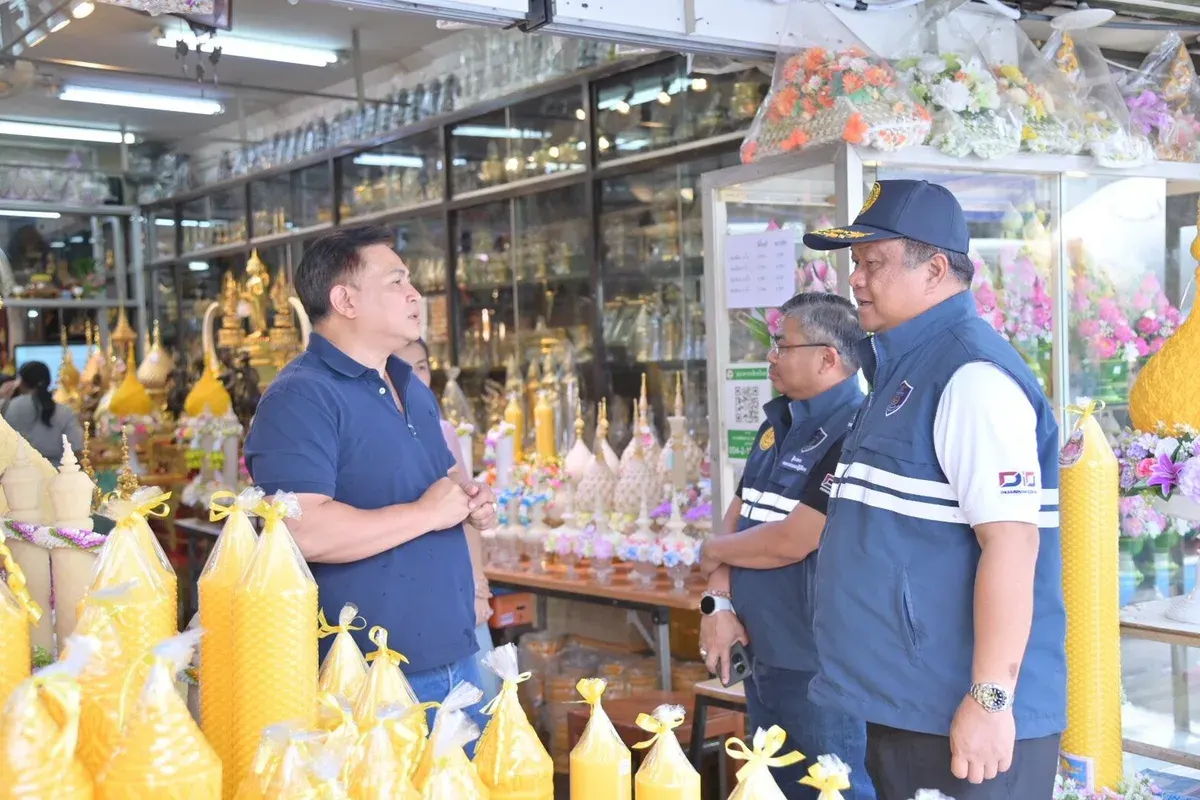
Jirawut Suvannaaj, deputy director-general of the Internal Trade Department, announced that with Asahna Bucha and the start of Buddhist Lent approaching on July 29–30, 2026, authorities are stepping up inspections to prevent price gouging on popular religious items including monastic alms sets, traditional Thai robes, and lent candles that devotees offer to monks.

Inspections conducted in Bangkok found that retail prices for these items remained stable compared to the same period last year, with no unjustified increases despite rising production costs. Some merchants have opted to change brands or adjust product quantities and sizes rather than raise prices. Current prices for alms sets range from 40 to 4,500 baht per set depending on contents, plain lent candles from 70 to 2,500 baht per pair, and carved candles from 130 to 3,900 baht per pair.

Sellers reported lower sales this year due to economic conditions, with consumers choosing smaller sets or purchasing items separately, and some opting for temple-prepared sets or electric lights instead of candles. Suvannaaj emphasized that merchants must display clear price tags listing each item's specifications, quantity, unit price, and packaging costs in font sizes of at least 16 points. He urged the public to contact the Internal Trade Department hotline 1569 with any complaints about unfair pricing.

No. 07 of Read at source → Next
National

Somdet Phra Yana Vachirmonkol Enshrined at Rajathiwas Temple

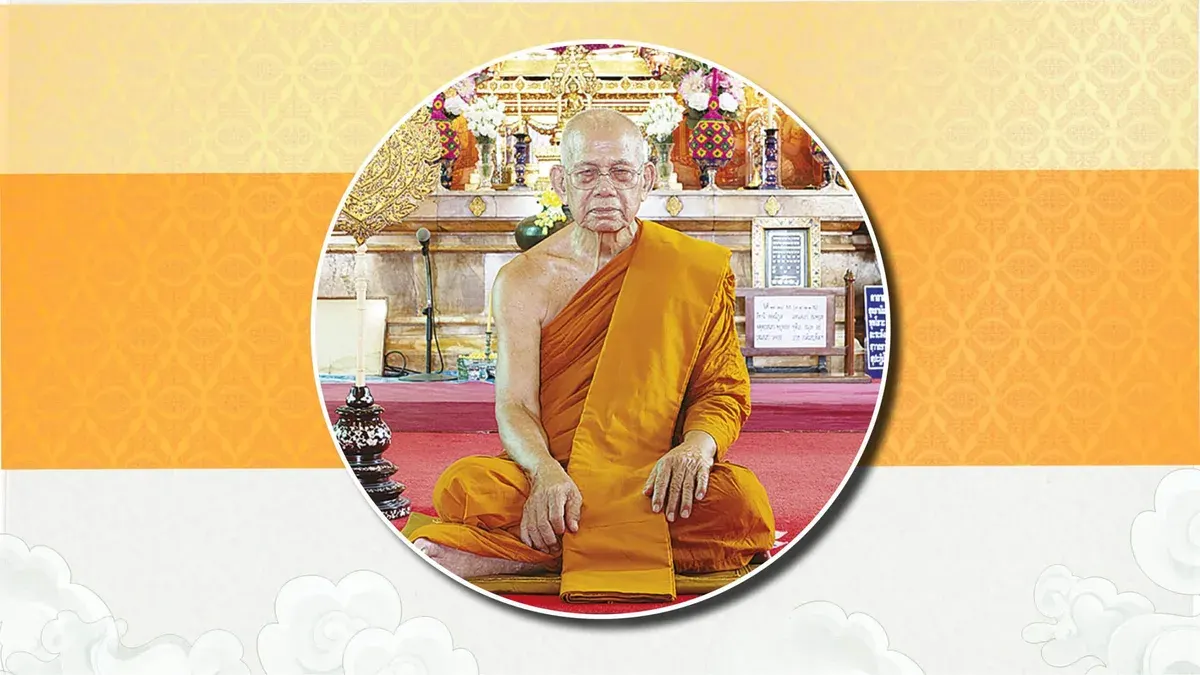
The King has promoted Phra Prom Vachirmonkol to the rank of Somdet Phra Yana Vachirmonkol, honoring the 96-year-old Buddhist abbot of Bangkok's Rajathiwas Temple after 76 years in the monastic order.

Somdet Phra Yana Vachirmonkol Enshrined at Rajathiwas Temple
24 Jul Khaosod

On July 14, the Royal Gazette website published a royal decree establishing ecclesiastical rank, announcing that His Majesty King Maha Vajiralongkorn has graciously promoted Phra Prom Vachirmonkol to the rank of Somdet Phra Rajakanatham with the royal title Somdet Phra Yana Vachirmonkol, bearing numerous honors inscribed in the records and stationed at Rajathiwas Temple Royal Monastery in Bangkok, with ten ecclesiastical ranks recognized. The proclamation took effect from July 12, 2026, and was announced on July 14, 2026.

Somdet Phra Yana Vachirmonkol (formerly Luechai Khunvuthotto), now 96 years old with 76 years in the sangha, currently serves as abbot of Rajathiwas Temple in Vichiraphyabal Ward, Dusit District, Bangkok. Born on July 7, 1930, in Songkhla Province to parents Wan and Yok Saiyanvannano, he was ordained on July 5, 1950, at Wat Huay Phud in Songkhla Province under Phra Kru Sophon Silajarn and Phra Kru Chantavimol.

He devoted himself to Dhamma study and passed the highest level examination in 1952 at Wat Matchimawat in Songkhla. In 1956, he engaged in meditation practice at Wat Phutthi Karam in Songkhla under Luang Phu Mahapi Chalito, eventually studying Pali at Rajathiwas Temple in Bangkok as advised by his preceptor. During his residence at Rajathiwas, he participated in meditation practice and later became responsible for education, teaching both Dharma and Pali.

In 1987, he became head teacher of Rajathiwas School; in 1993, assistant to the Central Dharma Council Director. He has also led Dharma examinations and opened testing at Wat Nikrodharama in Malaysia. From 2000 onward, he served as director of the Rajathiwas School and board member of the Mahakut Buddhist University Foundation. His ecclesiastical promotions occurred in 1972, 1987, 1994, 2000, and 2021, rising progressively through ranks. He has long served as abbot of Rajathiwas Temple since 2000 and actively promotes Buddhism through sermons and lectures across temples, government offices, private institutions, schools, and radio stations.

No. 08 of Read at source → Next
Regional

Phuket Roadworks Project Nears Completion After Nine-Month Delay

A B8 million road median project on Phuket's Chao Fa West Road is finally nearing completion after nine months of delays, with the remaining 200 metres expected finished by August 10.

Phuket Roadworks Project Nears Completion After Nine-Month Delay
24 Jul The Phuket News

PHUKET: More than nine months after the B8 million road median project on Chao Fa West Rd was due to be completed, Phuket Highways Office Chief Winai Kuemueang has again failed to provide a clear explanation for the prolonged delays, saying only that the remaining 200 metres of the central divider is now expected to be finished by Aug 10.

No. 09 of Read at source → Next
Tourism

Foreign Buyers Guide to Phuket Property Market

Foreign buyers cannot own land outright in Phuket, but can purchase condos and villas through leasehold or company structures in Southeast Asia's most active residential market, with prices ranging from 86,000 to 156,000 baht per square met

24 Jul The Thaiger Travel

Buying property in Phuket, a step-by-step guide for foreign buyersLegacyForeigners can buy property in Phuket, but they cannot own land outright, and that shapes almost everything else. Phuket counts 40,600 units for sale across 343 developments, one of the most active markets in Southeast Asia, with its own rules and risks a generic Thailand guide won’t cover. This guide covers where to buy, what you can own, what it costs, and the process itself. Where to buy

Area Median condo price Property profile Best for

Bang Tao, Cherngtalay, Kamala, Surin and Layan Around 156,000 baht per sqm in Bang Tao and Cherngtalay Phuket’s main premium property corridor, offering everything from mainstream condos to branded residences and high-end hillside villas. Luxury buyers, investors seeking strong demand and those wanting access to beaches, resorts and international amenities.

Kata and Karon Around 144,000 baht per sqm in Karon A condo-dominated coastal market offering more accessible prices than Phuket’s premium northern west-coast neighbourhoods. Buyers seeking beach access, holiday homes and investment properties supported by strong short-term rental demand.

Rawai and Nai Harn Around 130,000 baht per sqm A well-established residential market with condos and villas serving Phuket’s largest year-round international community. Owner-occupiers, retirees, families and long-term residents looking for a settled community and comparatively accessible prices.

Chalong and Phuket Town Around 86,000 baht per sqm in the wider Phuket Town area Phuket’s more affordable inland property market for buying, offering convenient access to marinas, schools, hospitals, shopping and everyday services. Budget-conscious buyers, families and residents prioritising practical convenience over beachfront living.

Demand is not spread evenly. A 2026 study of 54,628 enquiries across 1,258 Phuket projects found it clusters hard into a handful of corridors, each with its own price tier. Bang Tao, Cherngtalay, Kamala, Surin and Layan Bang Tao | Photo from Agoda Bang Tao and the surrounding Cherngtalay area are the centre of gravity for property in Phuket. The district accounts for 54% of all active listings on the island, built around the Laguna Phuket resort ecosystem, and it offers the widest spread of stock anywhere in Phuket, from mainstream condos through to branded villas. Pricing reflects that depth. One-bedroom sea-view condos list as high as US$538,000 (19.4 million baht), and villas run past US$3.8 million (138 million baht) at the top end. The median condo here sits around 156,000 baht per square metre, the highest of any area C9 tracks. Kamala sits between Patong and Surin, quieter than both, and hemmed in by hills and national park boundaries that keep developable land scarce. That scarcity is the whole story: villas along its hillside, informally known as Millionaire’s Mile, hold their value because there is nowhere left to build more of them. Surin and Layan are the quietest of the premium beaches, and villas here have actually outperformed condos on capital growth in recent years, a reversal of the usual pattern elsewhere on the island. View condos for sale near Bang Tao Beach listed by FazWaz Kata and Karon Karon Beach | Photo from Andamanda Phuket Kata and Karon sit a step down in price from the west coast belt without sacrificing beach access, and the stock here is condo-dominant rather than villa-led. One-bedroom units in Karon list up to around 9.1 million baht, with villas reaching 40.4 million baht, against a median condo price of roughly 144,000 baht per square metre. Short-term rental demand runs strong through this belt, which makes it a common entry point for expats weighing up buying property in Phuket purely as an income asset rather than a home. View condos for sale in Karon listed by FazWaz Rawai and Nai Harn Rawai, Phuket | Photo from Lux Farang Rawai and neighbouring Nai Harn, at the island’s southern tip, hold the largest year-round expat community in Phuket. The profile here skews toward owner-occupiers rather than investors, and pricing reflects that: one-bedroom condos list up to around 15.4 million baht, villas up to 42.7 million baht, with a median condo price near 130,000 baht per square metre, noticeably below the west coast belt. View condos for sale in Rawai listed by FazWaz Chalong and Phuket Town Chalong, Phuket | Photo from Hotels.com Chalong sits inland near the island’s marinas and international schools, close enough to the coast for convenience without paying beachfront prices. Phuket Town, along with the neighbouring Wichit and Si Sunthon areas, holds the lowest median condo prices C9 tracks on the island, around 86,000 baht per square metre, and offers proximity to the parts of Phuket that actually run day to day. Two areas are worth a one-line mention rather than a full section. Patong is condo-only and dominated by short-term-rental investors, which also makes it the area with the highest enforcement risk under Thailand’s Hotel Act. Cape Yamu and Pa Klok, on the quieter east coast, hold a thin scatter of niche luxury villas that can sit on the market for 300 days or more, a fair trade-off if privacy matters more to you than liquidity. View condos for sale in Chalong listed by FazWaz What foreigners can and cannot own Condos are the one property type foreigners can own outright, freehold, within a 49% quota per building. Once a project’s quota fills, common around Bang Tao before completion, later buyers get only a leasehold. Villas can’t include the land, so buyers hold a 30-year leasehold plus a superficies right to own the building, occasionally a usufruct where a Thai spouse holds the land. Investing 40 million baht in approved assets allows direct ownership of up to one rai under Section 96 bis, though approvals are rare. On a condo, funds must arrive from overseas in foreign currency, which is how the bank issues the FET form the Land Department requires to register the transfer. The 2025 ruling that changed how leaseholds work Photo by AndreyPopov from Getty Images A March 2025 Supreme Court decision reshaped what a 30-year leasehold actually promises, and the case itself came out of a property dispute in Phuket. In Decision No. 4655/2566, dated March 18, 2025, the Court ruled that pre-agreed automatic renewals, the so-called 30+30+30 model of a 30-year lease with two further extensions already written in, are unenforceable beyond the initial term. Existing leases remain valid, but the promise of renewal does not. The practical takeaway for anyone buying a Phuket villa on leasehold: price and plan around 30 years of secure tenure, not 60 or 90. Reforms that would extend leases to 99 years, or lift the condo quota to 75%, have been publicly discussed, but as of this writing neither has been enacted. Buy for the law as it stands, not the law as it might become. Condo, villa or branded residence Condos are 83% of Phuket’s inventory at a median 144,000 baht per sqm, the cleanest ownership route. Villas are the remaining 17%, cheaper per sqm but the fastest-growing segment. Branded residences run roughly 28% higher than condos, and closer to double on villas.

Property type Typical ownership structure Share of Phuket inventory Median price per sqm

Condominium Freehold, within 49% foreign quota ~83% 144,000 baht

Villa or landed house 30-year leasehold plus superficies ~17% 70,000 baht

Branded residence (condo) Freehold, within quota ~20% of total supply 181,000 baht

Branded residence (villa) Leasehold plus superficies included above ~162,000 baht

What things cost, and what you can expect to earn Photo by adrianvidal New-build condos carry a meaningful premium over resale stock; primary market units average 139,000 baht per square metre against 100,000 baht for secondary sales, a 39% gap that makes resale the better entry point if the finish and age suit you.

Area Median condo price per sqm

Cherngtalay / Bang Tao ~156,000 baht

Karon ~144,000 baht

Rawai ~130,000 baht

Wichit / Si Sunthon (Phuket Town area) ~86,000 baht

Phuket averaged a 5.8% gross rental yield in 2025 (Colliers Thailand), ranging from 3.2% in oversupplied pockets to 9.1% in well-chosen spots. West coast short-term rentals can post 6.5 to 8.5% gross, narrowing to 3.8 to 5.2% net after fees and tax, though stays under 30 days legally require a hotel licence most owners currently operate without. The market underneath the numbers Mass-market condo supply is building toward oversupply through 2026 and 2027, with 10,159 unsold units worth 77.078 billion baht reported by REIC in May 2025, concentrated in the projects launched over the past two years. Demand, meanwhile, has been shifting nationality rather than shrinking: Russian buyers now drive 44% of Phuket’s foreign condo transfer value, while Chinese demand has cooled as China’s own property market struggles. Put those two trends together, and the window sits in an unusual place. Land-scarce pockets like Kamala and Surin haven’t caught up to that supply pressure yet, in either direction, and analysts at KKP Bank are still forecasting 8 to 10% annual price growth for Phuket through 2026, the strongest of any Thai market. That gap won’t stay open indefinitely as the current wave of construction completes. How to actually be buying property in Phuket Photo by AndreyPopov from Getty Images Step 1: Reserve the property. A reservation deposit takes the unit off the market while contracts are drawn up. It is usually non-refundable, so push for a contingency clause tied to clear title before handing money over. This is also the point to line up representation, and a good starting reference is FazWaz’s own list of the best real estate agencies and platforms in Phuket. Step 2: Instruct a lawyer and complete due diligence. Verify the Chanote title directly, and for a condo, confirm the foreign-quota certificate showing space remains within the 49% limit. On a resale unit, get a debt-free certificate from the juristic office as well. Step 3: Sign the sale and purchase agreement. Have your lawyer review the price, payment schedule, fee allocation and the completion date before you sign anything. This document, not the reservation form, is what actually protects you. Step 4: Transfer funds from overseas. For a freehold condo, funds must arrive from an overseas account in foreign currency, so the receiving bank can issue the FET form covered above. Step 5: Register the transfer at the Land Department. Fees and taxes are settled on the day. Foreign buyers pay the standard 2% transfer fee; note that a reduced 0.01% rate introduced in 2025 applies only to Thai nationals buying property under 7 million baht. Total transaction costs on a condo purchase typically run 2.5 to 6.3% of the price, split by negotiation between buyer and seller. Leasehold registration on a villa is calculated differently, at 1.1% of the total rent payable across the lease term, so budget for it as a separate line rather than folding it into condo-style fee expectations. What to check before buying a villa or property in Phuket Altitude matters more than most buyers expect. Land above 80 metres falls under Zone 6 planning restrictions, and since a December 2024 revision, limited construction is allowed up to 140 metres, capped at six metres in height with most of the plot left open. Above that, or on any slope steeper than 35%, building is generally off the table, and hillside plots in Kamala, Surin and Nai Harn commonly straddle these zones. Larger coastal developments also trigger environmental impact assessment requirements, so confirm that status before putting down a deposit on anything of scale. The most serious risk is what locals call “dirty land,” plots illegally sold off from protected park or public land, which carries no statute of limitations in Thailand. Make sure any access track to the property is a registered right of way on the Chanote itself, since a missing one can hold up a building permit for good Buying property in Phuket comes down to three decisions that compound on each other: the district, whether that gets you freehold or leasehold, and the due diligence a hillside or coastal plot specifically demands. Get those three right, and the legal process itself is genuinely straightforward.

Sponsored The story Buying property in Phuket, a step-by-step guide for foreign buyers as seen on Thaiger News.

No. 10 of Read at source → Next
Police

Wife Hires Detective, Catches School Director's Affair With Best Friend

A Southern Thailand school principal was caught in a secret affair with his wife's best friend of ten years after she hired a detective and installed GPS tracking on his vehicle.

Wife Hires Detective, Catches School Director's Affair With Best Friend
24 Jul Khaosod

A ten-year friendship has ended in betrayal after a close friend was caught conducting a secret affair with her best friend's husband, a respected school principal in Southern Thailand. Detective Boy revealed the latest infidelity case after receiving a complaint and evidence from the wife, which exposed what he termed a case of "friend betrayal" and transformed a decade-long relationship into one marked by disloyalty.

According to Detective Boy, the husband holds the position of principal at a prominent school in a Southern province, while the other woman is a retired government employee who had been a close friend of the wife for over ten years. However, she had been secretly maintaining a deep relationship with the wife's husband all along.

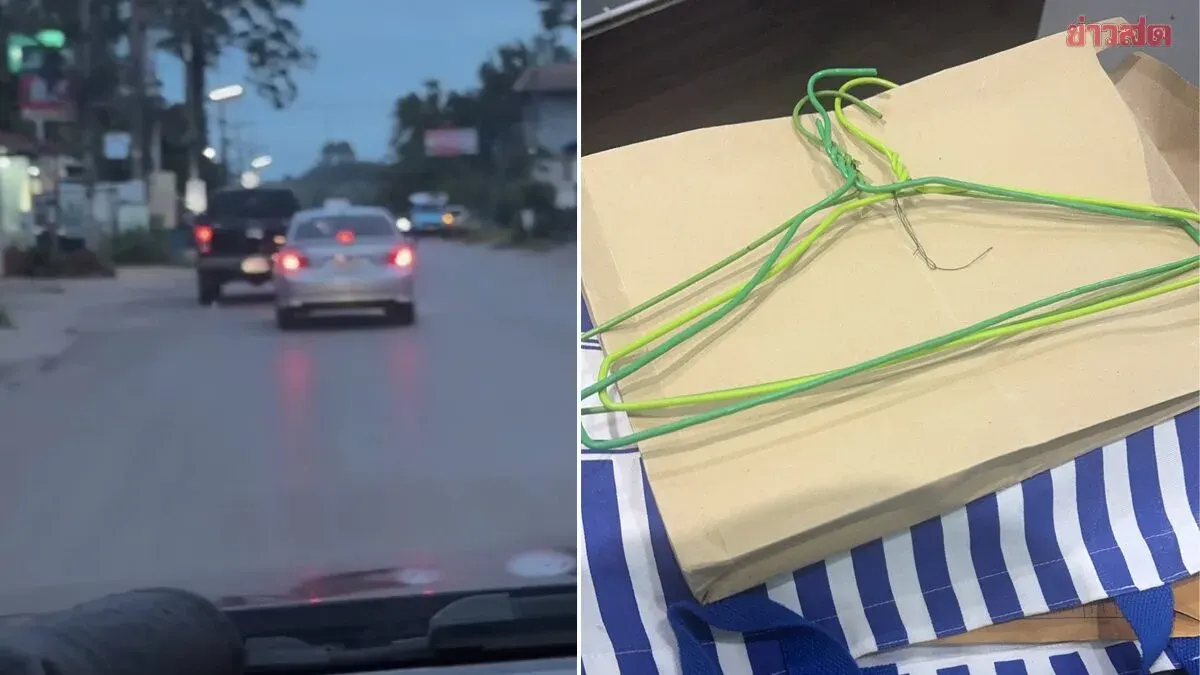
The investigation began when the wife noticed suspicious behavior from small clues in her immediate surroundings. She spotted an unfamiliar clothes hanger in both the house and car—a brand and style they had never purchased before—which raised her suspicion that another woman was interfering in their marriage. This led her to hire Detective Boy's team and install GPS tracking on her husband's vehicle.

Detective Boy explained that his team had to pose as parents enrolling a student at the school to gain access and conduct surveillance. On the day of the operation, the team and the wife followed the GPS coordinates of the husband's vehicle until they caught him picking up his mistress and engaging in activity in plain sight.

The investigation confirmed that the school principal had been secretly seeing his wife's best friend for a long time. The detective team gathered extensive evidence including photographs, video clips of pick-ups and drop-offs, and travel records.

Detective Boy confirmed that the investigation is now complete and all evidence has been handed over to the wife to support legal proceedings. She is preparing to file a civil damages lawsuit and submit a serious disciplinary complaint against her husband.

No. 11 of Read at source → Next
Loading more…
Endless reading Scroll to read. When you reach the bottom, keep scrolling. A bar fills, and the next story slides in when it's full. ↑ ↓ or Space Or use the arrows at the bottom of the screen.