Thailand Targets 3-Baht Electricity Rate for 23 Million Households
Thailand's government has approved a major electricity restructuring plan targeting a 3-baht-per-unit rate for residential users' first 200 units of consumption, benefiting over 23 million households nationwide by funding the reduction thro
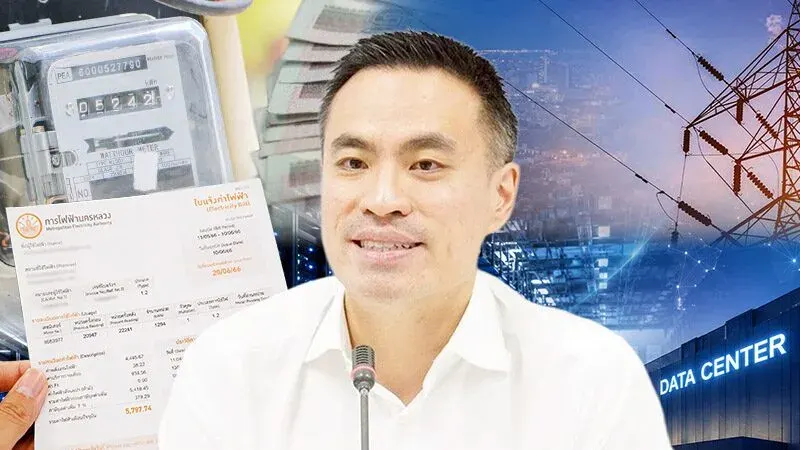
High electricity costs have become one of the public's most pressing complaints, affecting low-income families, small businesses, and industries facing continuous rises in energy expenses. The critical question many Thais want answered is whether a 3-baht-per-unit electricity rate is achievable. That question has received a partial answer following the National Energy Policy Committee's approval of one of the country's largest-ever electricity restructuring measures under Prime Minister Anutin Charnvirakul's leadership. Energy Minister Eknath Prom-phund announced a clear goal to reduce electricity costs for the public sustainably, not merely through temporary price suppression tied to automatic fuel adjustment cycles.
The core of this measure is reducing electricity rates for residential users during the first 200 units of consumption to no more than 3 baht per unit, funded through electricity development funds, clawback revenue from excess benefit recovery, and management of accumulated costs held by the Electricity Generating Authority of Thailand, which absorbed 31,268 million baht in fuel costs on behalf of the public during the recent energy crisis.
Who benefits? Residents paying lower electricity bills immediately—covering over 23 million households nationwide, including rental homes, dormitories, and apartments that previously paid higher rates. These consumers will see direct cost-of-living reductions, increased purchasing power, small and medium enterprises will face lower utility costs, and green industries can access clean electricity more affordably, strengthening ESG competitiveness.
Who pays? With current average electricity at roughly 3.95 baht per unit dropping to 3 baht, the government chose to "shift cost burdens" and "improve system efficiency" rather than subsidize directly from the national budget. A major cost being removed from consumer bills is public electricity, such as streetlights and public lighting worth over 18,000 million baht annually—costs previously bundled into all users' base rates but now to be separated and covered by new financial mechanisms. In effect, the public will no longer bear public electricity costs in their traditional form, with the three electricity authorities managing the transition.
Energy Minister Eknath confirmed the approach will not defer debt or use massive permanent subsidies but instead generate revenue through electricity restructuring. Key funding sources include: (1) Reducing costs from expensive power purchase agreements by renegotiating contracts with private producers, especially renewable energy projects receiving special adders. Some contracts currently pay 6-10 baht per unit while actual solar production costs around 2.16 baht per unit; rates should be adjusted to 2.1579 baht per unit reflecting true costs. (2) Regulating data centers, which will become a critical revenue source for the electricity system due to their massive 24-hour power consumption. The entry of global cloud, AI, and digital data center operators makes organizing this sector essential for Thailand's future.