Arsenic Exceeds Safe Levels Throughout Salween River in Mae Hong Son
Arsenic contamination in the Salween River in Mae Hong Son province continues to exceed safety standards at all monitoring points after eight rounds of testing, with levels ranging from 0.026 to 0.039 mg/L. The river, which flows from Myanmar, poses a health hazard if consumed, though tributaries in the province show no contamination. Authorities advise against drinking the water and recommend thoroughly removing fish organs and gills before consumption.
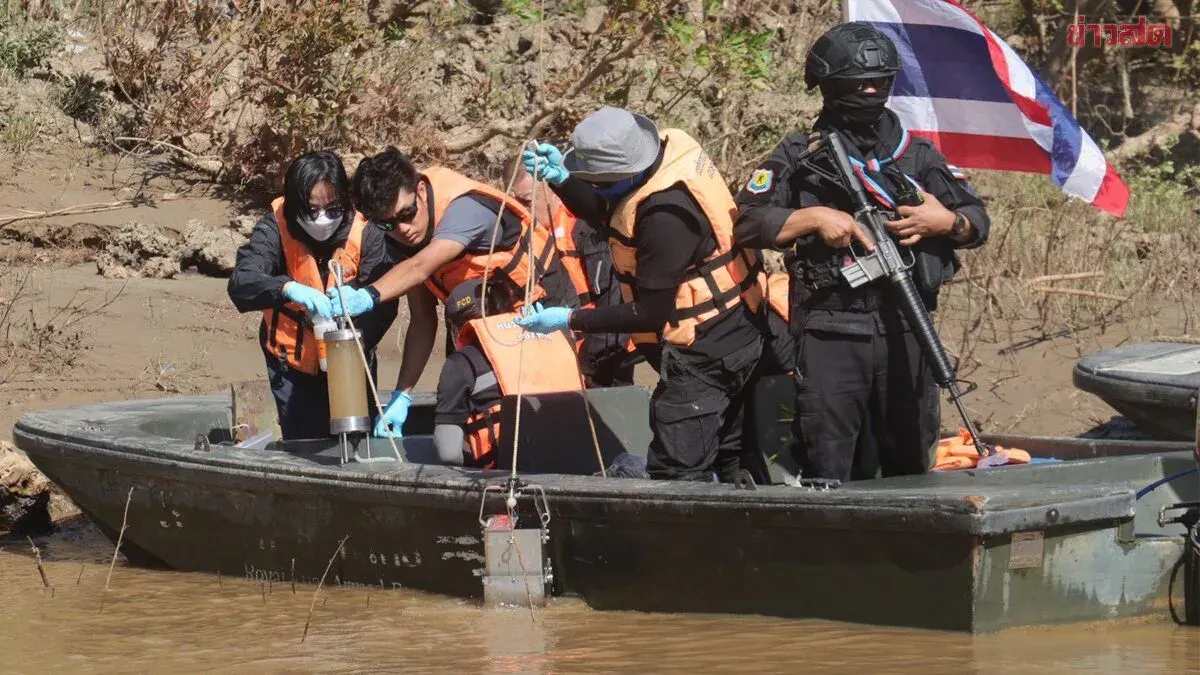
On November 23, 2026, Avira Phakmat, director of the Office of Environmental and Pollution Control Region 1 Chiang Mai, revealed that officials have conducted eight rounds of toxic substance testing in the Salween River and its tributaries in Mae Hong Son province. The Salween River, flowing from Myanmar, shows arsenic levels exceeding standards at concentrations hazardous to human health if consumed. In contrast, all tributaries — including the Ping River (Pai district), Sa Keap, Moei, Mae Sam Laeb, Mae Po, Mae Khong Kha, Po So, Yuam, and Pai rivers — showed no arsenic exceedances.
The eighth round of testing in September found the Salween and its tributaries still running reddish-brown with high turbidity. While most heavy metals met surface water quality standards, arsenic (As) exceeded limits at every monitoring station from Ban Tha Ta Fang in Mae Yom subdistrict, Mae Sariang district, to Ban Sob Moei Village 4 in Mae Sam Laeb subdistrict, Sob Moei district (stations SAL08-SAL13), with concentrations ranging from 0.026 to 0.039 milligrams per liter.
Officials urge the public to avoid consuming water from the Salween River and to exercise caution with caught fish, which may be contaminated. They recommend removing all internal organs and gills completely before cooking as a precautionary measure.