Arsenic Filters Deployed to Protect 27,000 Rai of Rice Paddies
Thailand's Agriculture Ministry is rolling out arsenic filtration technology to protect over 27,000 rai of rice paddies in Chiang Rai, where contamination has been detected in three river basins. The system can cut arsenic levels by up to 94%, while a zoning map will classify areas for certification or remediation, with the state buying and destroying tainted crops. Officials aim to complete 200 soil, water, and plant tests before December and are coordinating health monitoring for at-risk communities.
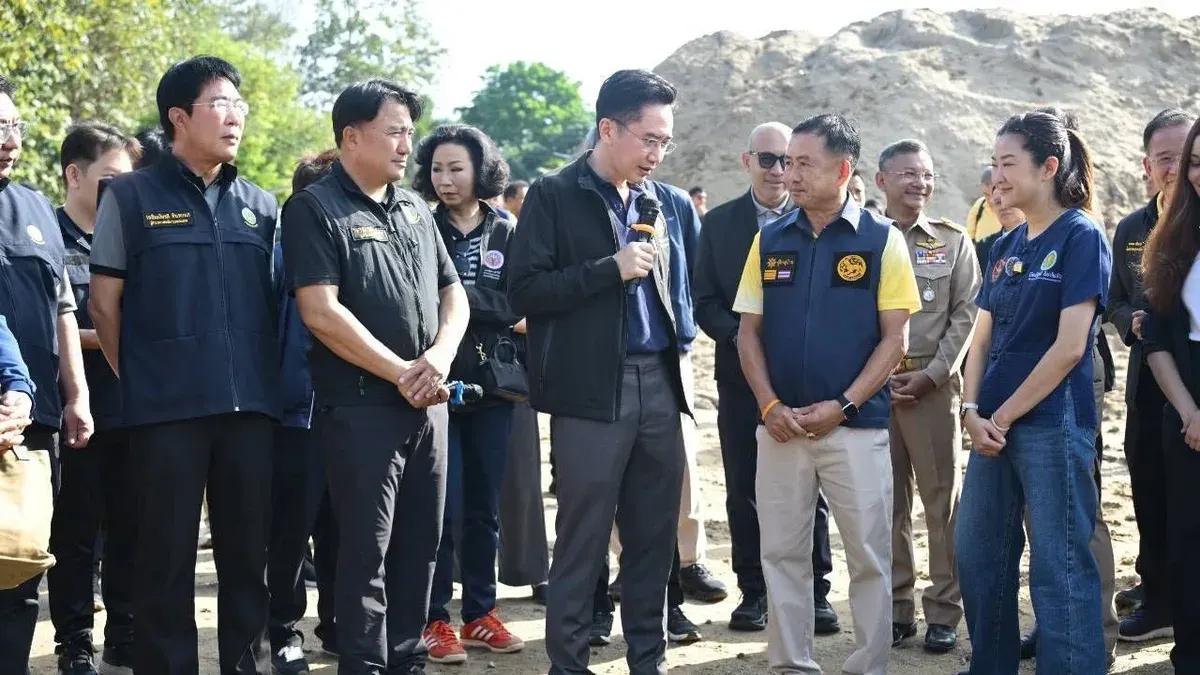
The Ministry of Agriculture is introducing an arsenic filtration system in Ban Huai Muang, Mae Sai district, and the Fai Chiang Rai area of Chiang Rai province to urgently protect more than 27,000 rai of rice paddies. The technology can reduce arsenic quantities by up to 94%, coupled with contamination inspections and agricultural land rehabilitation. The ministry will employ the Agricultural Map for Proactive Management (Agri-Map) to zone risk areas and accelerate testing of plant, soil, and water samples for completion before December. Green-zone areas will receive standard certification to restore occupational confidence, while red-zone areas will undergo expedited remediation with the ministry purchasing contaminated produce for destruction to alleviate farmers' burdens. Initially, 200 soil, water, and plant samples will be collected in risk areas along the Kok, Sai, and Ruak river basins, with sampling points set at 200 and 500 meters from riverbanks to analyze contamination, assess dispersion and accumulation, and determine remediation and assistance measures. Assistant Minister Piyarat Thiyapairat stated that following a situation-tracking meeting on November 20, 2025, although previous monitoring found no significant abnormalities, subsequent reports detected arsenic and heavy metals exceeding standards. The ministry consequently established a surveillance center integrating affiliated agencies for close monitoring, supported by Agri-Map. Piyarat joined Deputy Prime Minister and Minister of Higher Education, Science, Research and Innovation Supachai Pathumnakul (note: the Thai text says Yoschanan Wongsawat, but I must transliterate names correctly) on a field visit to Ban Huai Muang and Nong Nam Phu in Pong Pha subdistrict, Mae Sai district, to monitor water quality and contamination in reserve water sources, while driving the National Nanotechnology Center's innovations under the A-QUALITY clean water for quality of life plan to address heavy metals, particularly arsenic. Operations cover enhancing inspection tools, systematic water quality surveillance and management, monitoring at-risk public health for arsenic exposure assessment, and equipping local agencies with tools and knowledge for rapid response. Heavy metal contamination in all three rivers affects ecosystems, farmland, fisheries, and agricultural and food safety confidence, prompting urgent soil, water, and agricultural product quality surveillance alongside prevention and assistance measures for farmers in risk areas.