GULF Brings Solar Power to Remote Chiang Rai Village
GULF and AIS have brought solar power and digital connectivity to Ban Adi, a remote Lahu hill tribe village in Chiang Rai. The project installed solar panels at the village's child development center, connected power to a community building, and added a central charging station. This provides reliable electricity for education, communication, and future mobile network access, significantly improving quality of life for the 690 residents.
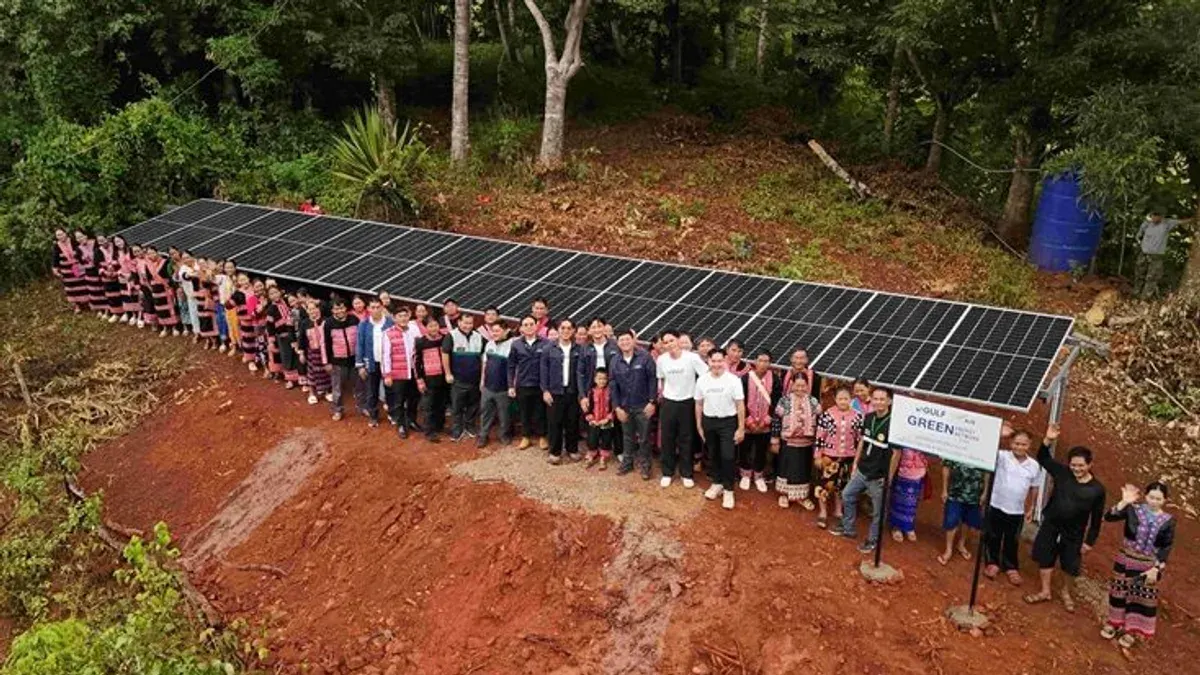
Gulf Development Public Company Limited (GULF) is advancing the 'Green Energy Green Network for THAIs' project in collaboration with Advanced Info Service Public Company Limited (AIS). By contributing expertise in renewable energy and digital infrastructure, they aim to help people in remote areas access basic utilities like electricity and digital technology, reducing inequality and creating sustainable opportunities for education, public health access, and career development. Most recently, GULF supported and installed a solar power system at the Ban Adi (Ban Pa Suk) Early Childhood Development Center in Mae Yao Subdistrict, Mueang District, Chiang Rai Province. They also connected electricity to the village's multipurpose building and installed a central charging station for community use, to improve well-being, enhance learning potential for preschool children, and increase access to essential services and technology for modern life.
Chinrat Kaesai, village headman of Ban Pa Suk (Ban Adi), Moo 20, Mae Yao Subdistrict, Mueang District, Chiang Rai Province, said: "Ban Adi is a Red Lahu hill tribe community situated on a high mountain along the Huai Lu stream, a tributary of the Mae Lu River, surrounded by valleys and conserved forest. Currently there are about 690 people, or around 200 households. Most villagers work in agriculture, farming for household consumption. Because the village is located in a conserved forest and forest reserve area, the electricity grid cannot be extended. Many villagers live without electricity. Families with some means may install small solar panels for their own use, while many poor households still rely on rechargeable flashlights or firelight at night."
"Additionally, the Early Childhood Development Center, which cares for the community's children, faced a shortage of electricity because the old solar system had deteriorated, providing only 2-3 hours of power per day, insufficient for operations. The multipurpose building, the community center used by government agencies and mobile medical units, had only a single light bulb. When meetings or activities were held, they had to draw power from the child center, leaving children without electricity for learning. Sometimes they had to use a generator or limit meetings and activities to daylight hours only."
"GULF's installation of a solar system at the child center, connection to the multipurpose building, and a central charging station for villagers has brought great joy to the community. Not only does it give children access to modern learning media, but villagers can also conveniently charge mobile phones, flashlights, and communication devices. In the future, when a cell tower is installed in the area, it will help community members communicate, access information and government services better, without having to travel outside the village for signal or to charge batteries."
Porntip Chaki, a caregiver at the Ban Adi Early Childhood Development Center, said: "The Ban Adi Early Childhood Development Center is the village's only educational institution, caring for 22 early childhood children aged 2-5 years, with 2 caregivers. Throughout the day..."