Bhumjaithai Withdraws Draft House Rules After Opposition Concerns
Bhumjaithai Party MP Nikorn Jamnong withdrew a controversial draft amendment to House regulations and submitted a revised version after negotiations with government and opposition whips. The new draft removes disputed provisions on the Committee on Rules of Procedure that were seen as threatening opposition oversight, while adding measures to streamline debates, exclude weekends from legislative countersigning periods, and require legislative legal experts on committees.
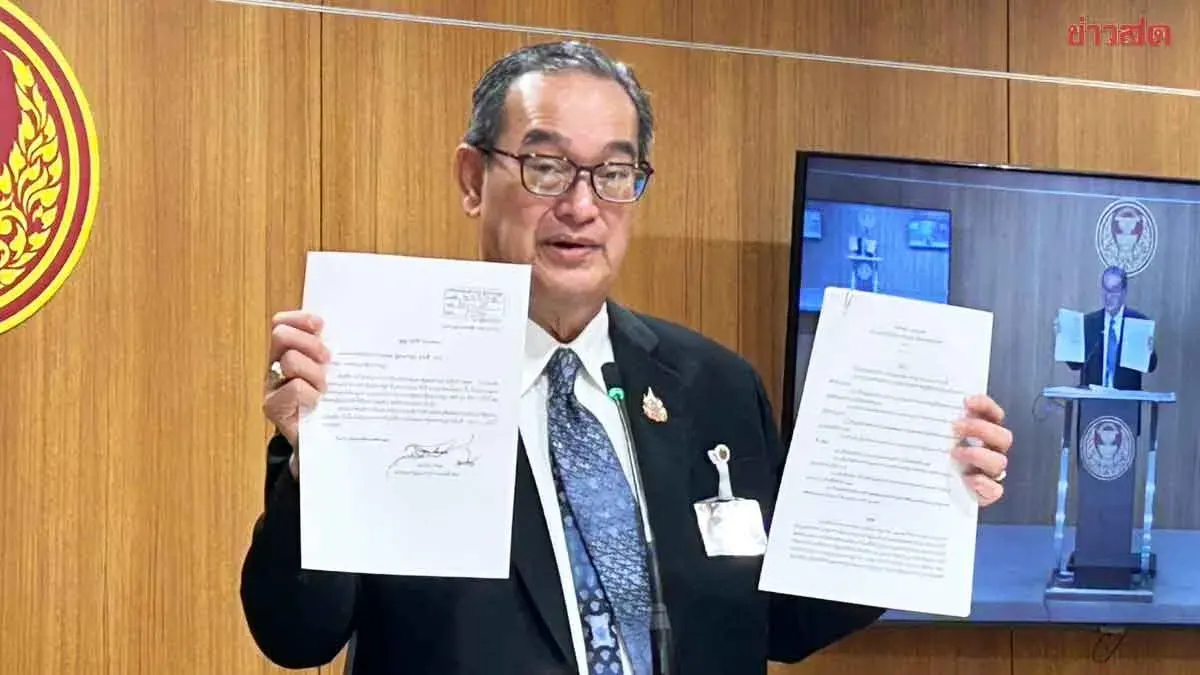
At 9:00 a.m. on November 11, 2026, at Parliament, Nikorn Jamnong, a Bhumjaithai party-list MP, announced he had withdrawn the draft amendment to the House of Representatives Meeting Regulations and submitted a new draft for improvement. On November 10, he had already submitted the revised draft to the meeting agenda, where it can be considered alongside three previous drafts.
The revision aims to reduce political conflict following joint negotiations between opposition whips and the government side, who agreed to continue dialogue as before to advance legislative work and parliamentary affairs.
Nikorn said the main reason for withdrawing the original draft was that it contained provisions on the operating methods and mechanisms of the Committee on Rules of Procedure (Kamathikan) that were interpreted differently, raising suspicions they would affect or block the opposition's oversight role. To prevent this from becoming a source of conflict and an obstacle to parliamentary development, he decided to remove all provisions on the committee's operating methods entirely, refocusing the draft on upgrading parliamentary structure, governance, and legislative efficiency.
Even with the committee provisions removed, the new draft retains key principles, including improving the question-and-debate system: urgent questions must be concluded within 30 minutes, while general debates must end within 20 minutes, as past debates often dragged on to fill the 30-minute allocation, wasting time for other work.
Additionally, regarding the 7-day period for countersigning laws — which previously included weekends — the new principle excludes Saturdays and Sundays.
Nikorn said he had received feedback from civil servants unable to resolve certain issues, so he acted as a channel to propose laws on their behalf since they lack the right to submit regulatory drafts themselves. At least two key demands from civil servants are incorporated: 1. Allowing the Committee on Rules of Procedure to incorporate key elements from other draft bills that the House has accepted in principle into the main draft without violating principles, to remove practical obstacles. 2. Adding legislative legal experts: requiring the appointment of assistant committee secretaries from career civil servants, with at least one being a "legislative legal expert" to ensure legal wording is precise and rigorous.
"I confirm the new draft I submitted is a compilation of useful proposals from various parties — both government and opposition — including from the Klatham Party, Prasit Watcharasin, Nattavut Buapratum (People's Party list MP). We see that this House belongs not to any single member or party, but to all members serving the people who elected us. This draft merges proposals from all sides so the House of Representatives has good rules for working together," Nikorn said.