Black Chin Tilapia Swarm Ratchaburi Canals After Floods
Severe flooding in Ratchaburi has accelerated the spread of invasive black chin tilapia throughout the province's canal network, with villagers catching them in large numbers while fishing. Experts say the fast-breeding species — which reproduces every 22 days and tolerates polluted water — has now colonized all waterways, making eradication impossible. Authorities and the Thai Aquaculture Association are urging a shift toward developing food processing industries to manage the population and create livelihoods.
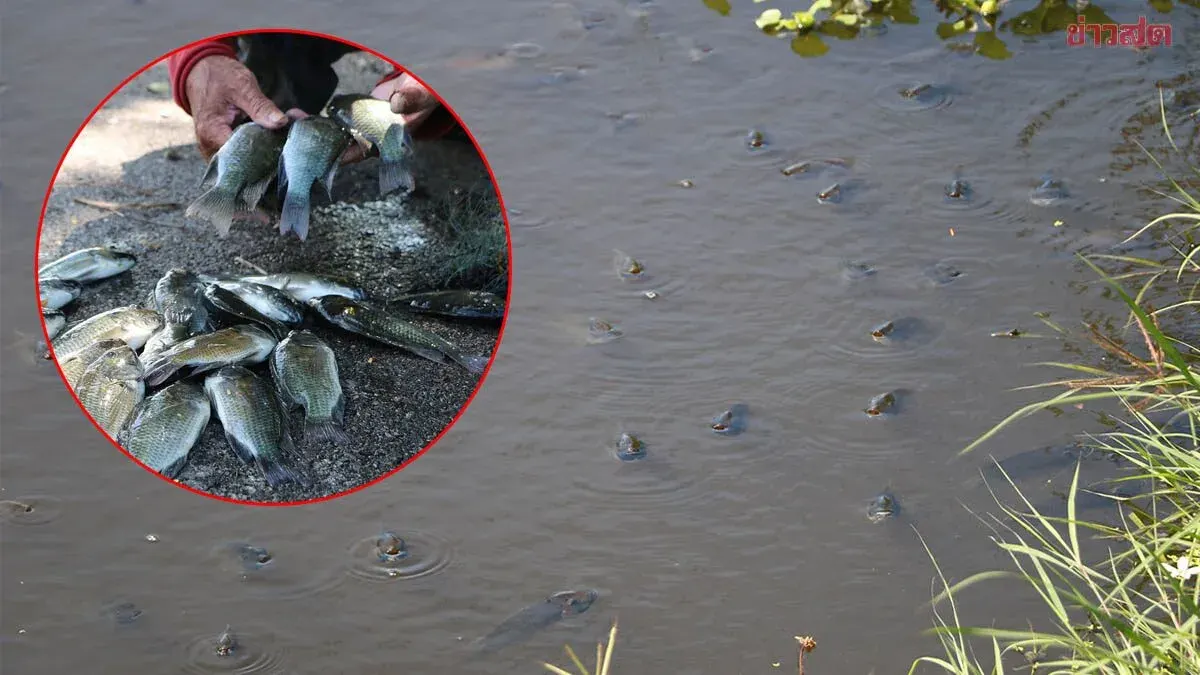
Black chin tilapia have spiraled out of control in Ratchaburi following severe flooding, with villagers catching them by the netful. On October 23, 2026, reporters in Ratchaburi noted that while heavy flooding across the province is gradually subsiding and water levels are dropping in many areas, government agencies, volunteers, and residents have been pumping water out around the clock. What followed in the various canal branches were massive schools of black chin tilapia, particularly in Sam Reun subdistrict of Mueang district where several canals converge. Villagers casting nets during the floods hoping to catch fish for food instead found black chin tilapia tangled in their nets by the dozens.
It is feared that this severe flooding has allowed the fast-breeding black chin tilapia to disperse throughout every canal and ditch. Even in the drainage channels of fruit orchards where farmers are pumping out water, numerous 3-4 inch tilapia have been seen jumping from the water, causing residents to panic over a massive new outbreak.
Dr. Surapol Singkhet, a former independent academic known as the "black chin tilapia hunter," stated that he serves as the Ratchaburi Fisheries Department's waterway guardian. He previously joined forces with fisheries offices from Ratchaburi, Kanchanaburi, and Suphan Buri to suppress the fish at Nong Bang Ngu in Chedi Samian subdistrict, but the fish escaped everywhere. Now that rice fields and orchards are flooded, black chin tilapia have colonized all of them.
Dr. Surapol added that black chin tilapia tolerate all water conditions, surviving even in polluted water. He admits eradication is likely impossible because they breed every 17 days — the male incubates the eggs in his mouth. People unfamiliar with the species might think they eat other fish eggs, but they are actually protecting their own. They reproduce extremely fast, every 22 days, and every caught female is full of eggs; opening a male's mouth reveals him brooding eggs.
Mr. Prakop Thanyodkaew, President of the Thai Aquaculture Association, said the black chin tilapia invasion has exceeded any possibility of eradication or elimination. Instead, serious efforts should focus on coexistence, such as developing genuine food processing methods. If turned into a profession, it would give unemployed villagers a way to catch black chin tilapia continuously, creating a supply chain. With the current floods spreading the fish everywhere, the situation is beyond control, but it must be promoted responsibly with all parties sharing accountability.
On behalf of the Thai Aquaculture Association, Mr. Prakop urged government agencies and relevant bodies to jointly address this urgent issue through integration. Regarding concerns that black chin tilapia might enter aquaculture farms, he answered clearly that the central region's shrimp farming operates on a closed system. Black chin tilapia inhabit natural water sources and cannot enter farm ponds due to extremely strict biosecurity protocols.