Thai-EU FTA Could Lift Garment Exports 20-57%, Says TGMA
The Thai Garment Manufacturers Association is lobbying the government to maximize benefits from the pending Thai-EU Free Trade Agreement, which could boost garment exports to Europe by 20-57% within five years. The association is also courting Taiwanese investment in high-tech fabrics to build a complete domestic supply chain and has planned a major industry forum in December to prepare businesses for global trade shifts.
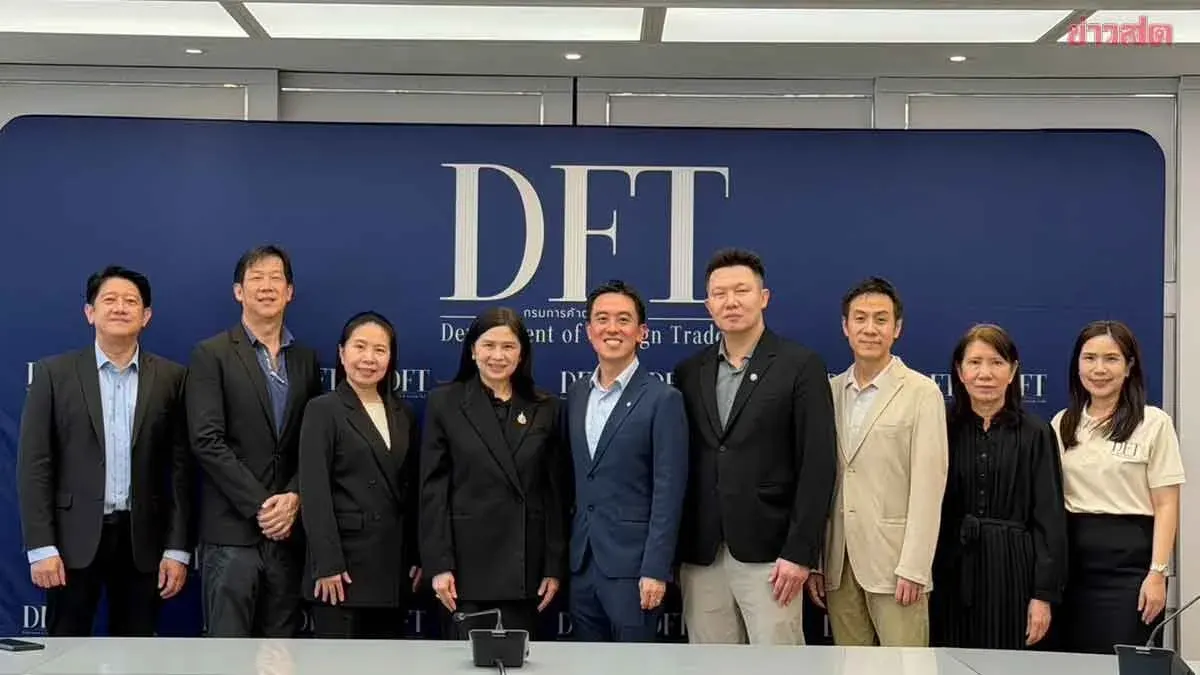
Thailand's garment industry is catching the eye of European fashion brands. The Thai Garment Manufacturers Association (TGMA) is stepping up coordination with the government to drive exports and expand trade opportunities under the Thai-EU Free Trade Agreement (FTA). TGMA President Chalermpol Lotarakpong, accompanied by the association's executive committee, met with Arada Fuengthong, Director-General of the Department of Foreign Trade, Ministry of Commerce, to discuss Thai garment export trends, opportunities from the Thai-EU FTA, and strategies to attract foreign investment to enhance the industry's long-term competitiveness.
Chalermpol noted that despite global economic and geopolitical pressures on key export markets — U.S. garment imports fell 7.1% and EU imports dropped 3.8% in the first eight months of 2026 (Thai year 2569) — Thai garment exports are expected to hold steady this year after growing 5% last year, reflecting the potential and adaptability of Thai entrepreneurs.
The Thai-EU FTA is seen as a crucial opportunity to expand export markets, with projections of a 20-57% increase in Thai garment exports to the EU within five years of the agreement taking effect. European fashion brands are showing growing interest in Thailand, prompting TGMA to collaborate with Germany's Apparel Sourcing Club to organize business-matching events between Thai manufacturers and European brands such as Hugo Boss and Vaude to increase trade opportunities and expand new customer bases.
Simultaneously, efforts are underway to promote investment in upstream textile industries from Taiwan, which has expertise in high-performance functional fabrics and eco-friendly textiles. This would combine Taiwan's strengths with Thailand's garment manufacturing capabilities and the petrochemical industrial base in the Eastern Economic Corridor (EEC) to develop a complete production chain from plastic pellets to fibers, fabrics, and finished garments. This integration would increase domestic production value, reduce reliance on imported raw materials, and support compliance with rules of origin under the Thai-EU FTA.
Members of the Taiwan Textile Federation have expressed interest in investment opportunities in Thailand. TGMA plans to invite a delegation of Taiwanese entrepreneurs to visit Thailand to explore investment feasibility and push for improvements in the investment environment to further support upstream industry development.
Chalermpol added that TGMA is also focusing on preparing entrepreneurs for global economic and trade shifts. The association will host the TGMA Dinner Talk 2026 on December 2, 2026, from 16:30 to 20:30 at the Chatrium Grand Bangkok. The event will feature three distinguished speakers: Arada Fuengthong on Thai-EU FTA opportunities and directions; Dr. Surach Tanboon from the Bank of Thailand on Thai economic trends and business challenges; and historian-economist Dr. Wit Sittivekin on global economic shifts and adaptation, moderated by Dr. Arisara Kamtharacharoen. The event expects to draw garment and textile industry entrepreneurs, executives, and representatives from government agencies, private sector, and related organizations to exchange views and build networks.