BOT Governor Urges Action on Thailand's Informal Economy
Bank of Thailand Governor Sethaput Suthiwartnarueput warned at the BOT Symposium 2026 that Thailand's informal economy, estimated at nearly 48% of GDP, is a critical structural challenge undermining competitiveness, tax revenue, and worker protections. He urged coordinated multi-year action across all sectors, particularly government crackdowns on the gray and black economy, to bring honest informal businesses into the formal system and revive sluggish national growth.
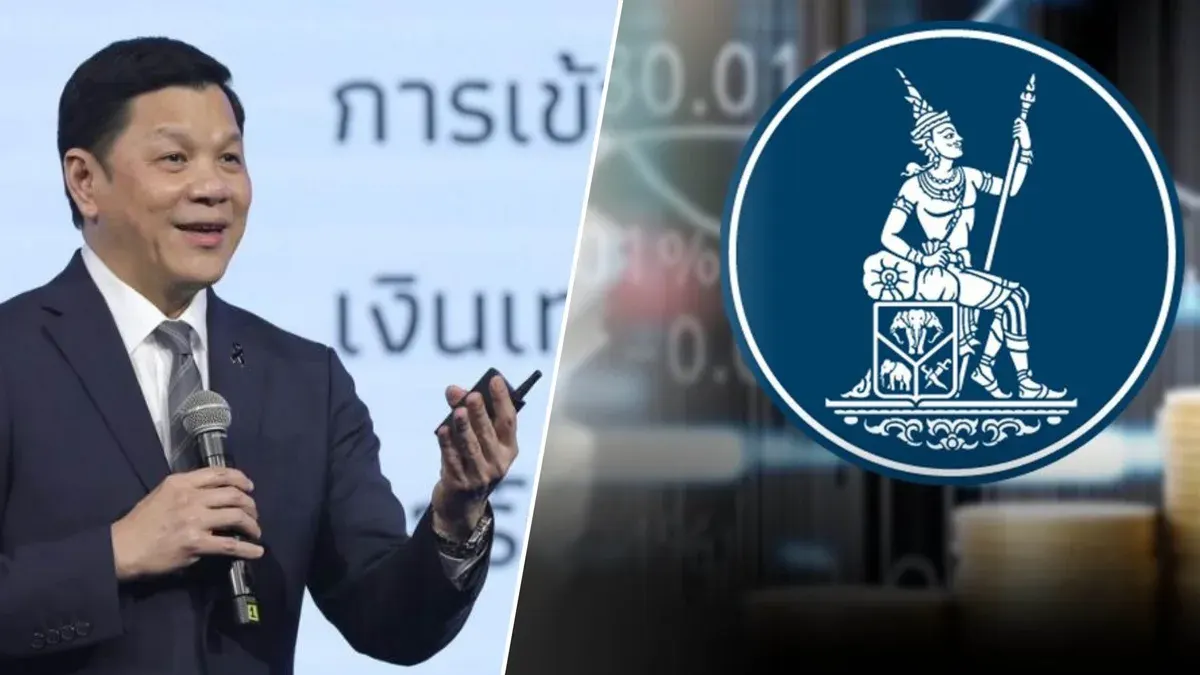
Bank of Thailand Governor Sethaput Suthiwartnarueput addressed the annual BOT Symposium 2026 under the theme "From Informality to Opportunity: Unlocking Informal Economy Potential." The governor highlighted that the informal economy is a major structural problem for Thailand, with the World Bank estimating its size at nearly 48% of GDP, affecting long-term competitiveness, the tax base, and labor welfare. Thailand's informal economy splits into two parts: the "honest" informal sector at 21-35% of GDP covering vendors, freelancers, and farmers who operate legally but remain outside tax and registration systems — encompassing 2.5 million of 3.2 million enterprises (70-80% of businesses) and 26 million informal workers (65% of the workforce). The second part is the gray and black economy covering illegal activities, corruption, online gambling, proxy accounts, and illicit capital, estimated at 13% of GDP in a 2012 Puey Ungphakorn Institute study with a growing trend. The governor added that these informal businesses lack accounting records and clear income data, making access to investment credit difficult, while 26 million workers lack social security and pension coverage, further narrowing the government's tax base as public debt approaches 70% of GDP. The data shows Thailand's informal economy is expanding. The governor proposed creating incentives to draw honest businesses into the formal system, stressing the problem cannot be solved by the BOT alone — all sectors must cooperate continuously for years. In particular, the government and agencies tackling illicit capital, corruption, and gambling must take real action, because reducing the gray economy and bringing honest businesses into the system would help Thailand's economy recover. Weak economic recovery has been a major national problem for years, especially since the 2014 coup. The current national economic and social development plan projects Thai GDP growth of at least 2.5% in 2026, trailing ASEAN. This remains a major task for the government to urgently address and drive growth higher. The informal economy problem, as outlined by the BOT governor with data and proposals, if acted upon sincerely by the government, will help the economy recover.