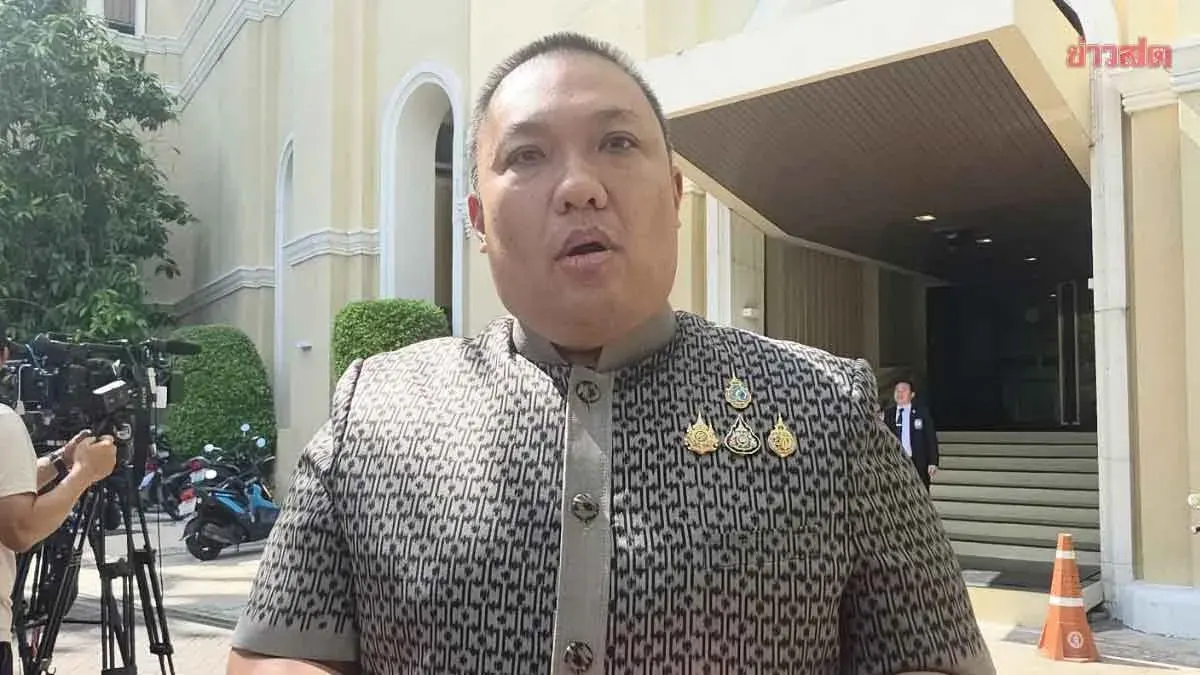
BOT Governor Urges Action on Thailand's Massive Informal Economy
Bank of Thailand Governor Vithai Rattanakorn warned that Thailand's informal economy reaches nearly 48% of GDP, harming competitiveness, tax revenue, and worker welfare. He urged the government and all agencies to take concrete action to formalize legitimate businesses, expand credit for high-potential SMEs, and crack down on shadow money, corruption, and gambling.
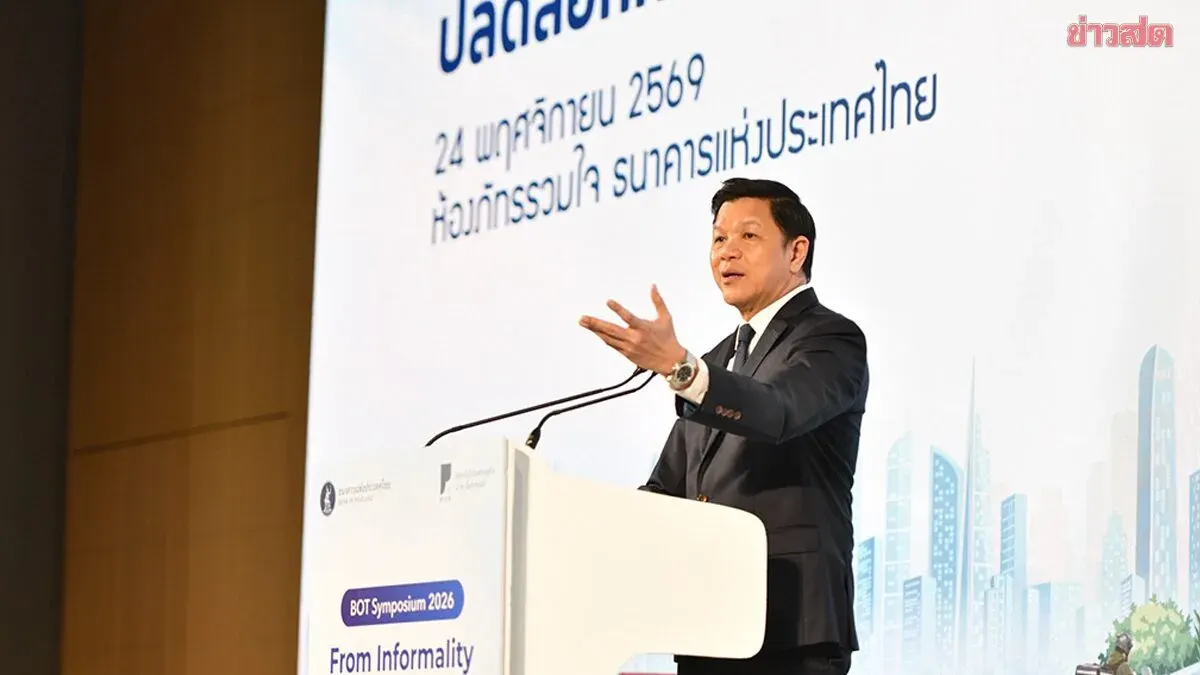
Bank of Thailand Governor Vithai Rattanakorn stated that Thailand's informal economy accounts for nearly 48% of GDP, affecting competitiveness, the tax base, and labor welfare. He urged the government and all agencies to tackle the problem in earnest, drawing legitimate businesses into the formal system while accelerating credit access for SMEs with potential. He emphasized that gray money, corruption, and gambling must be acted upon, not merely addressed through policy declarations.
Speaking at the opening of the annual academic seminar "BOT Symposium 2026: From Informality to Opportunity – Unlocking the Potential of Thailand's Informal Economy" on November 24, 2026, Governor Vithai said the informal economy is a major structural issue of significant scale. According to a World Bank assessment, the overall informal economy stands at nearly 48% of GDP, directly impacting long-term competitiveness, the tax base, and worker welfare.
Thailand's informal economy structure can be divided into two main parts: 1. Legitimate informal economy: Approximately 21-35% of GDP, covering vendors, street merchants, freelancers, and farmers who are not breaking laws but remain outside the tax and registration systems. This segment includes up to 2.5 million informal entrepreneurs out of roughly 3.2 million total businesses, or 70-80% of all enterprises, and as many as 26 million informal workers, representing 65% of the total workforce. 2. Gray economy and shadow money: Research by the Puey Ungphakorn Institute for Economic Research from 2012 found this segment at 13% of GDP with an expanding trend, covering illegal activities, corruption, online gambling, proxy accounts, and shadow capital that drain financial resources from the legitimate economy.
The impact of businesses and workers remaining informal harms the economic system. Informal businesses lack clear accounting and revenue records, making risk assessment difficult for financial institutions. This results in difficult access to formal credit, often limited to short-term working capital loans rather than long-term investment loans to boost productivity and competitiveness.
Additionally, over 26 million informal workers lack social security protection, provident funds, and post-retirement welfare guarantees. Businesses operating outside the system narrow the government's tax base, reducing revenue while public debt approaches 70% of GDP, steadily shrinking the government's policy space.
The BOT Governor said he has proposed solutions to bring legitimate businesses into the formal system through incentives to attract legitimate entrepreneurs, and that financial institutions must adopt risk-based pricing to create incentives. Simultaneously, he urged the Ministry of Finance and the government to assist high-potential SMEs, acknowledging that not all SMEs can be helped — only 20-21% currently access credit compared to 70% for large firms. Therefore, efforts must be accelerated to expand credit access for these high-potential SMEs.
Mr. Vithai stated that the informal economy problem requires every agency to cooperate, and he called on the government to step in and address the issue seriously.