CAAT Confirms Checked Bag Searches Only When X-Rays Show Suspicion
The user wants a short summary of the article about CAAT confirming checked bag search rules in Thailand. The summary must be 1-2 sentences, 120-220 characters, max 240. English only. No filler. Lead with what happened, then the most import
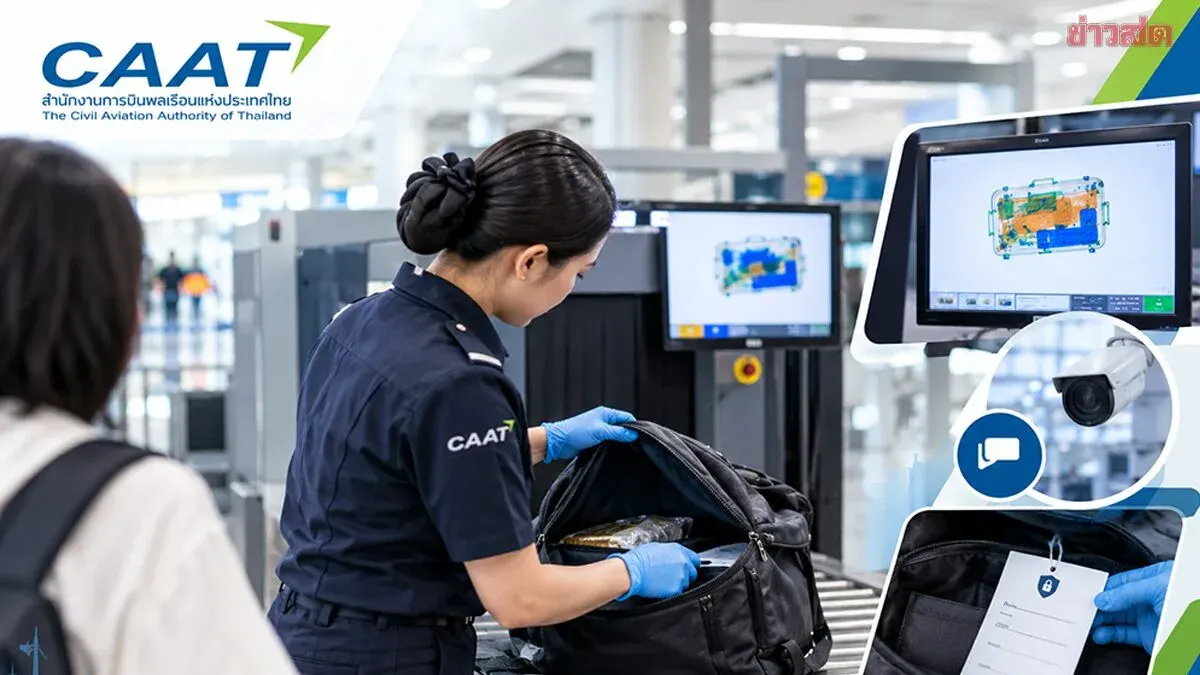
The Civil Aviation Authority of Thailand (CAAT) has disclosed the results of its monitoring of the new checked baggage inspection regulations, which took effect on October 16. The rules authorize designated airport officers to inspect checked bags without the passenger present, but only when X-ray screening indicates possible prohibited items or objects that could threaten flight safety. Overall implementation has been orderly. The most commonly detected prohibited items are power banks and battery-powered electronic devices, which pose safety risks — particularly short circuits and fires in aircraft cargo holds — if not transported according to regulations.
CAAT stressed that the purpose of these inspections is to prevent dangerous items from being loaded onto aircraft, not to search every bag as a routine. The process begins with X-ray screening; only if suspicious objects are detected is the bag taken to a designated area for inspection by legally authorized officers. The search must be video-recorded for later verification, and a Notice of Baggage Inspection must be placed inside the bag to inform the owner. Any bag opened outside these prescribed procedures, areas, or by unauthorized personnel is not considered a valid inspection under the new rules and may constitute an illegal act. Checked baggage remains under the airline's responsibility throughout the journey. If passengers discover irregularities with their luggage or its contents, they should contact their airline directly to report the issue and request a joint fact-finding with relevant agencies.
Regarding four cases circulating on social media about passengers' bags being searched, CAAT coordinated with relevant agencies to verify the facts. Two cases involved flights departing Thailand for international destinations; airport CCTV footage confirmed the bags were not opened by Thai airport inspection officers under the new measures. One case involved an inbound international flight, where pre-departure screening falls under the origin country's regulations and is unrelated to Thailand's measures. The remaining case was a domestic flight where a bag was legitimately inspected under the new rules after an electronic device with a battery was detected inside, and the passenger had not used a TSA-approved lock, requiring officers to cut the zipper.