Cabinet Approves 45-Baht Cap on All Bangkok Electric Trains
The Cabinet approved a 45-baht maximum fare cap for all Bangkok electric trains in 2027, effective January 1, backed by a 5.8-billion-baht subs
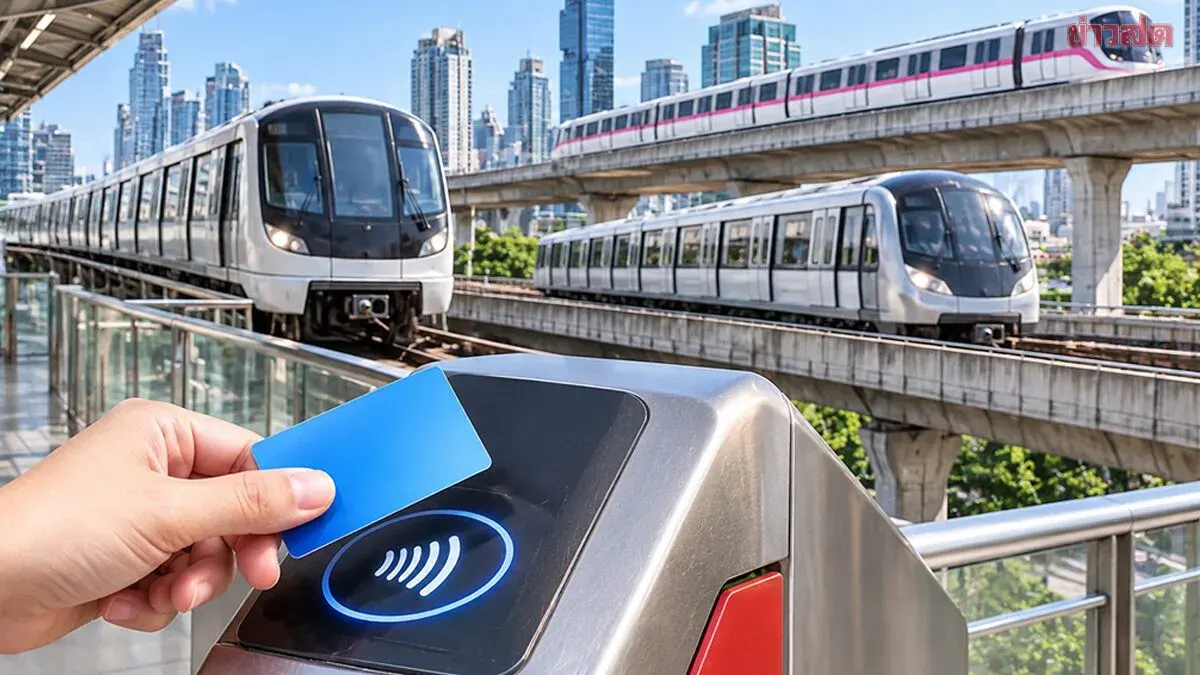
The Cabinet approved a joint fare measure for all electric train lines in Bangkok and its vicinity, effective January 1 to December 31, 2027, with an initial fare not exceeding 17 baht and a maximum fare capped at 45 baht per trip, setting a budget framework of 5.807 billion baht.
On November 3, 2026, Deputy Government Spokesperson Phloythale Lakkhamaichan revealed that the Cabinet meeting had approved and acknowledged the Ministry of Transport's proposal to implement measures reducing the cost of living through joint fare rates in the electric rail system. The measure covers the entire electric rail network in Bangkok and its vicinity from January 1 to December 31, 2027.
The measure sets the initial fare according to existing contracts at no more than 17 baht and caps the total fare at no more than 45 baht per trip. No duplicate initial fare will be charged when passengers transfer between different electric rail lines, aiming to reduce travel costs and increase convenience for the public.
This follows the resolution of the Committee on Driving the Policy on Electric Train Fare Setting to Reduce the Cost of Living, in its meeting 2/2026 on October 21, 2026. The Cabinet assigned relevant agencies — the Department of Rail Transport, the Office of Transport and Traffic Policy and Planning (OTP), the Mass Rapid Transit Authority of Thailand (MRTA), the State Railway of Thailand (SRT), the Bangkok Metropolitan Administration (BMA), and Krungthai Bank — to expedite implementation according to plan.
For the 2027 fiscal year budget, a total framework of 5.807 billion baht is allocated, divided into 5.785 billion baht for fare subsidies and 22 million baht for transaction fees in refunding passengers. The OTP is tasked with proposing the annual budget allocation from the central budget's emergency reserve to support the public under this measure, and will serve as the lead agency managing subsidy disbursements based on actual expenses.
Additionally, the Cabinet assigned the MRTA and BMA, as project owners, to compile data on actual ridership and revenue from the measure, including assessing induced demand after six months of operation. This data will be used to negotiate revenue sharing with electric train operators to ensure the state receives a fair and appropriate share of revenue, with progress reported back to the Cabinet.