A memorial service was held in Chachoengsao Province for two Russian siblings killed in a serial murder case that claimed five victims total, as police deployed ground-penetrating radar technology to search for additional evidence.
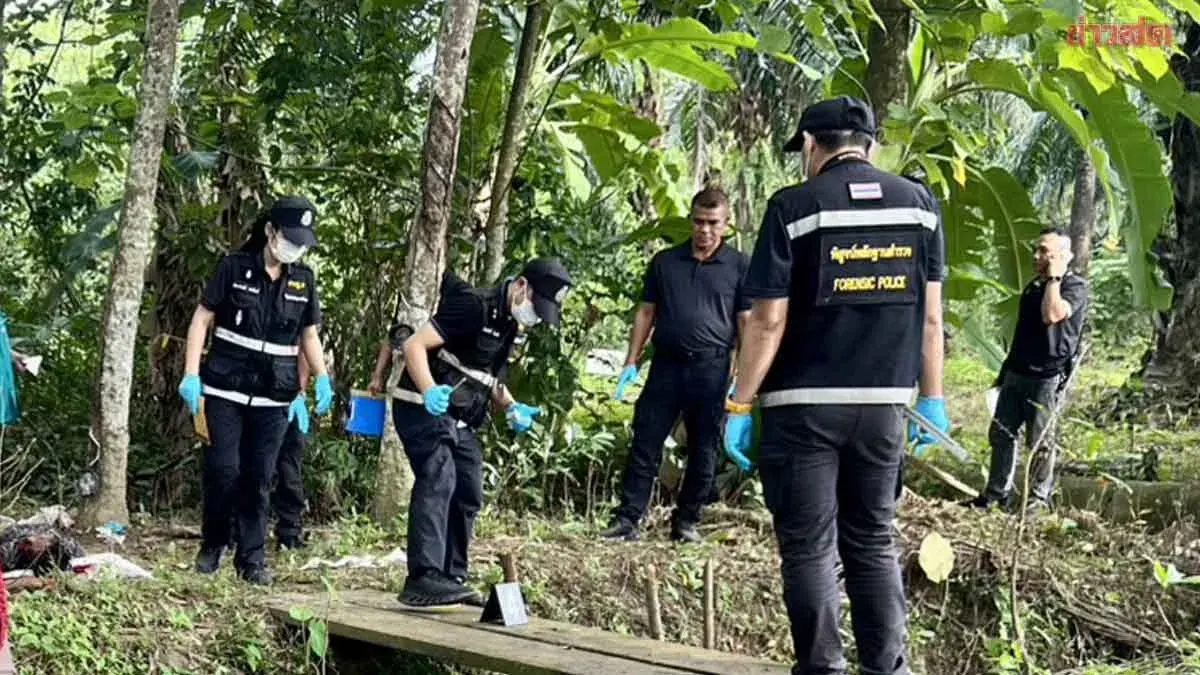
On August 6, 2026, Assistant Professor Chawlit Khaokhiao from Silpakorn University's Department of Archaeology coordinated with Summit Engineering and Services Company to deploy Ground Penetrating Radar (GPR) technology and expert personnel to search for additional evidence in the serial murder case involving five victims in Huay Yai Subdistrict, Bang Lamung District, Chachoengsao Province.
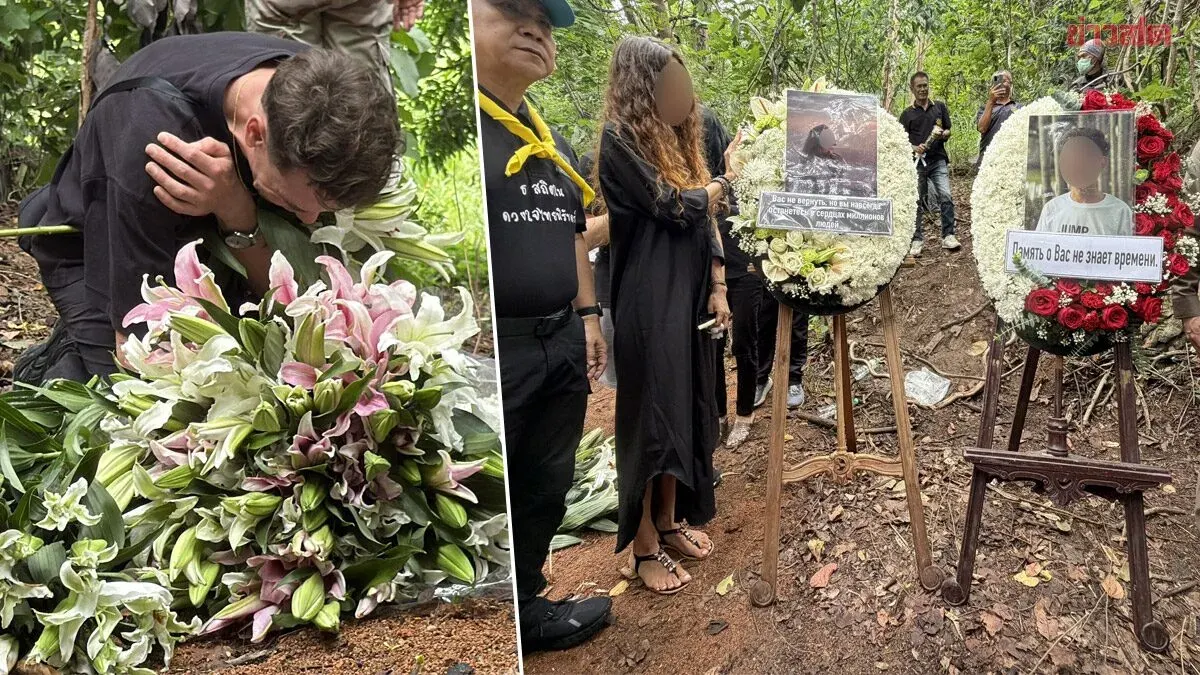
Before operations began, senior police officials and the Chachoengsao provincial governor held a planning meeting at Huay Yai Police Station before attending a memorial service for Diana and Roman, two Russian siblings who were among the victims killed and buried by the suspect.
The memorial was organized by Charlina Nazimova, the victims' mother, to dedicate merit to her two children and three Thai family members who died in the same case. Buddhist monks from the local temple presided over the ceremony, which was attended by government officials, police officers, Thai citizens, and foreigners. White flowers—carnations, lilies, and roses—were placed at the discovery site as a tribute. The family also displayed Diana's favorite beverage, a cup of coffee, as a symbol of remembrance. Throughout the service, Charlina was unable to hold back her tears despite consolation from relatives and friends.
Charlina expressed gratitude to the Thai public, government agencies, police, and volunteers for their assistance and support, noting her deep appreciation for the kindness of Thai people, which gave her family strength during this devastating loss.
Following the memorial, authorities began surveying the area using Ground Penetrating Radar, a subsurface imaging technology that sends high-frequency radar waves into the ground. When these waves strike objects or soil layers with different properties, they reflect back to the receiver and are processed into cross-sectional images of the subsurface. GPR can detect various subsurface anomalies such as previously dug and refilled holes, underground cavities, utility pipes, building foundations, metal objects, and archaeological artifacts. While GPR cannot directly visualize remains, it can identify suspicious soil disturbances and anomalies that differ from natural soil conditions, helping authorities pinpoint locations for excavation and forensic verification.