Chiang Mai University Empowers Youth With AI For Local Development
Chiang Mai University is supporting young leaders in Tak Province to use AI technology for developing local areas into future cities through the Young Public and Private Collaboration project. The initiative combines AI with data analysis a
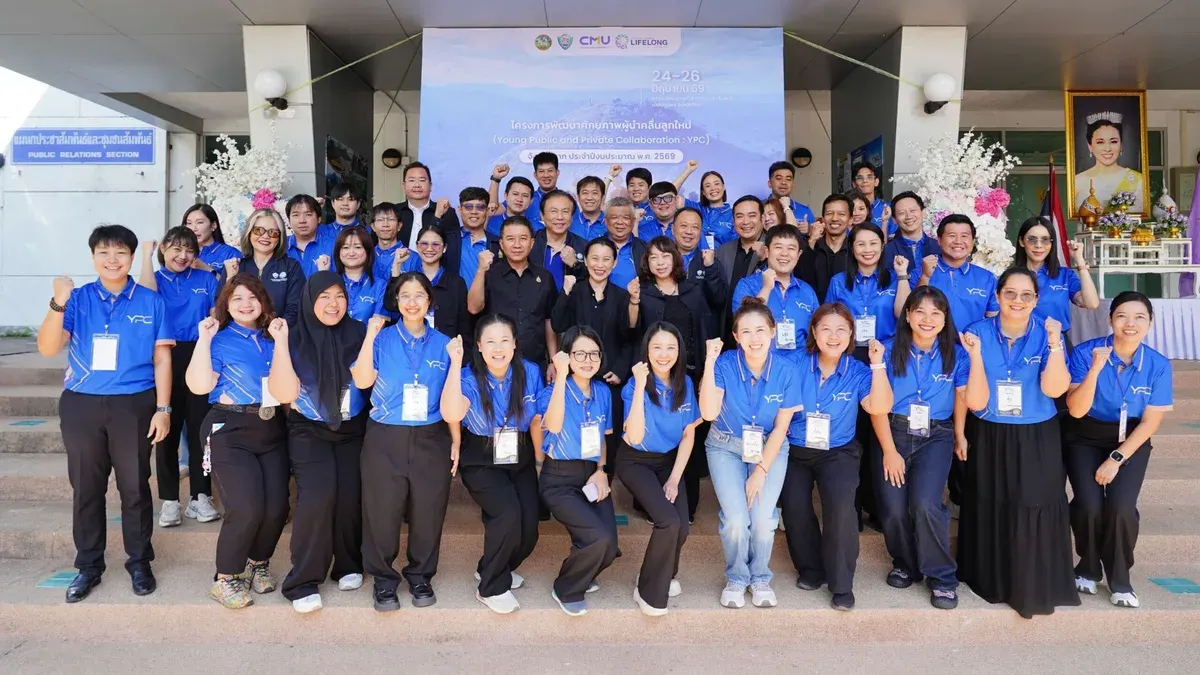
On July 7, Chiang Mai University's College of Lifelong Learning advanced its lifelong learning mission to promote national development through the Young Public and Private Collaboration (YPC) project in Tak Province. The initiative aims to equip emerging leaders with artificial intelligence skills combined with empirical data analysis and multi-sector participation to co-design strategic plans and development approaches aligned with provincial context and actionable on the ground.
The project serves as an integration platform for collaboration among government, private sector, education, and networks of young professionals in Tak Province. Participants jointly analyzed regional strengths and challenges including border trade, high-value agriculture, tourism, local goods and resources, as well as quality of life and long-term urban development before collectively determining development directions based on real data and stakeholder input.
Chiang Mai University's College of Lifelong Learning designed the learning process and transferred knowledge on AI application to support data discovery, analysis, and synthesis for strategic planning. The focus emphasized using technology as a tool to enhance decision-making efficiency while maintaining human verification and data validation, ensuring policy proposals and plans are accurate, contextually appropriate, and practically implementable.
Project participants jointly developed concepts and initiatives to advance Tak Province across multiple dimensions, including adding value to agricultural and geographical indication products, developing tourism potential, linking border trade and logistics systems, and creating collaboration mechanisms among young professionals, government, private sector, and educational institutions to drive learning-derived proposals into regional implementation.
Beyond AI knowledge and skills development, the project established collaboration networks among young civil servants, young entrepreneurs, and partner organizations in Tak Province, creating spaces for information and experience exchange among practitioners—a critical factor in designing policies and development projects responsive to public needs and regional economic growth.
Assoc. Prof. Dr. Pichayalak Pichayakul, Deputy Director of Chiang Mai University's College of Lifelong Learning, stated that AI is an important tool enabling faster and more comprehensive data discovery and analysis. However, quality strategic planning requires human review and data verification to ensure proposals are accurate, contextually appropriate, and practically beneficial.
The project's significance extends beyond participant capacity development to establishing a model for area development that integrates knowledge, technology, and multi-sector collaboration, ensuring urban development direction is grounded in data and stakeholder participation—a crucial approach to strengthening local capacity and advancing sustainable national development. Based on Tak Province's success, Chiang Mai University has expanded the initiative further.