China Vows No Pollution Support, Sends Experts for Thai-Myanmar River Talks
Thailand and China agreed to strengthen cooperation on cross-border river pollution affecting Thailand and Myanmar, with President Xi Jinping pledging that China opposes any pollution and will send academic experts and its ambassador to join joint talks. The Thai government is also deploying nanotech water-filtration systems, emergency water reserves, and an agricultural zoning map to protect communities and restore consumer confidence.

Deputy Prime Minister Anutin Charnvirakul and Interior Minister Anutin spoke to reporters at Don Mueang Air Base on November 20 after meeting with Chinese President Xi Jinping. They raised the issue of environmental cooperation, specifically cross-border river pollution impacting Thailand and Myanmar, at the leadership level. President Xi responded clearly that China will not support any action that allows pollutants or toxins into water sources or nature that people depend on.
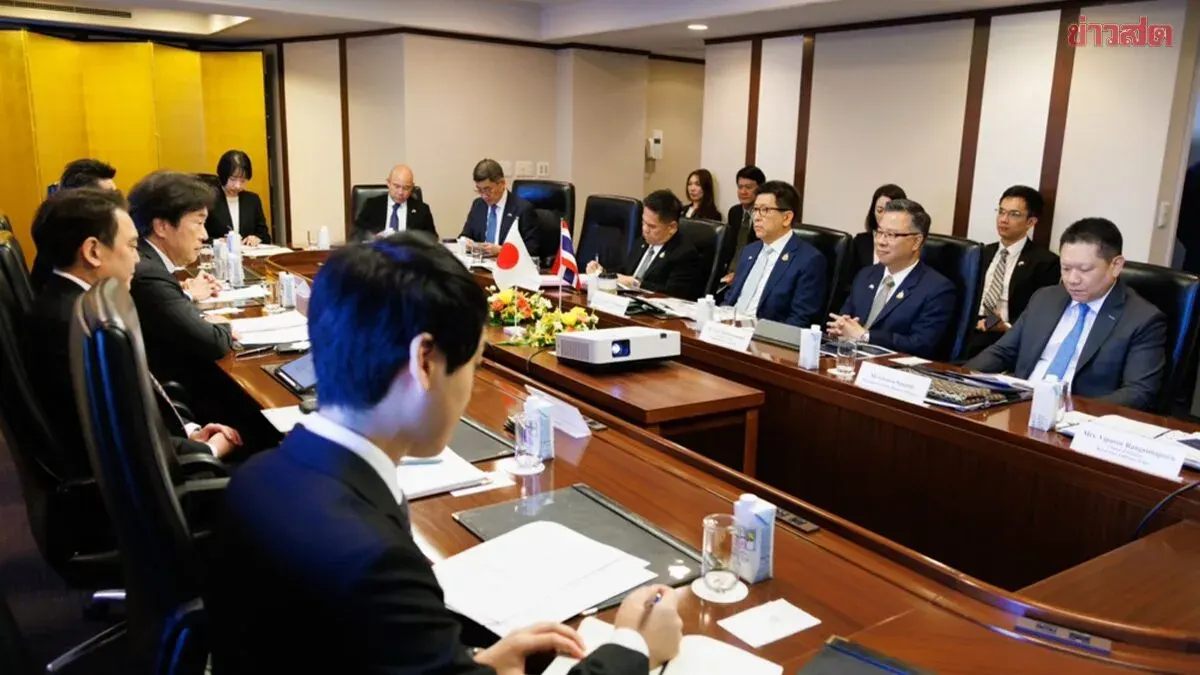
Foreign Minister Sihasak Phuangketkeow said Thailand had earlier urged Myanmar's leader Min Aung Hlaing to bring forward the bilateral working-group meeting to November 25-26. On November 24, Myanmar's working-group head will hold preliminary talks in Thailand alongside Deputy Prime Minister Yuthasak Wongwat and Natural Resources Minister Suchat Chomklin.
Sihasak said Thailand asked China to participate constructively without assigning blame. China confirmed it will cooperate academically through its institutes and Mae Fah Luang University. On November 24, the Chinese ambassador to Thailand will join the Thai-Myanmar working-group talks. At the leadership meeting, Xi personally acknowledged that Chinese private entities might be involved but stressed the Chinese government does not support any non-compliant or substandard activities, calling it a strong positive signal.
Deputy Prime Minister Yuthasak Wongwat said on November 22 he will convene a national academic brainstorming session to analyze water-filtration and sediment-trap measures, aiming to boost public confidence. The government has installed village-level nanotech water-filtration systems by NANOTEC, the Synchrotron Institute, and the Department of Science Service in at-risk areas of Chiang Rai, Chiang Mai, Fang and Mae Ai districts. This is paired with the Royal Irrigation Department's three emergency reservoirs holding 22.5 million cubic meters, and over 100,000 liters of clean water already distributed.
The Ministry of Agriculture and Cooperatives is accelerating crop, soil, and water sampling to complete an Agri-Map with red, yellow, and green zones by December 15, starting in Mae Ai and Chiang Rai. Farmers in green zones will receive GAP certification to reassure consumers, while a central online platform will continuously update water-quality and agricultural-area monitoring results.