Civil Society Urges PM to Delay Controversial Sin-Tax Bill Amendments
Civil society networks delivered a letter to Prime Minister Anutin Charnvirakul urging the delay or withdrawal of four draft laws that would shift funding from sin tax subsidies for Thai PBS, ThaiHealth, the Elderly Act, and the Sports Authority Act. They warned the Bhumjaithai Party could suffer politically and overlook workers, while the party director said Anutin is ready to listen. The submission follows a public hearing where the majority opposed the amendments.
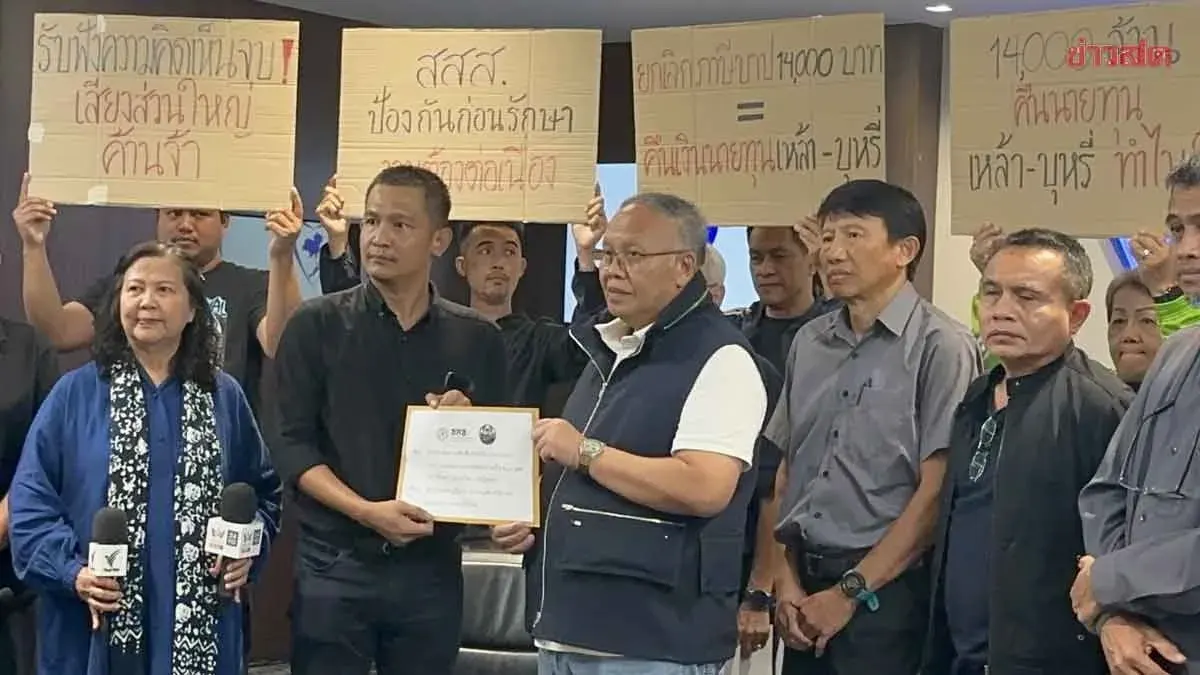
At 13:00 on 16 October 2069 at the Bhumjaithai Party headquarters, leaders of the Health Promotion Movement for the People (FKCH), the public health and media reform network for citizen rights, and health partner networks, more than sixty people, submitted a letter to Anutin Charnvirakul, who serves as Prime Minister, Minister of Interior, and leader of the Bhumjaithai Party and its executive committee. The letter calls for the withdrawal of four draft bills: amendments to the Thai PBS Act, the ThaiHealth Fund Act, the Elderly Act, and the Sports Authority Act. This follows a public hearing in which the majority expressed opposition, with Bhumjaithai Party director Siripop Dungsodsri acting as the representative to receive the letter.
Somboon Khamhang, coordinator of the public health and media reform network for citizen rights, explained that the matter has been debated within civil society, where a shared view has been formed and is being presented today. Nationwide civil society organisations share concerns that the Bhumjaithai Party's proposal to advance these four bills, even if it affects the organisations concerned, should not become a matter that undermines principle or shifts budgetary methods. They fear the party may have explanations, but from their perspective it is inevitable that organisations such as ThaiHealth or public media will have to adjust their positions.
They urged the Prime Minister and the Bhumjaithai Party to consider the issue carefully, warning that otherwise the party could suffer politically. They argued that opponents are not only those present in the room but the broader public health network that works with communities, and asked the Prime Minister to listen to additional perspectives.
Chuvit Chantarat, coordinator of the alcohol‑harm prevention network, reflected on nonprofit work that benefits everyone, noting that cherished efforts have never been rewarded and that a sudden appearance of funding from ThaiHealth does not bring wealth but causes pain whenever they are labelled as profiting from sin tax. He asked the party director to tell government spokespeople not to trample on their efforts, to see them as partners working with the state during floods, COVID‑19, and other crises, and not to push them aside.
He added that the government may need to revise or reconsider its approach genuinely, to respect civil society, especially as the state faces crises it cannot manage alone. Without an active citizen sector joining hands with the state, overcoming such challenges will be difficult, so the government should think carefully and avoid damaging the limited funds that exist, lest citizens be left with no options.
Theera Wacharaprani, director of the Office of the Network of Alcohol‑Free Organisations, spoke about the ThaiHealth Fund, which is financed by excise taxes and which the government says is not being abolished but merely changing its budgetary use. He argued that if the fund were eliminated, the health and social systems would face greater problems in the future. He maintained that the fund helps fill gaps and strengthen state capacity, and appealed for the matter to be studied and reviewed, noting that the government’s reference to financial discipline under Section 26 of the relevant Act predates the current debate and therefore should not be cited as justification.