Thai PBS Staff Oppose Bhumjaithai Media Law Amendment
Thai PBS staff have petitioned House and Senate committees to block a Bhumjaithai‑proposed amendment to the public broadcasting law, fearing it would let alcohol and tobacco interests influence the broadcaster. They argue that Thai PBS, financed by sin‑tax revenue to stay independent, must remain free from capital interference and warn that the change could let firms avoid paying billions in fees. A parliamentary committee will review the matter on 22 October.
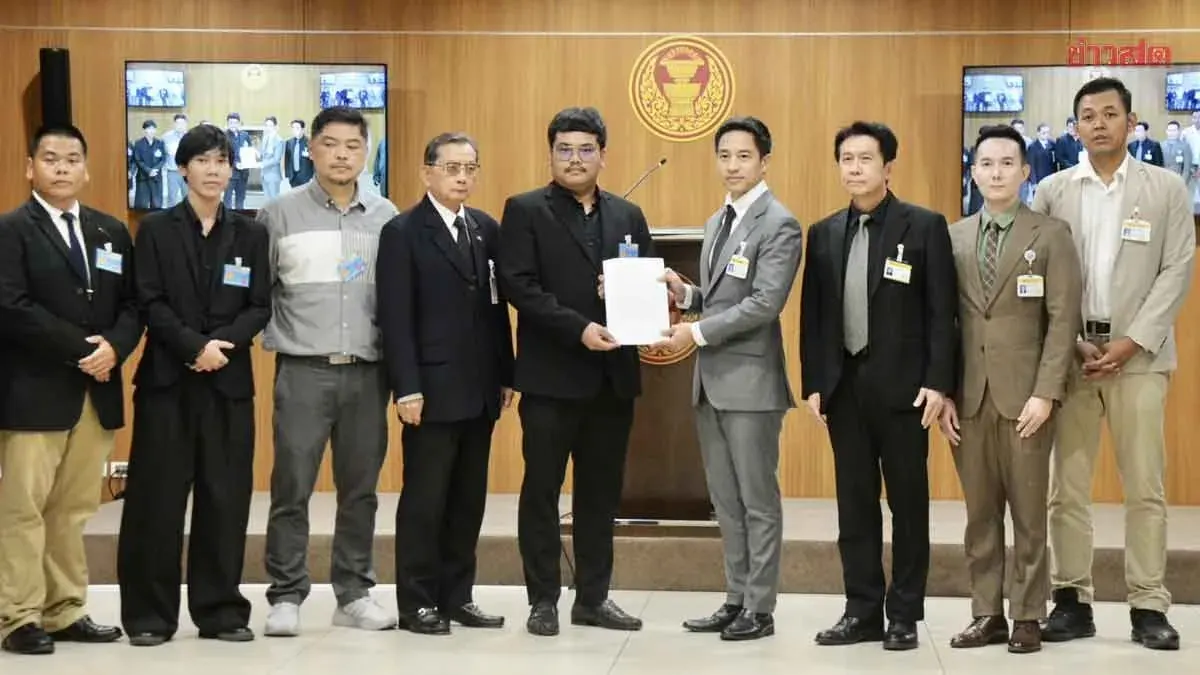
Thai PBS staff appealed to the House and Senate committees on political development, urging protection of public media from interference after the Bhumjaithai Party proposed amendments to the Thai PBS Broadcasting Act, citing financial discipline rules and questioning whether the changes would ease burdens for alcohol and tobacco capital. At 1:00 p.m. on 7 October 2026 at Parliament, Natthawut Uppa, representative of the Thai PBS Viewers and Listeners Council, led a delegation to submit a petition to People's Party MP Khachamon Nun-an, chair of the House Committee on Political Development, Media, and Public Participation, and Senator Naraset Prachakorn, chair of the Senate counterpart committee. They opposed the bill introduced by Bhumjaithai list MP Supachai Jaisamut, arguing that Thai PBS, funded by 'sin taxes' to avoid outside influence, should remain independent and that altering its financing could allow former sponsors to avoid payments.
Natthawut said the move aims to uphold the principle of free, uninfluenced public media, noting that Thai PBS's revenue comes from surplus taxes on alcohol and tobacco, not the annual budget, and questioned why the burden on those producers should be reduced while returning to a limited annual budget. He warned that if the act is amended, a period would require new ministerial regulations; without clear rules, companies that previously paid 14 billion baht might avoid payment altogether during the regulatory transition.
He pointed out that NBTV, a state‑run channel, receives 2.4 billion baht annually, while Thai PBS seeks to demonstrate how it serves the public interest of small‑scale audiences, stressing that the organization is subject to state audits, internal reviews, and annual reporting to parliament, and that it must adapt to earn trust in budget use. He stressed that financial discipline and Thai PBS's operations must not be conflated, and that public media must be protected from capital interference.
People's Party MP Khachamon Nun-an said the committee will place the matter on its agenda for 22 October, affirming that media must have freedom and a public service role in Thailand, warning of attempts to undermine media independence, and promising to examine both financial discipline and the future of Thai PBS, not because the broadcaster is flawless but to give it a chance to reform into an independent, cost‑effective public medium.
Bangkok MP Cholanat Khoeykul, spokesperson for the committee, observed that if the government claims changing Thai PBS's funding source aims for oversight and transparency, it should clarify the rationale and assess whether the move seeks to control public media, stressing this is merely an observation, not a conclusion.
Senator Naraset Prachakorn said he will bring the issue to his committee for consideration.