Coordinated Attacks Hit Three Southern Provinces Amid Peace Talk Revival
Coordinated attacks across Songkhla, Yala, and Satun provinces have injured students and targeted state infrastructure, marking a significant expansion into previously unaffected districts of Satun. Academics link the timing to the imminent revival of Malaysian-facilitated peace talks and warn that the violence reflects systematic planning. They also criticize the Thai government's lack of policy continuity and inter-agency coordination, which have repeatedly stalled the peace process whenever administrations change.
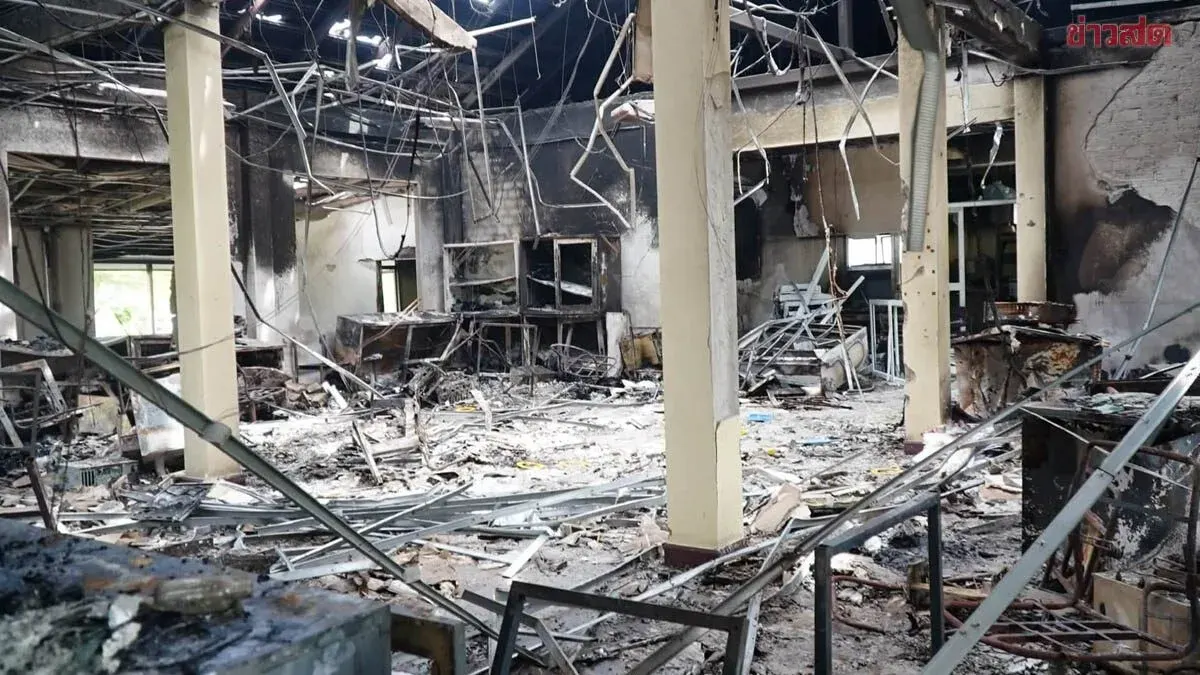
Academics analyze a new wave of coordinated unrest across Songkhla, Yala, and Satun provinces, noting its timing coincides with efforts to revive the southern border peace dialogue. Local scholars Assoc. Prof. Samart and Assoc. Prof. Narong offer perspectives on the situation.
Assoc. Prof. Samart Thongphue, Faculty of Political Science, Prince of Songkla University Pattani Campus, assesses that the latest incidents bear the hallmarks of political signaling rather than an intent to cause mass loss of life. However, the injury of schoolchildren turns that signal into an unacceptable error. He underscores the systematic pattern: near-simultaneous attacks across multiple provinces reflecting planning and coordination. Most targets were state infrastructure and symbols. Critically, the violence spread to Khuan Khanun and Thung Wa districts in Satun — areas not historically prone to unrest.
Samart also draws attention to the timing, which aligns with the pre-revival phase of the southern peace process following Malaysia's appointment of Gen. Dato' Ahmad Norihan Bin Jalal as new facilitator. The Malaysian facilitator has already visited Thailand to meet the Secretary-General of the National Security Council to discuss the dialogue framework, with talks expected to commence after the Malaysian prime minister visits Thailand in early December 2026.
Regarding the trend of geographic expansion, further incidents in additional areas remain possible but are unlikely to occur frequently or spread continuously. They may instead take the form of sporadic, symbolic attacks intended to send messages or demonstrate capability rather than widen the conflict.
On the state's response, Samart sees both progress and persistent problems. The push toward peace dialogue is correct because the conflict cannot be resolved by security measures alone. However, the core problem is the lack of continuity in the process and the absence of a unified vision within the government itself. "The problem isn't that we lack policy — we have policy. The problem is that policy never continues long enough to yield results. Every time the government changes, it's like starting from zero again. Different people, different thinking, different actions, causing a process that should be continuous to stall repeatedly."
Samart also observes that integration among relevant agencies remains insufficient. Even Wan Muhamad Noor Matha, in his capacity as advisor to the prime minister and a senior local politician, has acknowledged limitations in inter-agency coordination, with agencies operating separately and possibly misjudging the situation.
Meanwhile, within the government itself there are voices reflecting the need for policy review. Notably, Deputy Prime Minister and Foreign Minister Sehsek Phuangketkeow has expressed concern over the situation and stated that southern border policy requires comprehensive review. These factors indicate the problem extends beyond mere implementation.