CPF and Bosch Extend AI‑Driven Food Production Partnership
We need to produce a short summary 1-2 sentences, target 120-220 characters, never more than 240. Must be in English only. Lead with what happened, then the single most important detail (who, where, or when). One detail, not all of them. No
Sustainable food production requires both a deep understanding of manufacturing processes and technology that works in practice. Partnerships between food producers and technology firms bring new knowledge and innovation to factories, enabling efficient use of energy and resources while cutting greenhouse‑gas emissions without compromising quality or safety. Consumers benefit from healthier food and the confidence that it comes from environmentally responsible production.
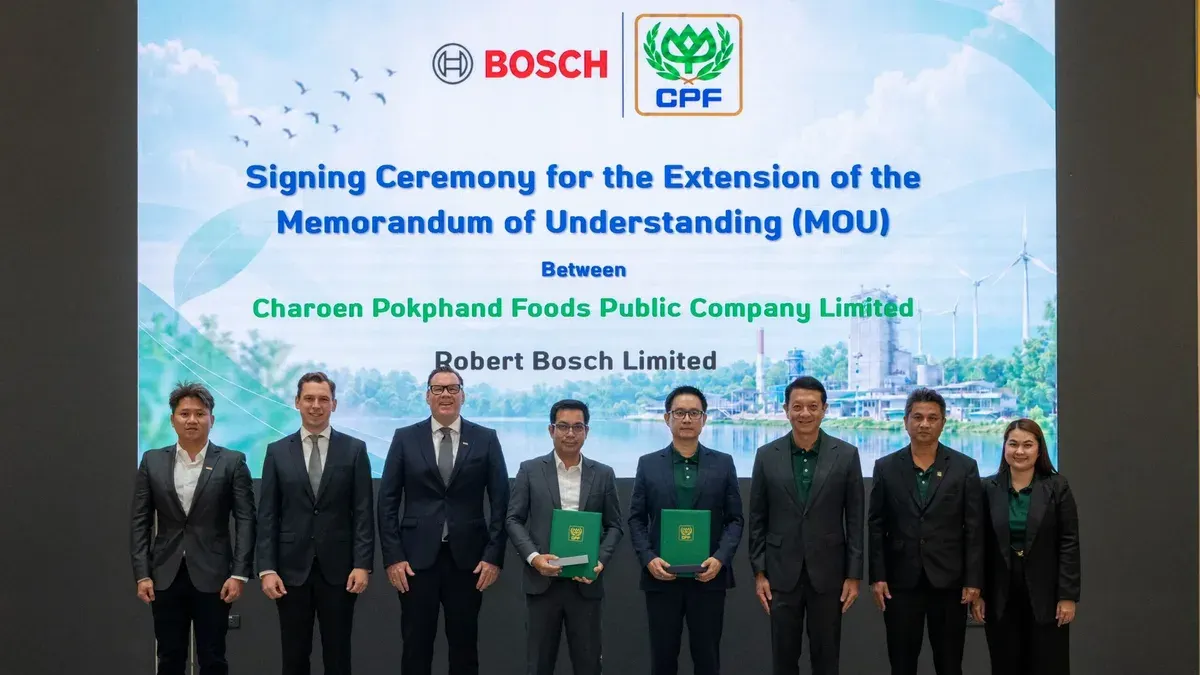
Charoen Pokphand Foods Public Company Limited (CPF) therefore partnered with Robert Bosch Ltd. to bring Bosch’s engineering, heat‑transfer, data, and artificial‑intelligence expertise into CPF’s production processes, aiming to increase energy efficiency, reduce emissions, and develop innovations that support sustainability in the food industry.
Both companies have signed a Phase 2 memorandum of understanding (MoU) extending their collaboration for another two years to further develop energy‑saving technologies for the food sector. This moves from improving steam‑boiler systems and adopting cleaner fuels to analyzing real‑time machine operation data with digital technology and AI, enabling more precise energy management and production planning.
Building on the first phase’s success, the initial CPF‑Bosch collaboration introduced new technologies that enhanced the efficiency of steam‑boiler systems—a critical component in food‑processing plants—and explored switching from fossil fuels to cleaner alternatives. Those efforts reduced fuel costs and greenhouse‑gas emissions, with the pilot plant achieving more than a 97 % increase in energy efficiency.
The second phase will use real‑time digital data linking of machinery and AI analytics to pinpoint where energy can be saved, detect abnormal conditions, and schedule appropriate maintenance.
Dr. Athapon Phetphulai, Director of Sustainable Engineering and Environment at CPF, said CPF aims to produce food that is good for body and mind, high quality and safe, while caring for society and the environment. Achieving these goals requires partners with the right expertise to develop technologies suited to real‑world food production.
Bosch’s engineering and technology expertise will help CPF analyze real‑world usage data, identify high‑energy‑use points, and create solutions tailored to CPF’s processes, improving operational efficiency, using energy wisely, and lowering environmental impact while maintaining product quality for consumers.
"CPF has expertise in the food industry, while Bosch is a leader in steam‑boiler technology. Both companies share policies aimed at reducing carbon emissions in the same direction. This partnership combines our expertise and technology to cut greenhouse‑gas emissions in food production, and we hope it can serve as a model for other industries," Dr. Athapon said.
Sutham Kasetkaewkeaw, Country Head – Bosch Industrial Heat at Robert Bosch Ltd., added that Bosch combines boiler‑design expertise with energy‑efficiency and clean‑steam‑production technologies to help factories improve energy use while cutting emissions. Bosch solutions have been installed and are now in use.