Defense Ministry: HIMARS Purchase Is Strategic, Not Trade Deal
The Thai Defense Ministry clarified that the potential purchase of U.S.-made HIMARS rocket systems is a strategic national security decision, not linked to ongoing trade or tax negotiations with Washington. The $123 million proposal remains in early stages and still requires U.S. Congressional approval, a process that previously blocked Thailand's bid for F-35 fighters. Officials stressed that arms procurement follows long-standing military-to-military cooperation and is distinct from commercial matters.
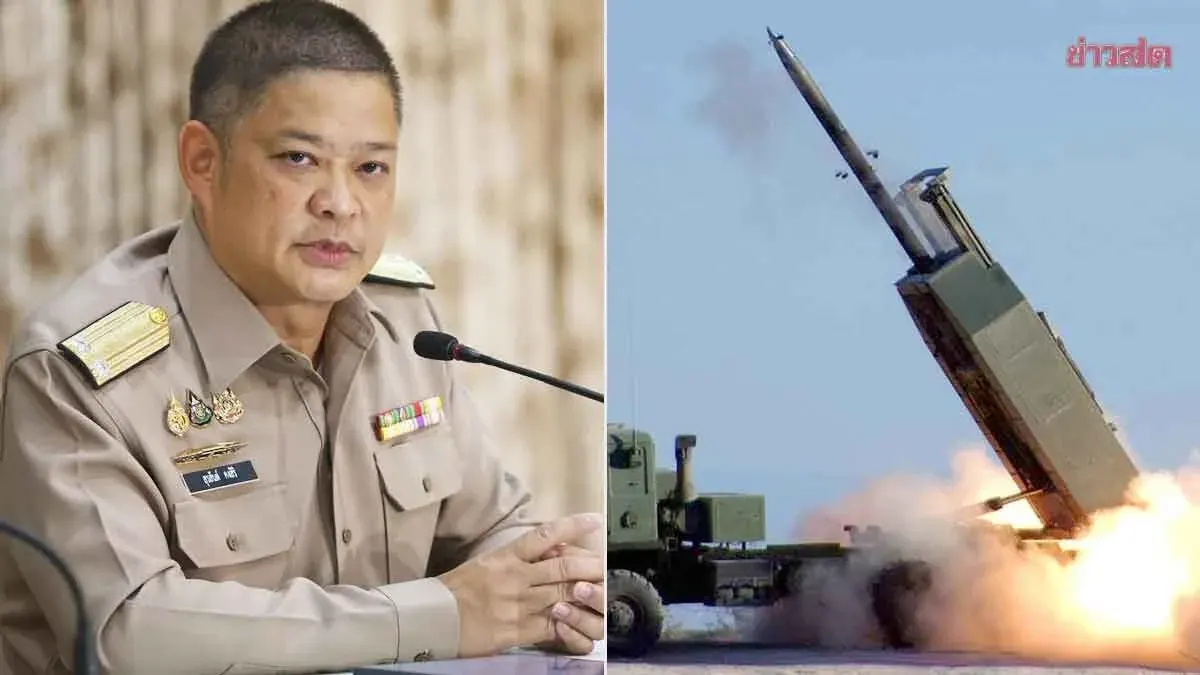
The Defense Ministry spokesperson reiterated that the plan to procure HIMARS rocket systems from the United States is a matter of national security strategy, unrelated to trade deals or tax measures. The process still has many steps to go. He noted that Thailand and the U.S. have a long-standing military relationship, and any arms sales to any country are conducted transparently.
On November 20, 2026, Pol. Lt. Gen. Surasak Khamkiri, Defense Ministry spokesman, addressed reports citing the White House that Thailand is preparing to purchase the HIMARS rocket system from the U.S. for a maximum value of $123 million under a trade agreement framework. He said details should be sought from the Royal Thai Army, but overall, the procurement of weapons and military equipment is about readiness to support military operations, which is already the duty of the armed forces. It involves consideration and assessment based on necessity, set as annual or long-term plans to align with the strategies of all service branches and the Defense Ministry.
The spokesman added that the procurement process is still a long way off because it is only a proposal to the U.S., and the U.S. has its own procedures, which may require Congressional approval before allowing any country to purchase U.S.-produced military equipment. For example, Thailand attempted to propose purchasing F-35 fighter jets but did not pass the U.S. Congress because such equipment has high capabilities and requires extensive processes, so it cannot be guaranteed that the purchase will ultimately happen.
The entire process operates through international cooperation, whether military-to-military or government-to-government, and the U.S. model of arms sales to any country is already conducted openly.
The spokesman also addressed observations linking the HIMARS procurement to a trade deal on U.S. tax measures, saying they are unlikely to be related because security and other issues cannot be linked. The security of people's lives and national defense cannot be tied to trade issues. He acknowledged that the timing may coincide with government discussions on tax measures with the U.S., but emphasized they are not connected. However, he accepted that in the security dimension, Thailand and the U.S. have had a long relationship, including joint exercises and equipment procurement from the U.S., such as the long-running, large-scale Cobra Gold exercises.
Therefore, it is possible the U.S. may want to support high-capability equipment to enhance Thailand's military capabilities, consistent with the U.S. concept of enabling allies and partners to be self-reliant and ready to share technology, which aligns with Thailand's defense industry development.
Thus, he reiterated that the military's arms procurement considers strategy and the concept of supporting the defense industry, and the procurement approach is a matter of national security, separate from trade issues.