Abhisit Rejects VAT Increase to 8.5% for 2028 Budget
Democrat Party leader Abhisit Vejjajiva opposed a proposed VAT increase from 7% to 8.5% to fund Thailand's 2028 budget, calling it a last resort. He urged the government to first review tax incentives, land and inheritance taxes, and digital service tax collection, and demanded greater transparency on off-budget funds and state enterprise investments.
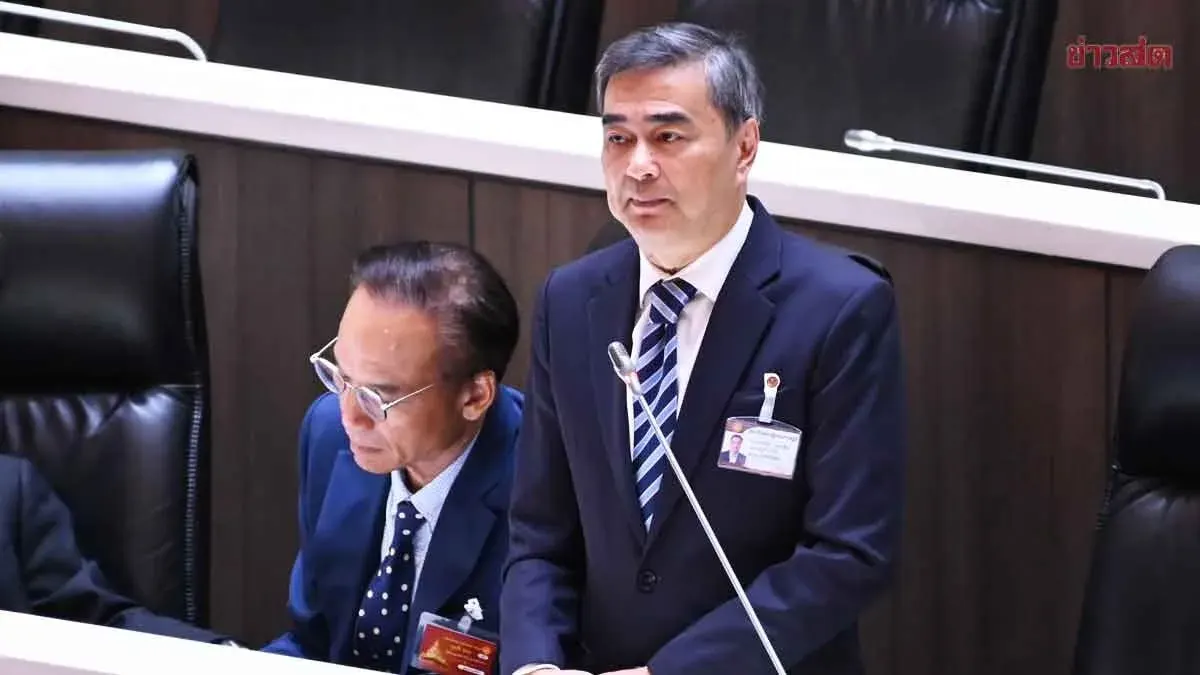
On November 20, 2026, the House of Representatives convened to consider a motion requesting opinions before drafting the 2028 fiscal year budget. At 10:55 AM, party-list MP and Democrat leader Abhisit Vejjajiva addressed the chamber, stating that the 2028 budget is exceptional because it is not being crafted under normal circumstances. He reminded the house that his party has called the current budget a "budget without a future," and that Thailand cannot continue its current fiscal trajectory.
Abhisit argued the government must consult broadly on state revenue, including the Budget Bureau, Finance Ministry, other agencies, and the public. He noted the Budget Bureau appears to be basing next year's budget on an assumed VAT rate of 8.5% — up from 7% — which would account for roughly 100 billion baht in projected revenue. While not opposing revenue increases in principle, Abhisit insisted the government should first review revenue lost through investment promotion tax breaks, land and inheritance taxes, and wealth or capital taxation. He also questioned whether the policy of cutting corporate tax rates has achieved its intended results.
"Raising VAT to 8.5% should be a last resort, not the first option for balancing the budget," Abhisit said. He lamented low collection of digital service taxes — a fast-growing sector — despite an agreement with the United States, and called for public debate on how to raise revenue before defaulting to a VAT hike. He suggested any VAT increase be earmarked for elderly care and asked whether it is time to amend the Fiscal Discipline Act on tax avoidance.
Abhisit also demanded transparency on state enterprise investments, off-budget funds, and money held by local administrative organizations. He asked whether such investments should remain off-budget, become state enterprise responsibilities, or shift to public-private partnerships. He urged the government to clarify what laws or regulations must change to unlock reserve funds, noting past attempts to access local reserves have stalled.