Democrat MP Accuses Government of Dodging No-Confidence Debate
The user wants a short summary (1-2 sentences, 120-220 characters, max 240) of the provided article. The article is about Democrat MP Satit Wongnongtoey accusing the Thai government of dodging a no-confidence debate by imposing conditions a
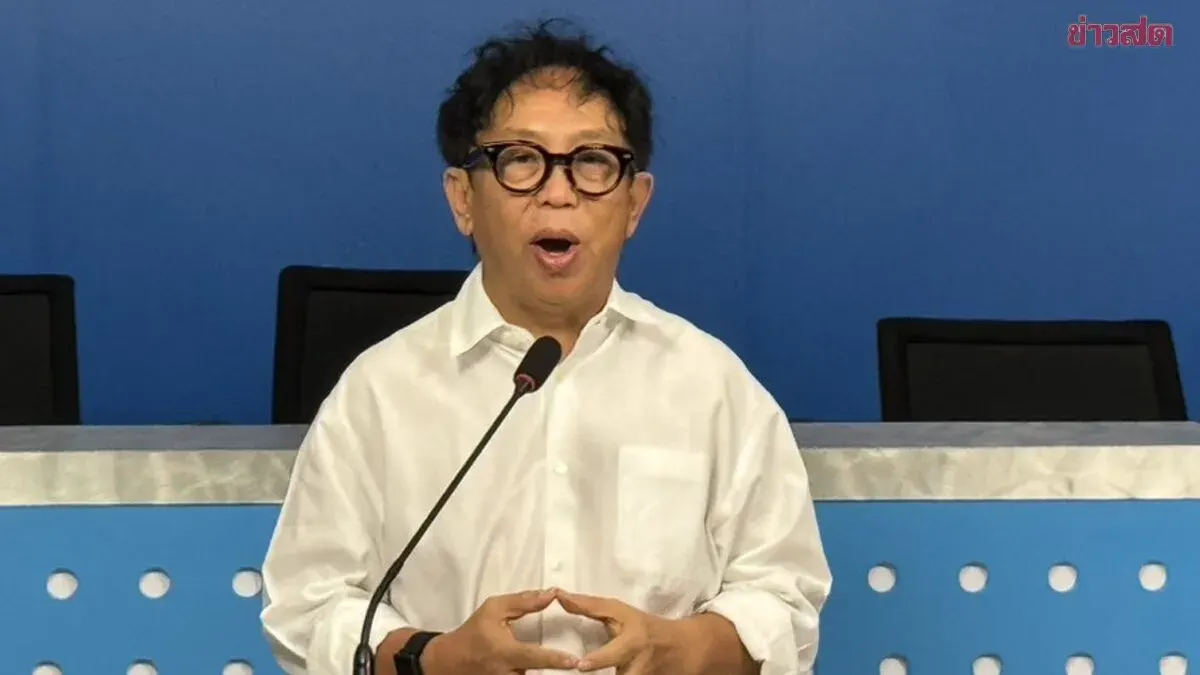
On October 25, 2024, Satit Wongnongtoey, a party-list MP and deputy leader of the Democrat Party, addressed the approach to the no-confidence debate, stating that in his 31 years in parliament he has never encountered a government placing so many conditions on setting a debate date. Even during the Thaksin Shinawatra administration in 2005, when the government held its largest majority, there were no such obstacles to the no-confidence process, because all sides understood it as a constitutional mechanism for legislative oversight of the executive and a fundamental check-and-balance in a democratic system.
"Every government has daily work, but when it comes to the oversight mechanism of a no-confidence debate, it must allocate time for parliament to perform its scrutiny duty," Satit said. "This government views the framework as quite narrow and tries to make negotiations difficult, for reasons unknown."
Satit added that the government's condition to debate for three days in the last week of October forced the opposition to approach House Speaker Sopon Sarakham. Fortunately, the speaker understands the legislature's role in checking the executive and has not yet finalized the agenda. However, concern remains because the prime minister claims to have no free time, which is unacceptable in a democratic system. The government must accept the constitutional scrutiny process; refusal constitutes a constitutional violation and a serious breach of political ethics, especially given the excessively limited framework.
Asked whether the debate could occur before the session ends on December 22, Satit replied that it is not a matter of opportunity but of constitutional mandate — a process that must take place in this session, with no alternative. "A year has 365 days; will the government not find time for parliament to conduct scrutiny for five, six, or seven days? You have time to travel to provinces, attend birthdays, and countless other events. Every government is busy, but there is a constitutional obligation to accept scrutiny and allocate time. The government has no choice; it must make time."
Satit further noted that after discussions with the House speaker, if the late-October window passes, they could agree on four debate days plus one voting day, and weekend sessions would not be an obstacle. The opposition has even conceded that on days when any of the 18 ministers has duties, that minister can be excused from the debate. Therefore, the time offered by the opposition is very generous. The government should not use its authority to claim unavailability; with seven weeks remaining until the session ends from November onward, the period after the APEC summit in China in late November is feasible. Specifically, November 7-11 appears workable for the government to open debate, yet for unknown reasons it refuses to debate during that period.