Democrat Party Calls for Five-Day No-Confidence Debate
The Democrat Party demands that the upcoming no-confidence debate against 18 ministers last five days, criticising the government's push to limit it to three days. Deputy leader Sathit Wongnongtoey argued that the government has no right to dictate parliamentary schedules and urged whips to reach an agreement next week. He warned that shortening the debate would undermine its constitutional role as a check on government and could be unconstitutional.
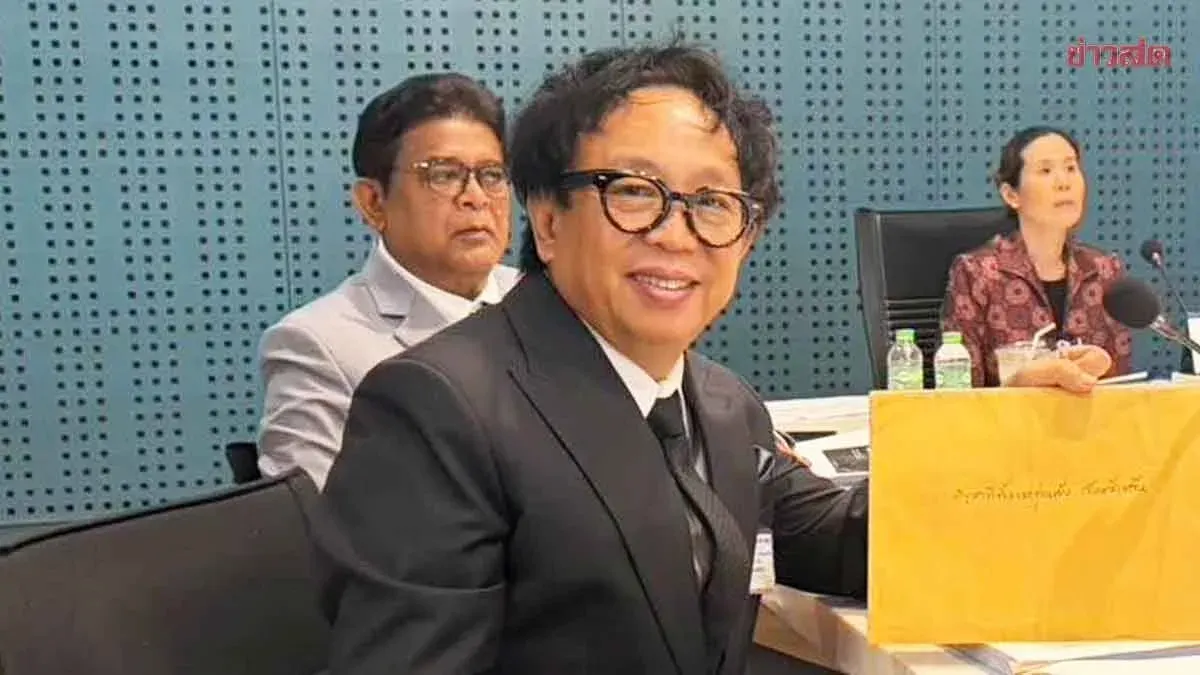
The Democrat Party reiterated that the no-confidence debate involving 18 ministers should span five days, with roughly one day allocated for every four ministers, and warned that the opposition figures nicknamed ‘Noo-Nok’ would face the most intense questioning. Deputy party leader Sathit Wongnongtoey attacked the government for attempting to confine the debate to just three days, asserting that it has no authority to manipulate the parliamentary timetable. He called for a meeting of the government and opposition whips next week to seek a consensus.
Speaking on 15 October 2026, Sathit said the government had proposed holding the no-confidence debate from 27 to 29 October, with a vote on 30 October. He recalled that the government and opposition whips had previously met a month or more before submitting the motion and had agreed to start the debate on 26 October and conclude it within a week. However, because the motion had not yet been filed, the number of ministers to be debated was still unknown. After the motion naming 18 ministers was lodged, no joint whip meeting had taken place. On the day the motion was submitted, he told House Speaker Sophon Sarum that five days would be suitable, based on two considerations: first, an average of four ministers per day allows sufficient time, especially given that the prime minister’s own interrogation tends to be lengthy; second, during the four no-confidence debates held under former Prime Minister Prayut Chan-o-cha, fewer ministers were implicated and the proceedings lasted four days.
‘Therefore, I believe five days is the appropriate length,’ Sathit said. ‘It is puzzling that the government whip and the prime minister suddenly insist on only three days, raising doubts about who is actually scrutinising whom—are we questioning the government, or is the government trying to question the opposition? The government does not even know how many speakers will address each of the 18 ministers.’ He added that, by convention, the government does not dictate the duration of a no-confidence debate, which is an opposition motion and a rare annual tool for holding power to account. Limiting the debate to two or three days would constrain the opposition’s oversight role and could violate the constitution.
When asked whether he would file a protest with the Speaker if the government persisted with a three‑day schedule, Sathit said he would not, noting that the Speaker’s duty is to mediate and set the timetable according to the merits of the opposition’s motion—such as how many ministers are involved and the breadth of the issues. Restricting the debate would impede the opposition’s fact‑finding function and might be unconstitutional. He dismissed the government’s possible claim of insufficient time, arguing that the no‑confidence debate is not contingent on the government’s availability; if the administration refuses to participate, the constitution loses its purpose. The government bears responsibility to parliament and must accept the procedural rules established by the constitution, including the no‑confidence debate.