Deputy PM Leads Cleanup Effort in Nan After Floods Recede
Deputy PM Yossakon Wongsuwan joined cleanup efforts in Nan after floods receded, leading volunteers and military personnel to remove silt and mud while the government prepares relief compensation and long-term water management strategies fo
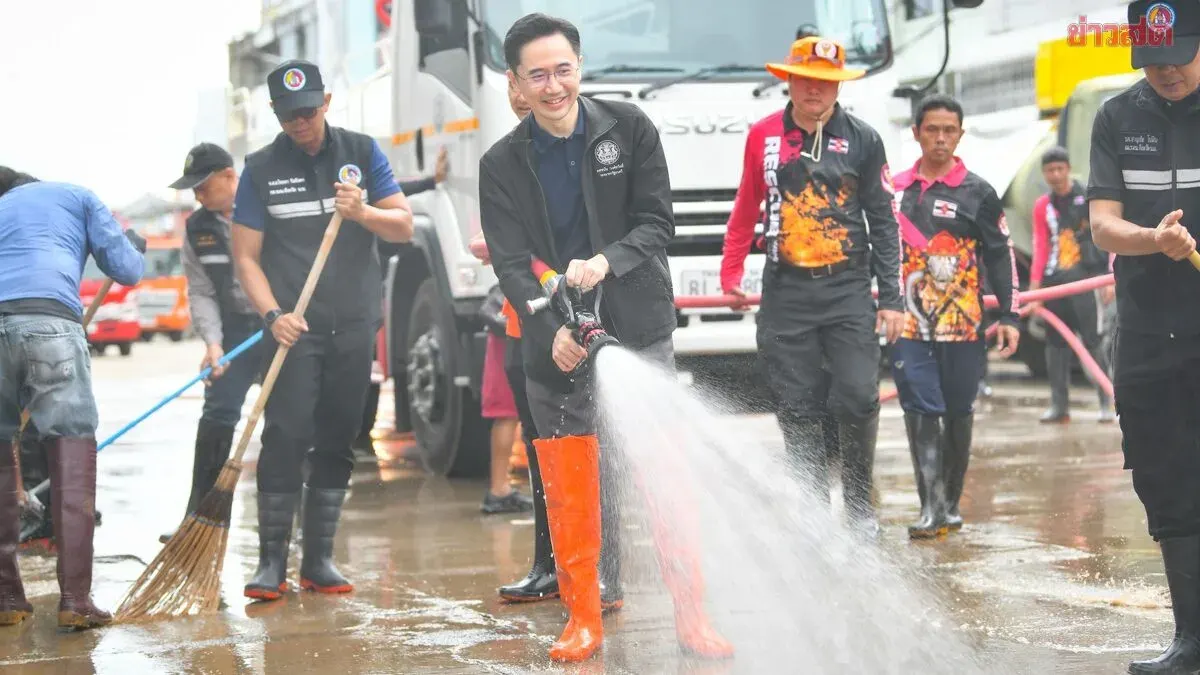
On August 21, Deputy Prime Minister and Minister of Higher Education, Science, Research and Innovation Yossakon Wongsuwan, acting as chair of the committee overseeing flood and drought prevention in northern Thailand, visited Nan municipality's Sumanthewaraj Road to oversee city recovery efforts. He participated in cleaning streets and homes while encouraging volunteers and civil society groups supporting the restoration work. High-pressure water trucks from the Nan Provincial Administration Organization, Royal Irrigation Department, and military personnel supported the cleaning operation to wash away silt and mud deposits. Military volunteers, municipal officials, and Nan residents worked together throughout the cleanup effort. Deputy PM Yossakon personally wielded a high-pressure hose to remove stubborn mud deposits alongside government staff and volunteers. The Nan municipality mayor thanked the government representatives for maintaining a command center in the area over the past three to four days through the recovery phase.
Yossakon revealed that Prime Minister Anuthim Charnvirakul had recently called to check on the situation and discussed plans moving forward. While today's focus remained on area restoration, the government will soon shift toward relief compensation measures for flood victims. Although floodwaters persisted only briefly, they carried massive amounts of silt causing extensive damage, requiring comprehensive measures for farmers and residents needing home repairs through multi-ministry coordination.
Yossakon stated that the Prime Minister intends to visit Nan province this weekend to specifically address relief and compensation. If the Finance Ministry and Comptroller General's Department can systematize collaboration, documentation steps and timelines can be reduced, allowing residents to receive aid quickly and resume normal life and economic recovery as soon as possible.
When asked about long-term flood prevention plans for Nan's economic zone, Yossakon explained that the Irrigation Department and provincial authorities have already proposed strategies. The key principle involves establishing water retention areas at various points to manage water flowing down from higher elevations through reservoirs, catch basins, and small weirs before water reaches the town center.
The plan also emphasizes applying technology for early warning systems by upgrading from geographic information systems to digital twin technology, partnering with the private sector to analyze remote sensing station data from multiple locations. This will enable precise water-level alerts through mobile applications, allowing residents to see specific data for different terrain elevations in their areas.