Deputy PM Pledges State Support for Private Sector Tech Innovation
Deputy Prime Minister Yoschanan Wongsawat unveiled a national strategy to position Thailand as a technology creator rather than follower, pledging full government support for private sector innovation in AI, science, and deep tech. Speaking at the National Chamber of Commerce seminar in Chiang Rai, he outlined plans to overhaul education toward producing job creators, convert work experience into academic credentials, and leverage university and science park networks to boost competitiveness across agriculture, medicine, and precision engineering.
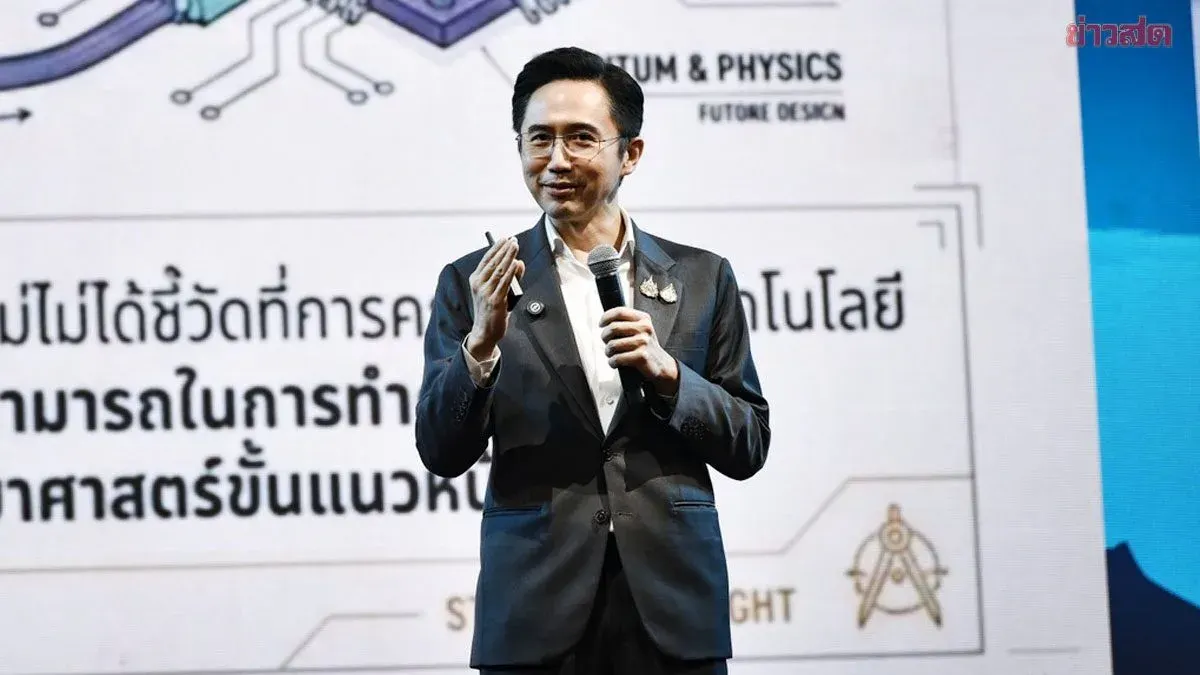
Deputy Prime Minister Yoschanan Wongsawat declared that the Ministry of Higher Education, Science, Research and Innovation (MHESI) will act as a tailwind supporting the private sector to develop science and technology in Thailand, leveraging AI to unlock the potential of Thais, transforming them from job seekers into job creators. On November 14, 2026, at the Chiang Rai Rajabhat University auditorium in Chiang Rai province, Deputy Prime Minister and Minister of Higher Education, Science, Research and Innovation Yoschanan Wongsawat delivered a special keynote address at the 44th National Chamber of Commerce Seminar on the topic "Unlocking New Growth: New Potential for Growth," projecting national strategies and sending an important signal of cooperation that the government is ready to join hands and support the private sector to weather the crisis of disruptive technology together.
Yoschanan stated that amid these changes lies a massive opportunity if Thailand can access and develop science and technology on its own, urging the business sector to set long-term goals together. To reinforce collaboration with the private sector, MHESI is bringing ready-to-use innovation and technology assets — from food irradiation technology that aids agricultural exports, to various quality testing innovations, to product processing technologies — to help create added value for businesses. The ministry will draw knowledge from universities and the nationwide Science Park network as a primary support force for entrepreneurs and the private sector at all levels, enabling them to compete and grow strongly.
"Imagine 20 years from now — which Thai-invented or developed technologies will the world rely on? This will transform us from followers into leaders. Compared to many countries, Thailand has ready resources in both human capital and technology — we can act immediately," Yoschanan said.
He continued that a key goal is overhauling the old education system to shift the paradigm from producing graduates as mere job seekers to job creators who can meet future labor market demands. "We should create people who are Job Creators — this term holds immense value. When trends change, these individuals will create new jobs, build new economies from their work. Our startups won't survive on single individuals alone; factories and farmers will link up, creating economies of around one or two thousand people."
MHESI is also preparing mechanisms to assess real work experience as skills that can be converted back into academic degrees, allowing workers at all levels to upskill for new industries without being locked into traditional academic paths.
On building new economic engines, Yoschanan emphasized the need to harness AI as a foundation to unlock Thai potential, moving beyond superficial knowledge toward deep specialization (Mastery) — whether in agriculture, medicine, DNA data application for precision food, or space technology that will underpin precision engineering for domestic medical device and automotive manufacturing.
"No one can clearly predict what the true New Growth Engine of the future will look like, but the most important thing we must do starting today is to build people ready to handle any situation. Thais are naturally gifted in one discipline, but for others we must use AI to make them proficient. We don't know what the outcome will look like..."