Industry Minister Launches Community Skills Program to Boost Local Economy
The Industry Ministry launched a skills training program in Suphan Buri teaching locals to produce herbal products and grain compresses for commercial sale, with graduates expected to earn an extra 10,000 baht monthly.
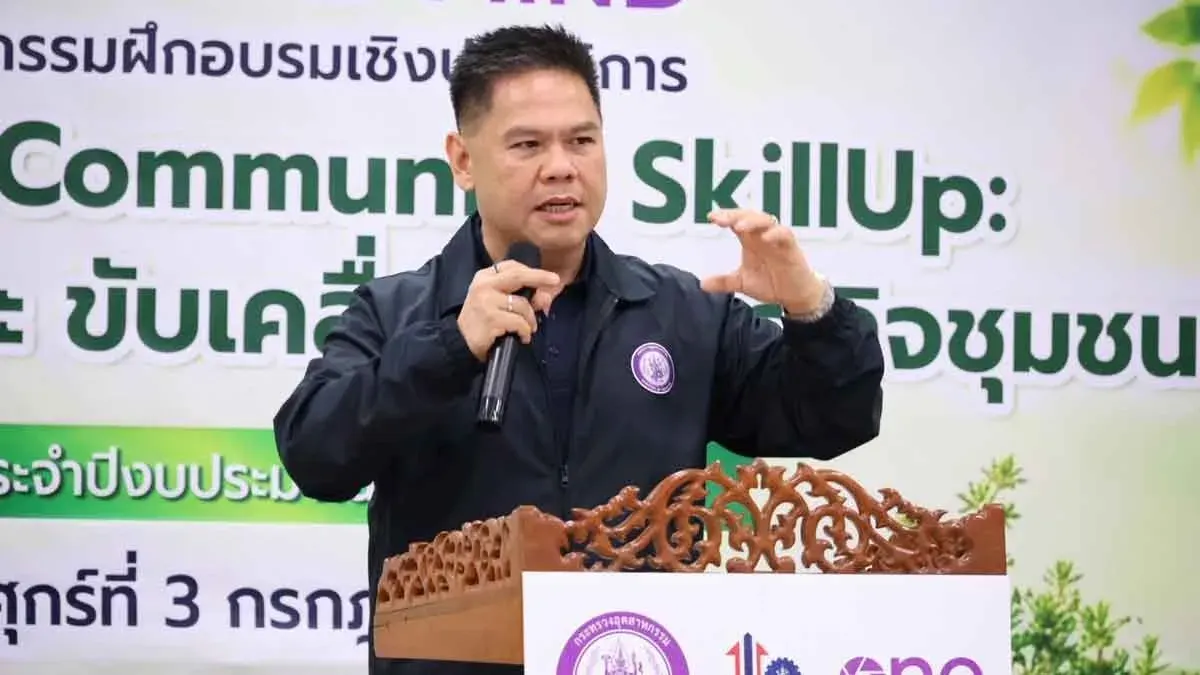
Industry Minister Weerawuth Silparachai presided over the opening of the DIPROM Community SkillUp practical training workshop in Suphan Buri province for fiscal year 2569. The program focuses on developing professional skills through three main curricula: herbal mosquito repellent and spray production, Thai-patterned herbal compress manufacturing, and high-tech grain compress production—all with commercial potential appealing to both Thai and international consumers.
The initiative aims to cultivate grassroots entrepreneurs by equipping participants with knowledge and skills for supplementary income or small business development, thereby expanding the nation's entrepreneurial base and strengthening local economies. By processing local agricultural and herbal products, the program adds value to raw materials, transforming basic commodities into higher-value products with diverse market applications and creating value across the entire production chain from farmers to retailers.
Training graduates can connect with related business sectors including Thai traditional medicine networks, massage shops, spas, health and beauty retailers, and community gift shops, expanding marketing channels and income opportunities. According to DIPROM director Nattaniya Netysupha, the 150 program participants are expected to increase their average monthly income by approximately 10,000 baht per person, or 120,000 baht annually, generating total economic value of at least 18 million baht yearly.
The program particularly benefits elderly residents, housewives, farmers, and vulnerable groups with limited formal employment access. By providing practical vocational skills, it offers community members alternative income sources, reduces unemployment, and decreases rural-to-urban migration, ultimately strengthening family and community institutions long-term.