EEC Plans 4,000-Rai New City with PPP Model
The Eastern Economic Corridor (EEC) plans to develop a 4,000-rai EEC Capital City in Chonburi's Bang Lamung district using a 50-year Public-Private Partnership model. The project aims to create a Net Zero, livable smart city targeting foreign talent and investors, with bidding expected to open in March 2027.
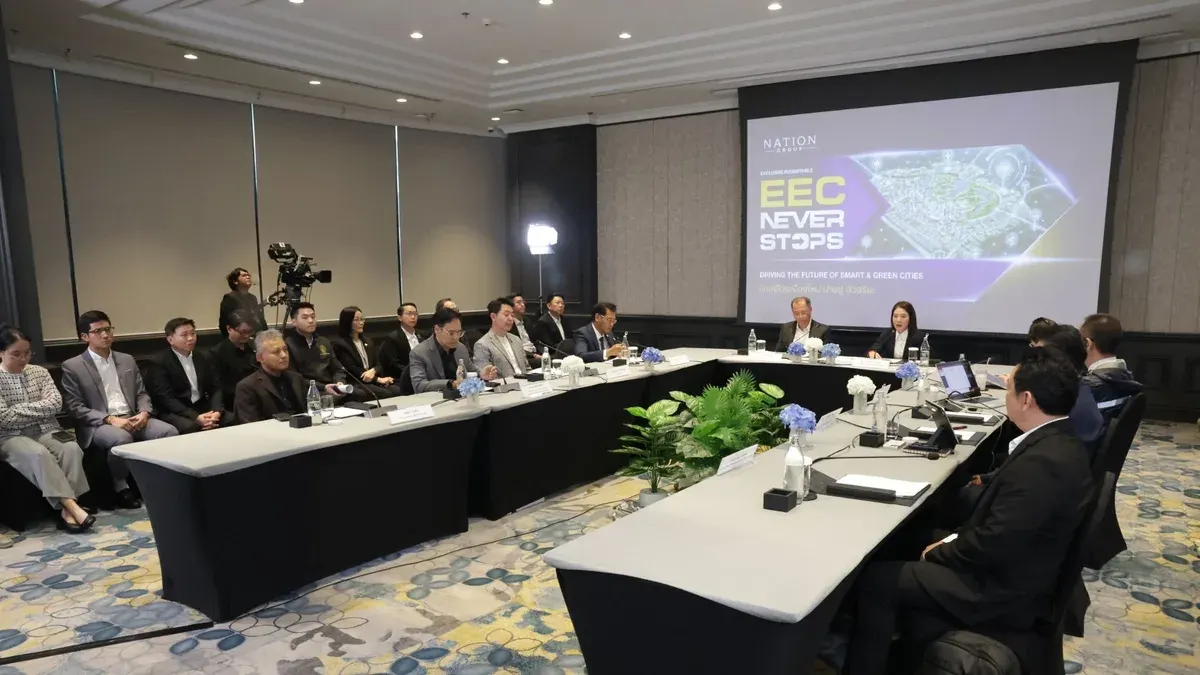
EEC Policy Committee Secretary-General Chula Sukmanop disclosed at the "Exclusive Roundtable EEC Never Stop: Driving the Future of Smart & Green Cities" seminar organized by Nation Group that the Eastern Economic Corridor's (EEC) mission extends beyond area development, infrastructure readiness, attracting target industries and modern economic activities, and providing comprehensive government services. A crucial task remains developing an international-level EEC Capital City as a prototype that is modern, livable, and conducive to quality business.
The new EEC city development aims to elevate from a Smart City to a Livable City and environmentally friendly Net Zero City, building confidence to attract high-potential personnel and foreign investors to reside and operate businesses in the area. The project covers approximately 4,000 rai in Huay Yai subdistrict, Bang Lamung district, Chonburi province, on land belonging to the Agricultural Land Reform Office (ALRO). The EEC has shifted its development approach from relying primarily on state budgets to promoting Public-Private Partnership (PPP) investment, as developing an international-standard city requires private capital, innovation, and expertise.
Chula stated that opening opportunities for private sector participation in infrastructure and utility development will enhance fundraising capacity and bring foreign know-how, while pushing the EEC to become an international model for low-carbon infrastructure and utility management. The PPP approach under the Net Zero concept has drawn international attention, including at the Net Zero conference in Barcelona, Spain.
Furthermore, the new city development emphasizes meeting new lifestyle needs under the Live, Work, Play concept, creating balance between living, working, and leisure by designing all three elements within the same area, making the city more than just a residential or business zone but a fully integrated living space.
**PPP Pushes 50-Year Concession, Auction Slated for March 2027** Regarding the timeline and investment format, Chula said the EEC has clearly separated the utility development contract from the land lease contract for real estate development to give private lessees confidence that utility systems will support urban development. He expects the first quarter of 2027, around January, to begin the process of seeking approval from the EEC Policy Committee and the Cabinet to invite private investment via PPP with a 50-year concession covering design, construction, management, and maintenance of utility systems, before opening the project bidding within March 2027.
Since city development requires continuous growth over approximately 30 years, the EEC must carefully structure returns and set operating conditions so utility operators can manage costs and generate worthwhile returns from the project's early stages while operating sustainably long-term.
Chula added further details.