Environment Minister Orders Post-Loy Krathong Cleanup, 9 Tons Collected
Thailand's Natural Resources and Environment Minister ordered a nationwide cleanup after the Loy Krathong festival, resulting in over 9 tons of waste collected across five provinces. The operation involved government agencies, volunteers, and local communities retrieving krathong and debris from rivers, canals, and coastal areas to prevent marine pollution. Collected waste included foam krathong, plastic packaging, and hazardous materials like metal fasteners, all processed through recycling and proper disposal channels.
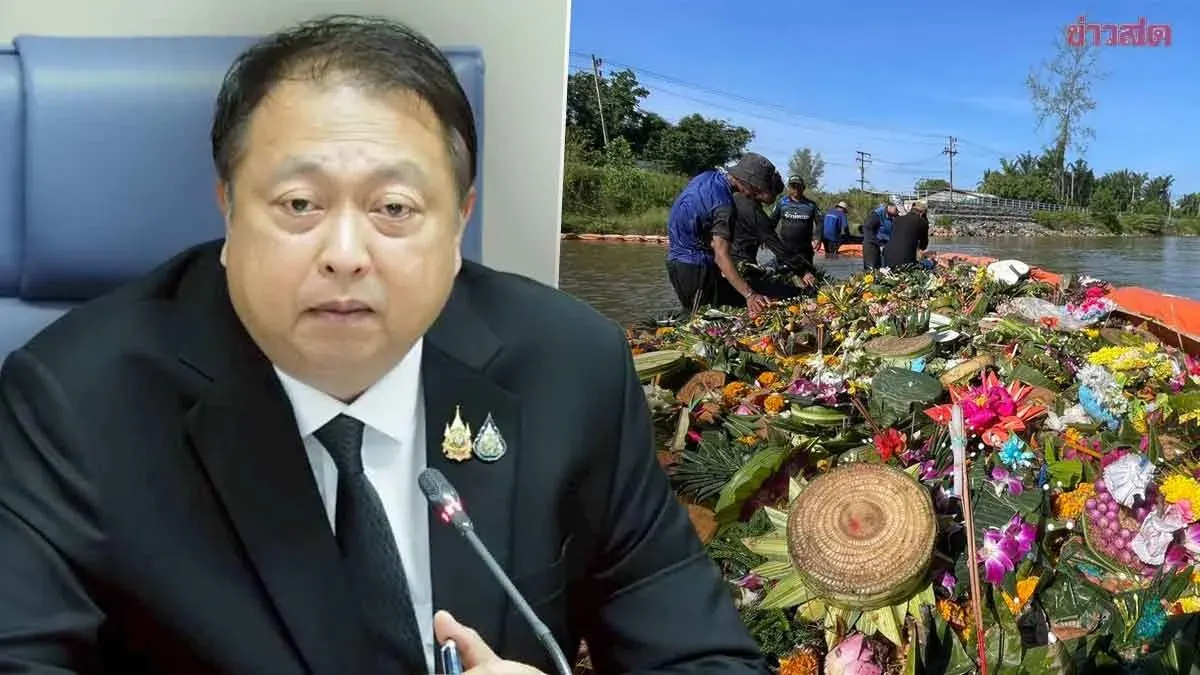
Natural Resources and Environment Minister Suthep Thaugsuban has ordered the Department of Marine and Coastal Resources to accelerate waste cleanup following the Loy Krathong festival, after more than 9 tons of trash were collected.
On November 26, 2026, Minister Suthep Thaugsuban stressed the importance of reducing waste volume and managing it systematically from source to end-point, coupled with preventing and addressing marine debris problems. After the Loy Krathong festival, large quantities of waste and krathong were found lingering in rivers and water sources, which could flow into the sea and impact marine and coastal ecosystems and resources. Authorities are therefore rushing to collect remaining debris to intercept it before it reaches the ocean, while coordinating cooperation across all sectors for proper waste management.
Deputy Permanent Secretary of the Ministry of Natural Resources and Environment, Phadet Laithong, acting as Director-General of the Department of Marine and Coastal Resources, ordered subordinate agencies to expedite collection of waste and krathong remaining after the festival. This integrated cooperation among government agencies, private sector, local administrative organizations, temples, community network partners, and marine volunteer networks conducted cleanup activities along rivers, canals, water sources, and coastal areas in Samut Prakan, Rayong, Phang Nga, Ranong, and Pattani provinces, collecting a total of 9,060 kilograms, or over 9 tons.
Operations covered boat-based waste collection, retrieval of krathong from water sources, and deployment of trash boom barriers to trap debris before it flows into the sea. Waste included krathong made from natural materials and foam krathong, along with plastic waste, food packaging, beverage bottles, and leftover krathong construction materials. In Bang Muang Canal, Phang Nga, 3,029 krathong were collected — 2,950 natural material and 79 foam — weighing 1,735 kilograms total. Along the Pattani River, 2,975 kilograms of waste were collected, mostly biodegradable organic waste, though foam krathong were still found along with nails, wire, and metal pins used as fasteners in krathong construction, posing hazards to workers and aquatic animals.
Collected waste was sorted, weighed, and recorded according to the International Coastal Cleanup (ICC) data protocol before being handed to relevant agencies for appropriate processing — recycling, bio-fertilizer production, and proper disposal following academic principles — to ensure comprehensive waste management.