Floods Cut Thai Car Output 35%; EV Sales Surge 94%
Severe flooding in September–October cut Thailand's October auto production by 35% and exports by 34%, but domestic sales rose 9% as buyers rushed to purchase electric vehicles before a planned excise tax hike in January 2027. The Federation of Thai Industries says factories have restarted and still targets 1.45 million units for the full year.
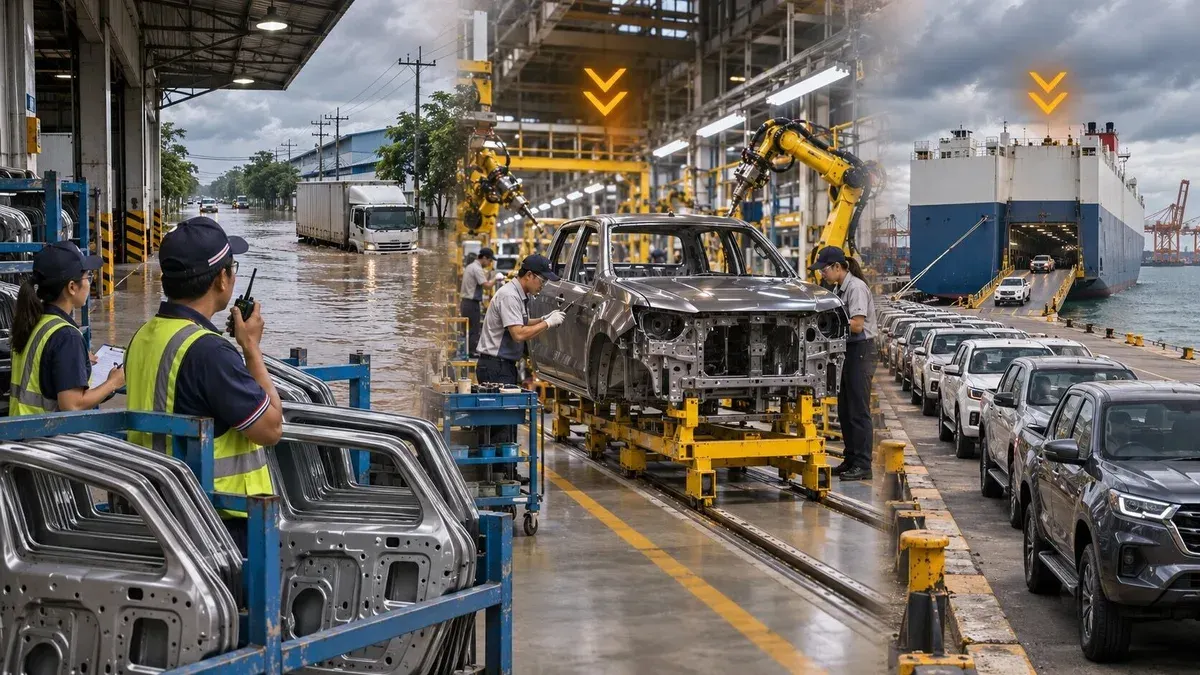
The Federation of Thai Industries (FTI) reported that Thailand produced 87,938 vehicles in October 2026, down 35.19% year-on-year after parts suppliers were hit by severe flooding from late September to mid-October, disrupting deliveries to assembly plants. Exports fell 34.38% to 54,503 units, with pickup trucks and internal combustion passenger cars seeing the steepest declines. All factories have resumed normal operations since mid-October and are accelerating output to catch up, so FTI still expects to meet the full-year target of 1.45 million units.
Domestic sales reached 51,127 units in October, up 8.71% from a year earlier. Battery electric vehicles (BEVs) surged 94.46% to 16,488 units, partly driven by buyers rushing to purchase imported EVs still subject to the current 10% excise tax before the Cabinet-approved hike to a maximum of 35% takes effect on January 1, 2027. Meanwhile, diesel pickup sales continue to decline due to tight financing and persistently high diesel prices.
FTI said the tax measure aims to protect the domestic production base and encourage manufacturers to use Thailand as a production hub, preserving a supply chain that employs over 800,000 Thais. The federation is also promoting E20 and B20 biofuel use to reduce crude oil imports amid Middle East tensions; currently 6.27 million vehicles (70% of gasoline cars) support E20, and 5.74 million (about 50% of the diesel segment) support B20.
The industry is watching the joint Thai–U.S. ART statement signed on November 17, 2026, which opens the way for reducing trade barriers including tariffs on vehicles and parts. The measures are not yet in force; if implemented they could expand trade opportunities and lower import costs, though domestic producers may face heightened competition.