FTI Urges Pickup Stimulus as Output Dips, Exports Plunge
The article covers FTI's report on Thailand's auto industry. Key points: September production down 6.08% due to floods (factories now back online). 9-month production up 0.39%, but exports down 3.41%, domestic sales up 7.79%. Pickups weak d
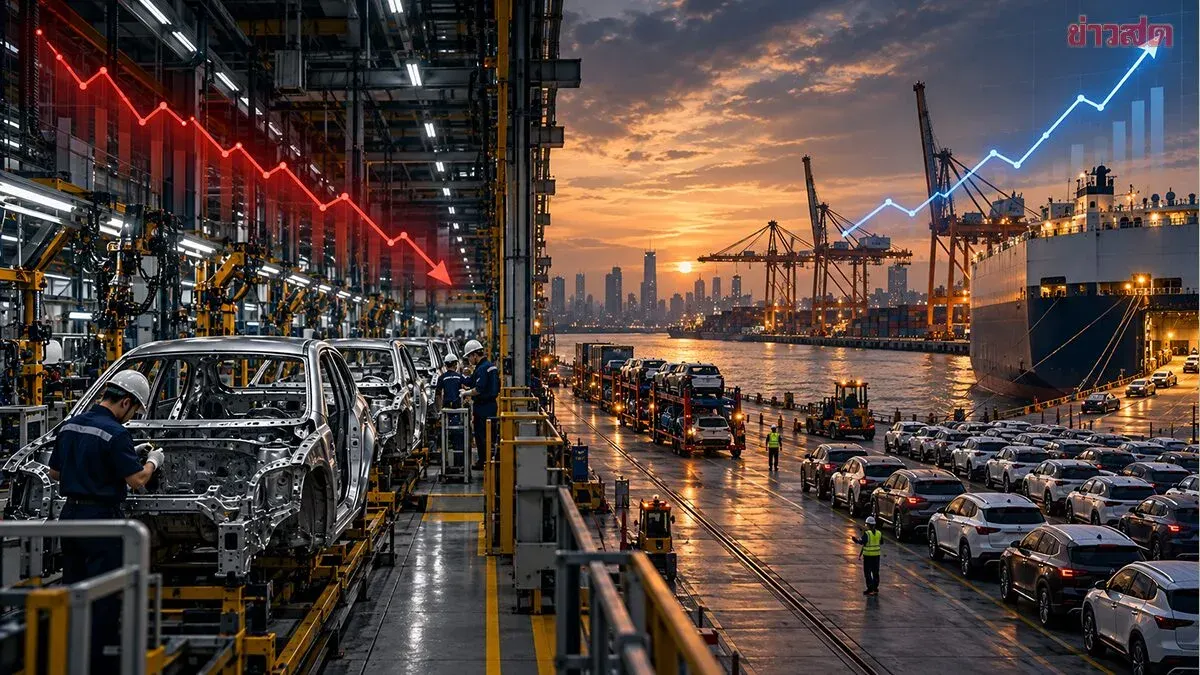
The Federation of Thai Industries (FTI) announced that September 2026 car production totaled 120,319 units, down 6.08% from the same period last year. Several factories temporarily halted output from late September to mid-October after floods disrupted parts suppliers and logistics, though all plants have since resumed normal operations. FTI automotive group advisor and spokesman Surapong Paisitpattanapong said the floods will not derail the 1.45 million unit target for 2026, split between 900,000 for export and 550,000 for domestic sales, as manufacturers have adjusted schedules to recover lost volume.
In the first nine months of 2026, total production reached 1,080,030 units, a 0.39% increase year-on-year. Exports fell 3.41% to 686,647 units while domestic sales rose 7.79% to 393,383 units. September domestic sales hit 55,255 units, up 14.28% year-on-year but down 7.61% from August. Battery electric vehicles (BEVs) led growth with 16,626 units sold, up 81.61%, while pickups remained weak at 10,315 units, down 7.11% due to strict auto lending, sluggish economic growth, weak purchasing power, and high living costs.
Surapong noted pickup exports to the Middle East dropped 30.60% in September to 14,419 units, with the first nine months down 33,118 units, or 37.73%, amid regional conflict and Strait of Hormuz shipping risks. The FTI urges the government to accelerate domestic pickup financing to offset the export slump and sustain production, as pickups use over 90% locally made parts and are exported to more than 120 countries. A production decline would ripple through the supply chain, affecting Thai and foreign parts makers, showrooms, and service businesses, with broad income and employment consequences.
The FTI also calls for excise tax restructuring to treat internal combustion and electric vehicle investors fairly, preserving competitiveness and long-term investment. FTI Vice Chairman and Automotive Group Chairman Surawit Supakarndejkul confirmed that while floods forced temporary shutdowns at some assembly plants, all factories were back on line by mid-October. The impact will appear in November figures, but the 1.45 million unit target stands. The automotive and parts sector comprises over 2,500 companies across the supply chain and supports extensive employment.