Former Bandit Monk Luang Pho Am Honored at Ratchaburi Temple
Former bandit "Tiger Am" transformed into a respected monk and became the first abbot of Wat Ketu Noi Amphawan in Ratchaburi, founding the temple in 1892 after his preceptor vouched for his spiritual reformation to authorities.
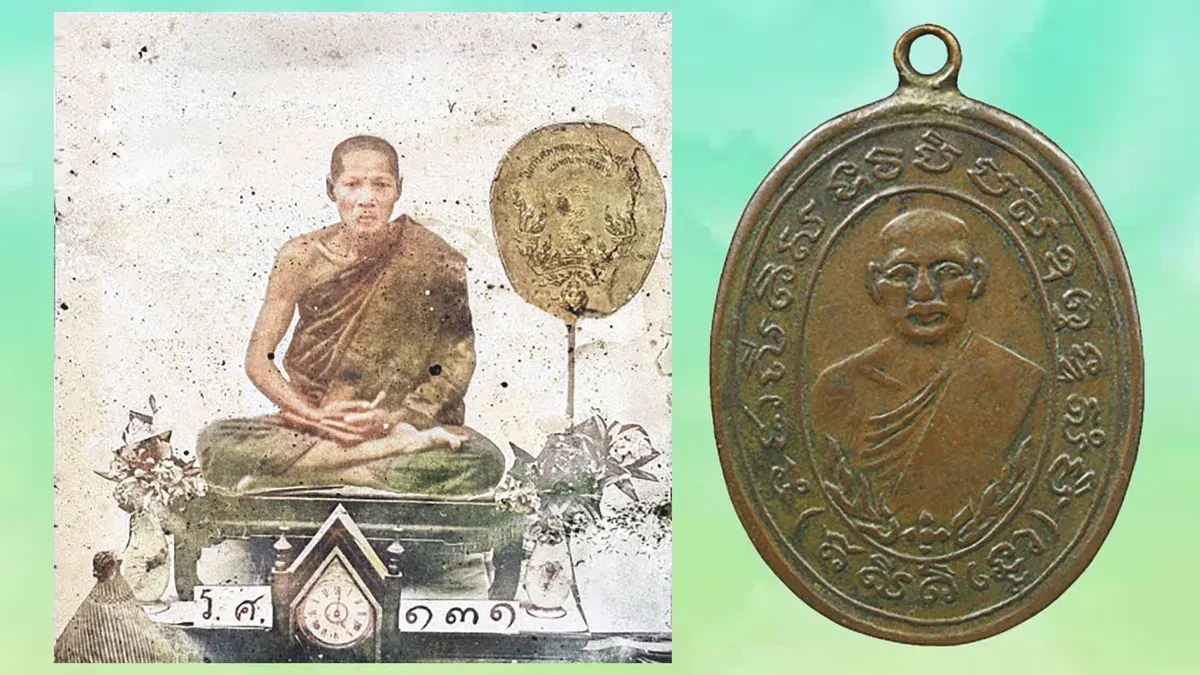
Luang Pho Am Isitinno, the first abbot of Wat Ketu Noi Amphawan in Muang District, Ratchaburi Province, was a revered elder monk who gained prominence during the early reign of King Rama V. His history is known only through accounts of village elders, who relate that before entering monastic life, he was a notorious bandit called "Tiger Am." He fled from authorities until he met his future preceptor, Phra Upachchaya Pan Sopako, the abbot of Wat Bang Khun Thian Nok. Inspired by profound faith, he asked to become the preceptor's disciple with firm resolve to abandon his criminal past and live virtuously according to monastic discipline. His preceptor mercifully ordained him as a Buddhist monk, bestowing the monastic name Isitinno at Wat Bang Khun Thian Nok in Samut Songkhram Province.
When authorities tracked Tiger Am to Wat Ketu Noi Amphawan while he was assisting Phra Upachchaya Pan, his preceptor declared: "Tiger Am no longer exists; there is only Phra Am," and guaranteed officials that he would be responsible for supervising Phra Am. As a result, Phra Am remained at Wat Bang Khun Thian Nok and became an essential assistant to Phra Upachchaya Pan, helping construct various monastic buildings, including the ubosot of Wat Ketu Noi Amphawan.
Wat Ketu Noi Amphawan is a community temple of the Thammayutika Nikaya sect located at 94 Moo 9, Khung Krathin Subdistrict, Muang District, Ratchaburi Province. It received official permission to establish in 1892 and received royal ordination of the Buddhist boundary in 1960. Historical records mention Khun Ta Ketu and Khun Yai Noi, devout benefactors who donated their land to Phra Upachchaya Pan to build the temple. After the ubosot's completion, local Buddhists helped raise funds and construct various monastic structures. Permission to establish the temple was granted in 1892 under the name Wat Ketu Noi Amphawan, commemorating the meritorious devotion of Khun Ta Ketu and Khun Yai Noi, though villagers simply called it Wat Ketu Noi.
Within the temple stands a sacred Buddha image named Luang Pho Dam, or Phra Phuttha Samruddhi Phichit Phrairee, enshrined in the ubosot. The legend tells that in 1914, during King Rama V's reign, a group of fishermen casting nets in the Gulf of Mae Klong encountered resistance when pulling up their net due to something entangled. A diver sent down discovered a Buddha image with only the head present, lacking the hair knot and base. The fishermen brought it to Phra Upachchaya Pan, who was building Wat Ketu Noi Amphawan at the time. The preceptor enshrined the image in the ubosot and had a new hair knot and base cast to restore it. Because the Buddha image was made of black bronze, locals named it "Luang Pho Dam." Since then, it has been venerated by that name.
Luang Pho Am was appointed as the first abbot of the temple from 1892 onward, developing its facilities and promoting its growth. He passed away in 1918 after overseeing the temple for 26 years.