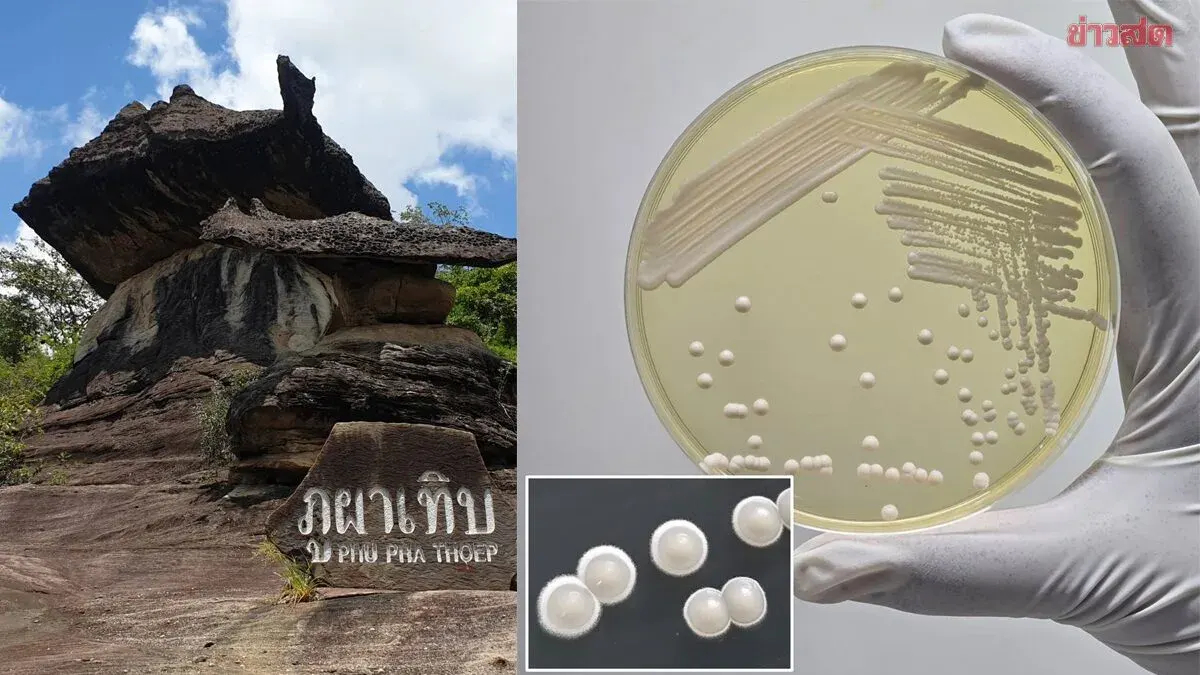
Kasetsart University researchers discovered a new yeast species in Phu Phan National Park, naming it "Princess Yeast" to honor Princess Sirindhorn's 70th birthday and her support for Thai biodiversity research. The microorganism, isolated f
Thailand has achieved a major breakthrough in microbiology and taxonomy with researchers from the Department of Microbiology at Kasetsart University's Faculty of Science discovering a new yeast species called "Princess Yeast" (Blastobotrys princeps sp. nov.) from a biodiversity study of microorganisms living alongside wild mushrooms in Phu Phan National Park, Mukdahan province. This represents another significant step in Thai research that expands the nation's knowledge of biological diversity and opens opportunities for studying microorganism potential for agriculture, food industry, and future bioeconomy development.
The research team consists of Assistant Professor Dr. Pannida Khunnamnong, Honorary Professor Dr. Savitree Limtong, Associate Professor Dr. Nanthana Sisuuk, and graduate student Panuddha Nualthaisong from the Department of Microbiology at Kasetsart University, working with Dr. Barami Saklorat from the Forest and Plant Conservation Research Office of the Department of National Parks, Wildlife, and Plant Species. The research was funded by the Kasetsart University Research and Development Institute. The new yeast species was discovered from samples of Russula mushrooms collected from Phu Phan National Park in Nai Si Nuon subdistrict, Muang district, Mukdahan province. The research team named it "princeps" scientifically and "Princess Yeast" in Thai, a name conferred to honor Her Royal Highness Princess Sirindhorn on the occasion of her 70th birthday celebration and to recognize her role as a patron of taxonomy and biodiversity in Thailand. The Latin word "princeps" means "the first important person, leader, and honored individual."
The discovery resulted from studying yeast biodiversity isolated from wild mushrooms, with the team collecting 60 samples from Phu Phan National Park and isolating 90 yeast strains. Using molecular taxonomy techniques to compare data against international databases, researchers found that most yeasts were previously known species. However, one strain, DMKU-TM03, had nucleotide sequences differing from all recorded species. Following polyphasic taxonomy principles—which integrate genetic data, morphological characteristics, and biological properties—the team confirmed it as a previously unreported new yeast species.
Beyond confirming the new species status, the research team also studied the microorganism's characteristics for formal classification. Results show this yeast can utilize multiple carbon sources and is currently undergoing further study for potential applications in agriculture and food industry, representing another important step in advancing basic discovery toward future practical benefit.