Government Unveils 1 Million Home Solar Package With 2.5% Loans
The Thai government will propose a 1 million household solar rooftop program to the Cabinet on October 26, offering 50,000 baht loans at 2.5% interest over seven years with zero down payment. Registration opens October 27 through a one-stop service, and households can earn an estimated 700-1,000 baht monthly after loan repayments by selling excess power to the grid at 2.20 baht per unit.
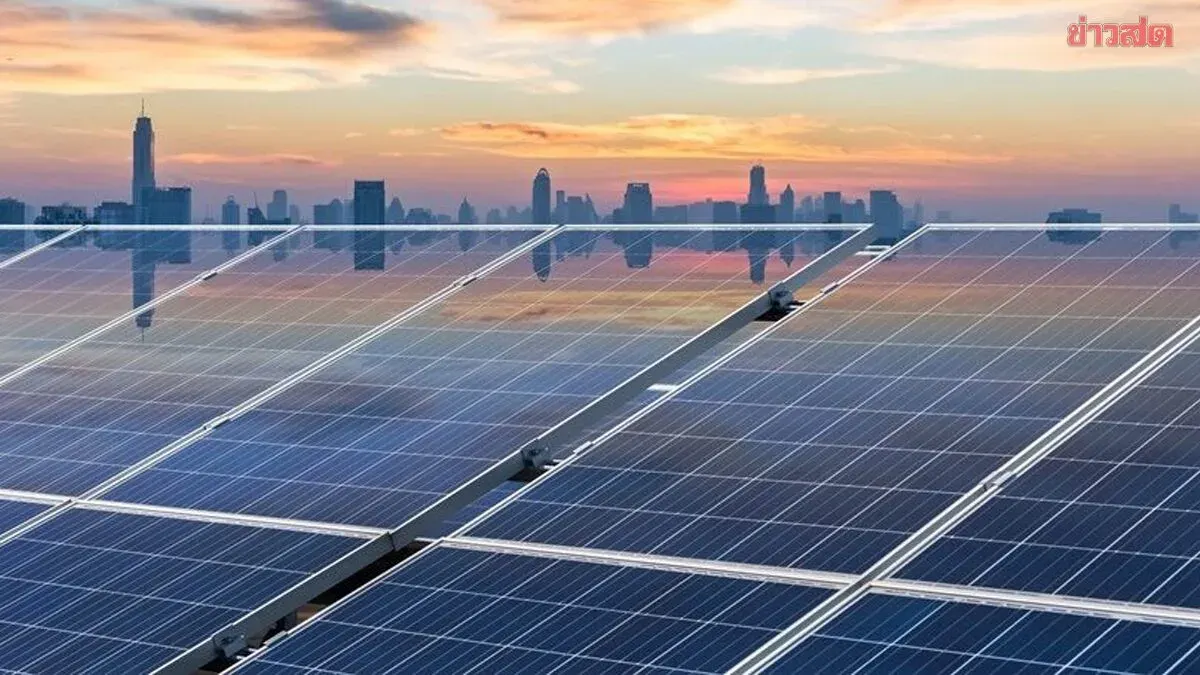
On October 22, Deputy Prime Minister and Finance Minister Ekkanit Nithitanprapas disclosed progress on measures to accelerate the shift to clean energy. The Finance Ministry is preparing to present a household solar installation package to the Cabinet on October 26, aiming to promote solar systems for 1 million households through a 400 billion baht loan authorization, with 200 billion baht allocated for the clean energy transition. The total budget is estimated at 700-800 billion baht, divided as follows:
1. Loans disbursed through three state financial institutions — the Bank for Agriculture and Agricultural Cooperatives (BAAC), Government Housing Bank (GH Bank), and Government Savings Bank — totaling 50 billion baht. Each household can borrow up to 50,000 baht at a special low interest rate of 2.5% per year, uniform across all three banks, with a minimum loan term of seven years. "This will allow the public to join the project without any upfront payment. Registration opens on October 27 at 2.5% interest and a minimum seven-year term, enabling participation with zero out-of-pocket cost," Ekkanit said.
Households may choose from three installation types: rooftop, ground-mounted, or floating. Maximum installed capacity is capped at 10 kilowatts, though the state will buy back excess power up to 5 kilowatts at 2.20 baht per unit, per the National Energy Policy Committee resolution. The Metropolitan Electricity Authority and Provincial Electricity Authority will handle purchases. Revenue from power sales will first cover bank installments; after debt service, households are expected to net roughly 700-1,000 baht per month, simultaneously reducing electricity bills and generating income.
2. Smart Grid infrastructure and Smart Meter deployment for 200-300 billion baht. In parallel, the ministry is coordinating with the Ministry of Labour to train and upskill solar installers to prevent labor shortages. Welfare card holders and low-income individuals will be recruited for training to create careers and supplementary income.
The total project budget is expected not to exceed 100 billion baht. The 1 million household target is projected to cover all current demand; if demand exceeds this, the government may expand registration. Registration will operate as a one-stop service involving the Ministry of Interior, the Provincial Electricity Authority, and the Metropolitan Electricity Authority.
Finance Ministry Permanent Secretary Lawan Saengsanit said the workforce development program will focus on training low-income welfare card holders of working age (20-50) to build sustainable careers and income.