Thailand Plans Solar Rooftop Program for 1.5 Million Households
Thailand will launch a solar rooftop program targeting 1.5 million households, funded by a 200-billion-baht energy transition loan, allowing citizens to install panels and sell excess power back to the grid with bank financing.
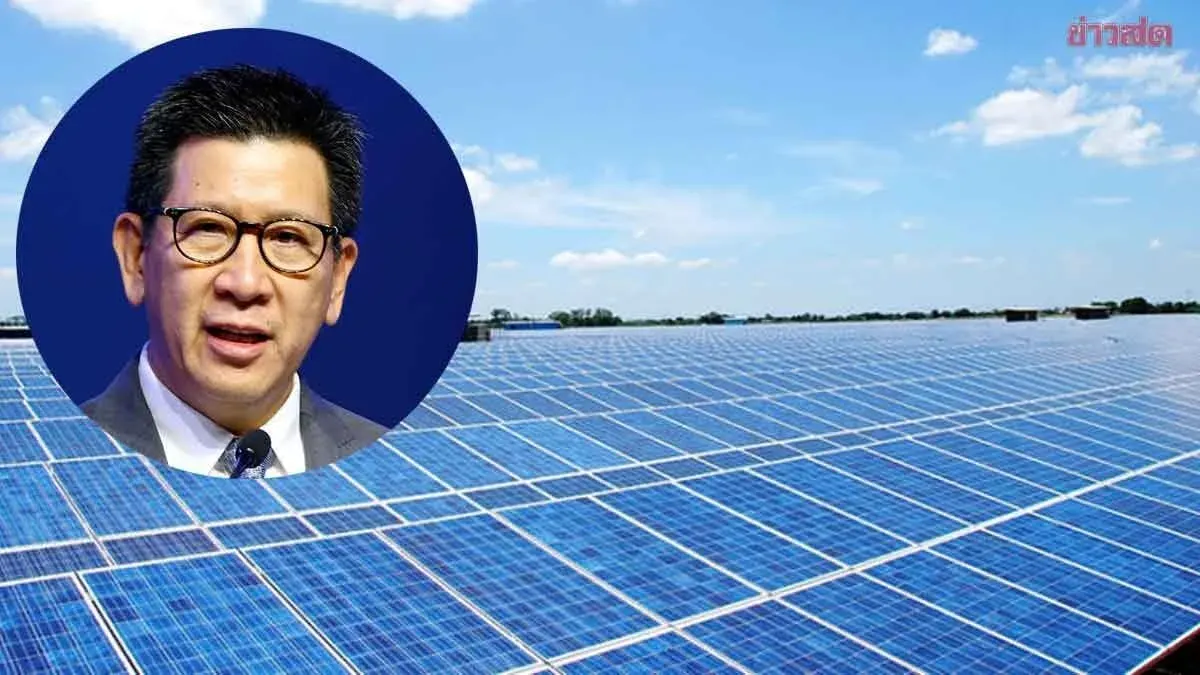
Deputy Prime Minister and Finance Minister Ekniti Nitithanprapas announced that rising import energy prices stemming from Middle East conflict have increased electricity costs, prompting Thailand to accelerate energy transition efforts. The Interior Ministry will propose the solar rooftop program to the Finance Ministry by September 11 to secure funding from the 200-billion-baht energy transition loan. The initial phase targets 1 million households at 50,000 baht per household—totaling 50 billion baht—for solar cell installation on roofs and ground areas, though the ministry is considering expanding this to 1.5 million households.
The program will partner with the Electricity Generating Authority of Thailand (EGAT) to allow citizens to sell power back to the grid, and will collaborate with three banks—Government Savings Bank, Government Housing Bank, and Bank for Agriculture and Agricultural Cooperatives—to provide upfront investment financing that households can repay through solar energy sales proceeds. This means participants may require no initial investment of their own.
Ekniti stated that solar panels last 25–30 years and will generate ongoing income for households, with potential monthly earnings of around 1,000 baht from a 5-kilowatt installation depending on consumption patterns. EGAT will install smart meters and develop a smart grid infrastructure, expand transmission lines, and build battery storage systems. Training programs will also be launched to create jobs in assembly, installation, and maintenance.
Initial eligibility requires one person per household to install solar cells and a meter, with EGAT managing the grid connection. The government is also considering tariff reductions on solar panel imports. Although seven to eight Thai manufacturers currently produce panels primarily for export duty-free, they lack incentive to serve the domestic market due to import taxes. Ekniti explained that reducing import duties on certain components would support Thai businesses, build a local supply chain, and develop the domestic solar industry, though some components will still require importation.