Thailand's First Underwater Welding Program Opens at Ang Thong Technical College
Thailand's first underwater welding vocational program launches at Ang Thong Technical College to address a critical shortage of skilled divers in the country. Graduates can earn six-figure monthly incomes working on offshore oil platforms,
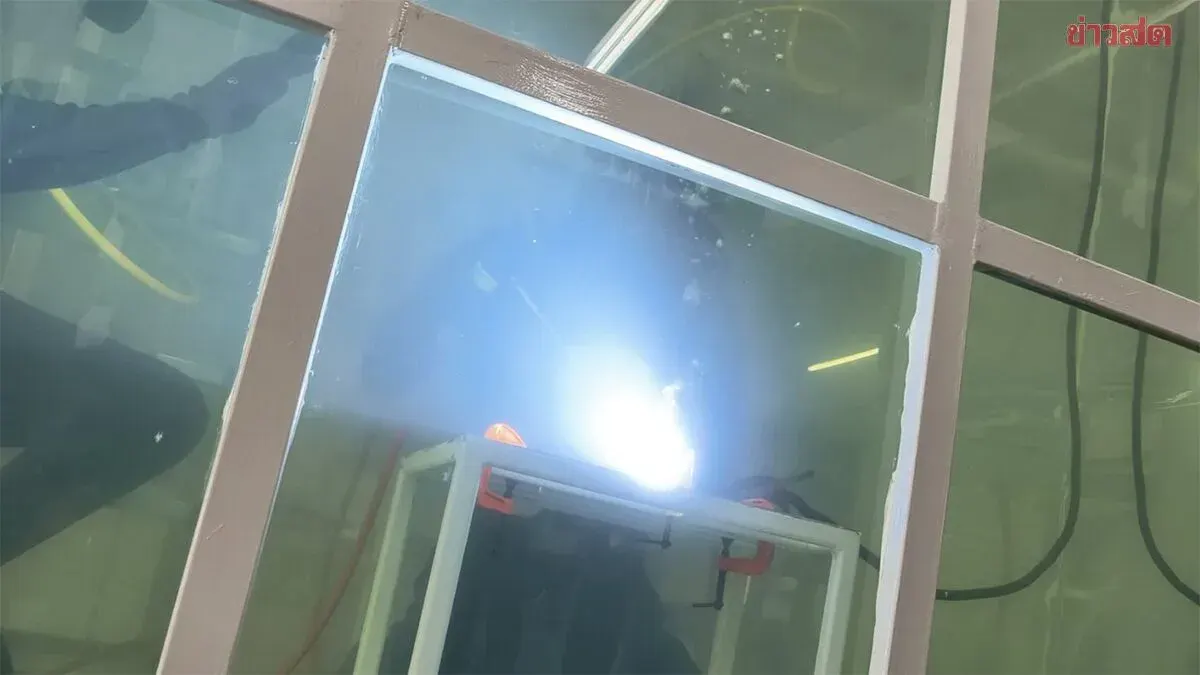
Ang Thong Technical College is advancing a new underwater welding curriculum—the first of its kind in Thailand—to meet specialized skilled labor demand, after identifying a critical shortage of underwater welders in the country. The college offers both theoretical and practical training for higher vocational certificate (HVCC) students, systematically teaching diving skills and underwater welding techniques. Director Paitoon Sangsuwatch led Deputy Governor Tasanai Sudhapoch on a visit to the college, where welding department head Pramod Jamneiam demonstrated the training facilities.
Paitoon explained that the curriculum aims to develop students into specialized welding professionals earning high incomes. Underwater welding is a highly skilled trade with significant market demand but few qualified practitioners in Thailand. The college drew on instructors trained in military welding and underwater techniques to develop the HVCC-level program. Students must have welding basics, be able to swim, and be ready for diving, as training combines welding and underwater work skills. The college has procured specialized equipment for diving and underwater welding practice under experienced supervision.
Prospective graduates can pursue underwater pipeline repairs, offshore oil and gas work, steel ship repairs, dredger maintenance, and submerged structural projects. Underwater welding is particularly valuable for ship repairs—rather than hauling vessels ashore at high cost and time, trained divers can complete repairs at the problem site, reducing steps and expense. Experienced underwater welders can earn well into six figures monthly, depending on experience, job type, and number of dives. Pay per dive typically ranges around 5,000 baht, subject to job conditions.
The college prioritizes safety, using DC electrical current for training—unlike household AC—and enforces strict safety protocols with close instructor supervision. This curriculum represents a strategic approach to developing vocational workforce capacity in a specialized skilled trade aligned with industrial needs.