Thailand to Subsidize Home Solar Panels for One Million Households
Thailand will subsidize rooftop solar panels for up to one million households with 50,000-baht grants, using a 400-billion-baht loan program to cut electricity costs and reduce dependence on imported natural gas for power generation.
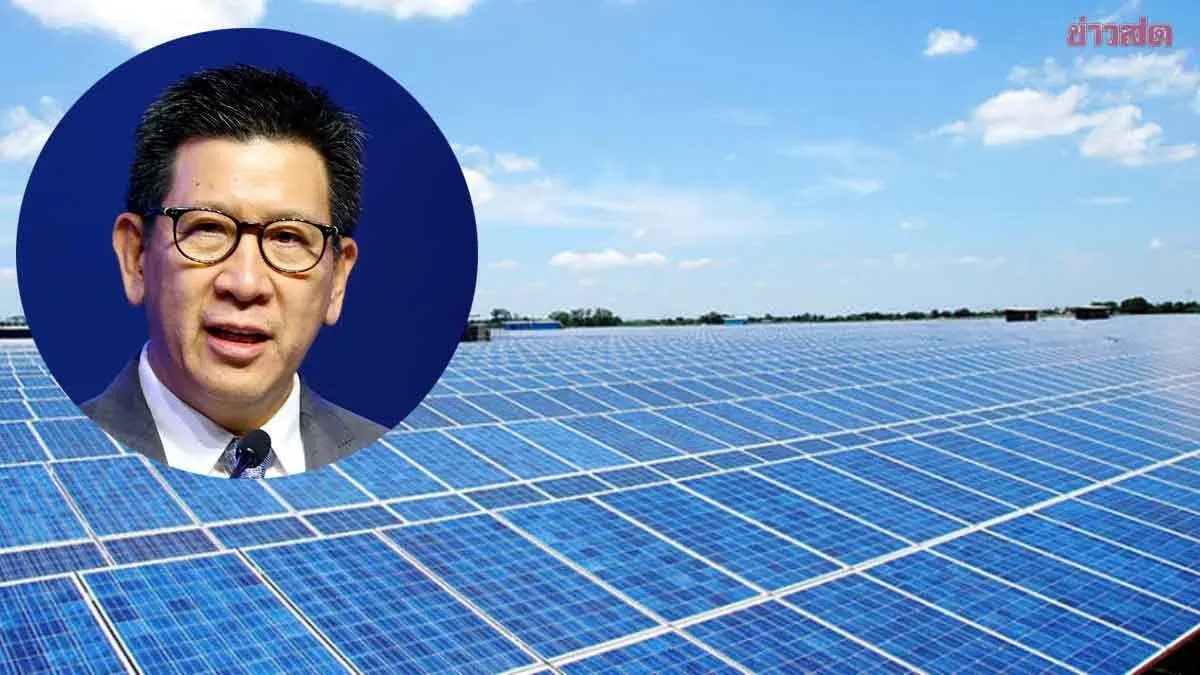
Deputy Prime Minister and Finance Minister Ekniti Nitithanprapas announced that under a 400-billion-baht loan decree, the government is developing a major solar rooftop subsidy program to reduce household electricity bills and advance Thailand's energy transition. Currently, Thailand depends on imported natural gas for over 60% of its electricity generation. The government will offer free subsidies of 50,000 baht per household to install rooftop solar systems, targeting 500,000 to 1 million households nationwide, particularly those consuming 5 kilowatts or more. For households without upfront capital, the government has partnered with the Government Savings Bank and Government Housing Bank to provide low-interest financing, with repayment structured around actual electricity savings rather than fixed loan payments. For example, a household that previously paid 5,000 baht in monthly electricity bills could reduce that to 3,000 baht after solar installation; the bank would collect 1,000 baht from the savings while the household retains 1,000 baht in monthly savings, with a typical payback period of 3 to 4 years. The program also aims to support Thailand's solar panel manufacturing sector by tasking the Board of Investment with measures to help local solar industry operators, while the electricity authorities will serve as a single-point-of-contact to ensure safety standards, facilitate grid connections, and manage excess power sales back to the grid through net billing arrangements. Ekniti emphasized the comprehensive approach: supporting citizens with subsidies, enabling low-income households through bank financing, promoting domestic solar manufacturers, and streamlining the process through utility companies as a one-stop service.