Govt Unveils Plan to Tackle Northern Toxic Pollution Crisis
The Thai government has announced a two-pronged strategy to address toxic pollution in northern river basins caused by upstream mining. Diplomatic efforts include a trilateral ministerial meeting with China and Myanmar on November 24 and engagement with the FAO, while domestic measures involve banning exports of mining precursor chemicals to Myanmar, declaring pollution control zones, and deploying ministers for daily on-site monitoring and public briefings.
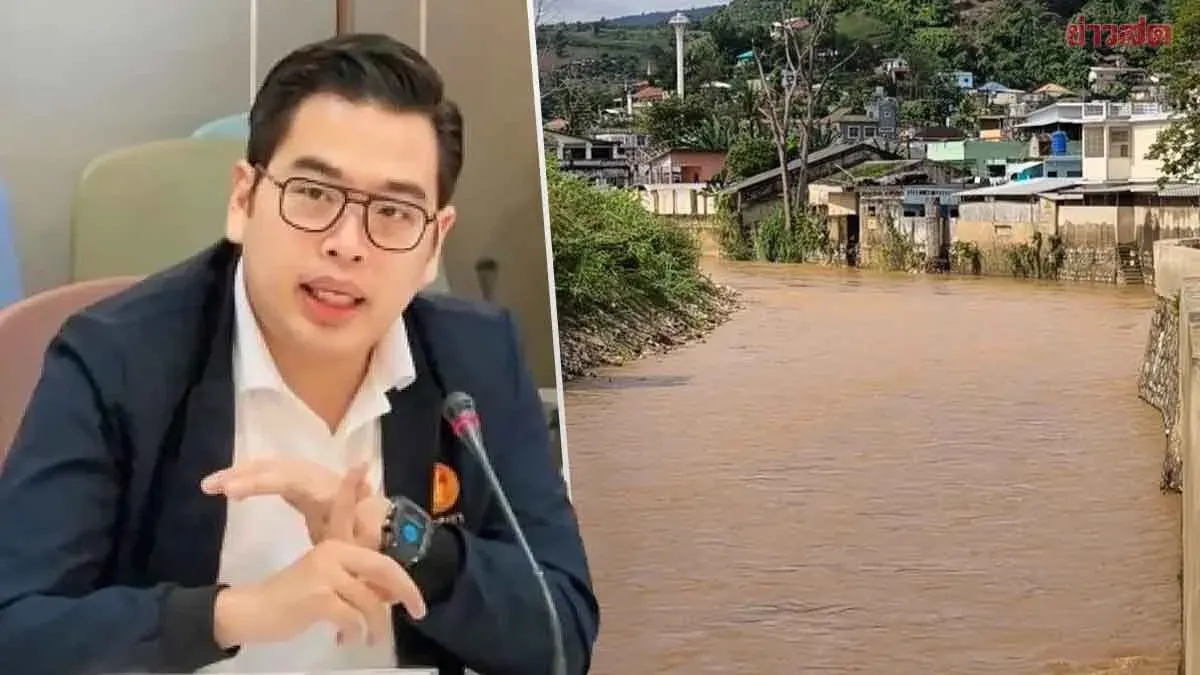
Pheu Thai Party deputy spokesman Payu Neungjamnong disclosed efforts to resolve water pollution and toxic contamination from upstream mines over the past several days, led by Deputy Prime Minister and Minister of Higher Education, Science, Research and Innovation Yoschanan Wongwatthana after discussions with Chinese leadership, together with Deputy Prime Minister and Interior Minister Anutin Charnvirakul who convened relevant ministers to deliberate and set proactive measures.
Payu stated the talks yielded conclusions on two main axes: diplomatic measures to address the source of the problem jointly among the three concerned countries — Thailand has coordinated with China and Myanmar to prepare a ministerial-level meeting on November 24 and a subsequent trilateral working group meeting in Thailand, after which a ministerial task force will conduct on-site mine inspections. Additionally, the Ministry of Agriculture and Cooperatives has invited representatives of the UN Food and Agriculture Organization (FAO) to negotiate and request relevant international agencies to help engage the polluting countries in finding a definitive solution.
Payu revealed the second axis comprises five key domestic measures: cutting off supply lines by using the National Security Council mechanism to immediately ban exports of rare earth mining precursor chemicals to Myanmar; declaring affected areas as pollution control zones; establishing sandboxes to filter arsenic in Mae Sai District and Chiang Rai Province; creating Agri-Map color-coded zoning; and ordering the Department of Disaster Prevention and Mitigation and Chiang Rai and Chiang Mai provinces to issue daily progress updates across all platforms.
These domestic actions accompany the diplomatic measures, with cabinet ministers deploying to the field immediately to monitor the situation firsthand while opening channels to hear from academics and protest groups. Payu added that both main axes will be executed by a special government task force led by Yoschanan, which will formalize plans to address water pollution and toxic contamination in a concrete manner to tackle the actual situation in the north, reflecting the government's and all concerned ministers' serious attention to managing this crisis.