GULF Brings Solar Power to Remote Mountain School in Kamphaeng Phet
GULF Energy installed a solar power system at a remote mountain school in Kamphaeng Phet's Wung Kasang village, bringing electricity to an early childhood center and community facilities that previously relied on candles and oil lamps. The
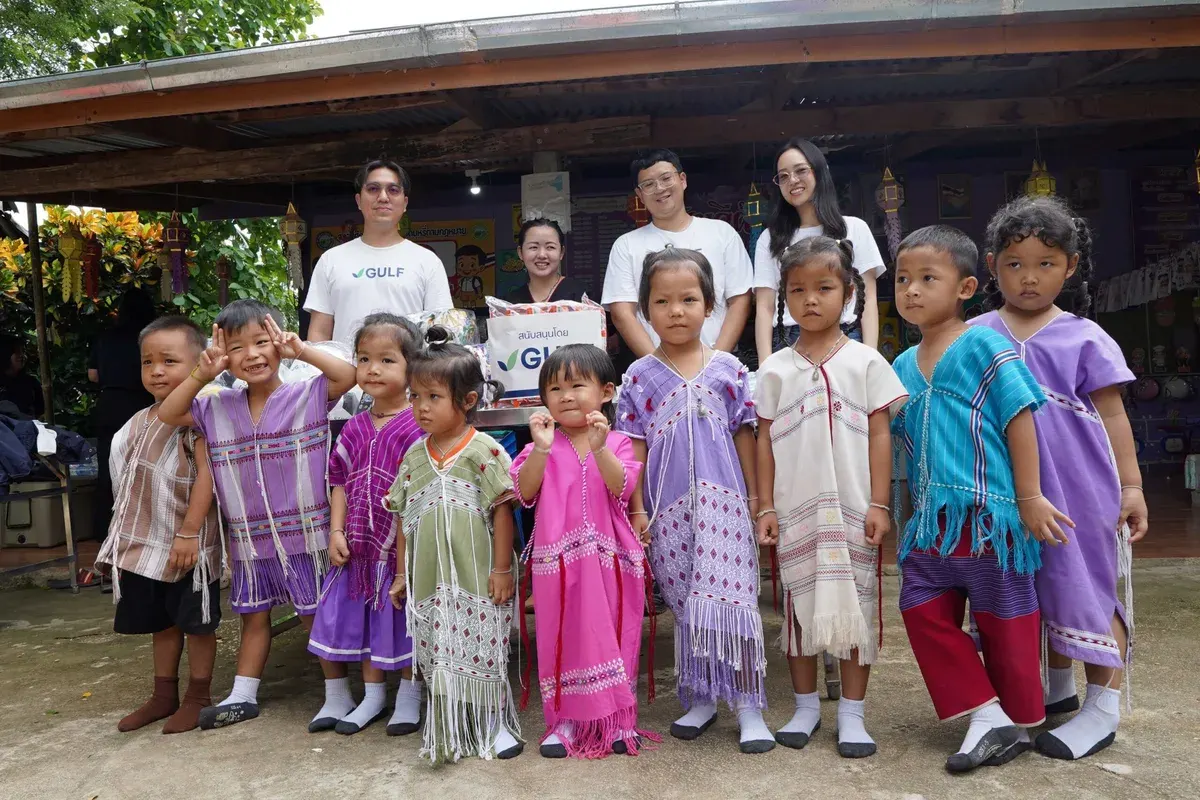
Gulf Development Public Company Limited (GULF) has rolled out the second phase of its 2025 Green Energy Green Network for THAIs project in Wung Kasang village, Pong Nam Ron subdistrict, Klong Lan district, Kamphaeng Phet province. Drawing on renewable energy expertise, GULF has installed a solar power system at the Pong Nam Ron–Wung Kasang early childhood development center to improve health, safety, and educational opportunities for preschool children while also connecting power to the village community hall and sports field, enabling shared benefits and potential income-generating opportunities for residents.
Wung Kasang is an ancient Pakakenyao hill tribe community of approximately 357 people in 110 households located in a valley west of Khlong Wang Chao National Park. Most residents practice agriculture and livestock raising. The village has had no grid electricity; residents light their homes with candles or oil lamps, and those with solar cells use them only for basic lighting. To charge devices or power agricultural equipment, villagers must travel over 6 kilometers to neighboring villages, creating financial and time burdens. The early childhood center, which serves children aged 2–5, has suffered from deteriorated solar equipment, limiting modern teaching methods.
Varuratana Pootueoh, the center's teacher, explained that the 13 students at the facility need advanced learning support during this critical developmental stage. Power shortages have prevented teachers from using printed materials and educational videos, forcing reliance on handmade crafts instead. Poor lighting during cloudy days affects children's eye health, requiring outdoor activities. During rainy season, electricity must be rationed for fans and mosquito control to prevent malaria. The facility's security cameras and emergency radio communication with parents cannot operate reliably due to insufficient power supply.