IFS Reports 15% Factoring Growth Amid SME Credit Crunch
The user wants a short summary of the article about IFS Capital Thailand's factoring business growth amid SME credit crunch. The summary must be in English, 1-2 sentences, 120-220 characters, never more than 240. It should lead with what ha
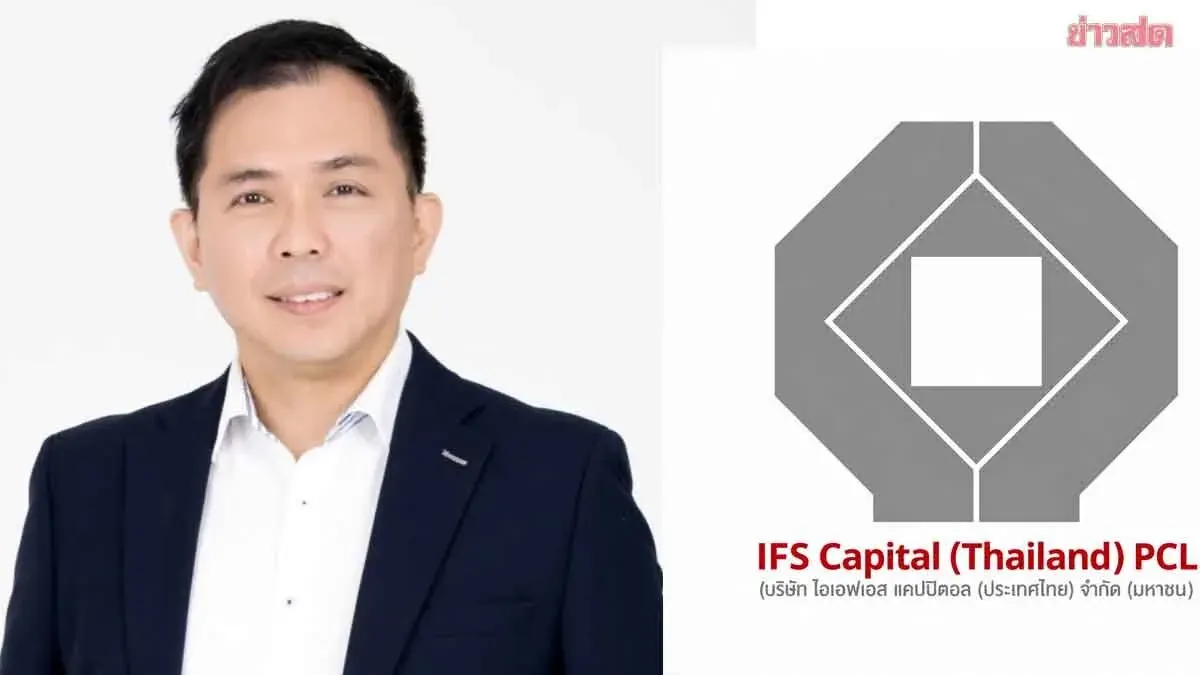
IFS Capital Thailand's director and CEO Woon Yi Hui said the factoring business — a financial service that helps SMEs turn uncollected sales into cash for faster working capital — has grown at its strongest rate ever, expanding over 15% between fiscal years 2023 and 2025 to reach 35.75 billion baht in FY2025, even as bank lending to SMEs shrank for 16 straight quarters from Q3 2022 to Q2 2025, according to Bank of Thailand data.
SMEs are a vital engine of the Thai economy, but access to capital remains a barrier to expansion. The Office of Small and Medium Enterprises Promotion (OSMEP) reports Thailand has about 3.3 million SMEs, making up 99.5% of all businesses and employing more than 13.6 million people, roughly 70% of private-sector jobs. OSMEP projects SME GDP will grow 2.0–2.8% in 2026. However, despite government support measures, bank credit to SMEs has contracted continuously for 16 quarters, underscoring the growing importance of alternative financing, particularly factoring, in providing necessary working capital.
Factoring: A Growing Alternative Funding Channel Factoring plays an increasing role because it does not rely solely on traditional bank credit criteria and collateral requirements. Designed to serve SMEs of all sizes, it offers another avenue for businesses that may face limitations in obtaining bank loans to access needed funds. Once approved, SMEs can submit new invoices for continuous funding without reapplying for a credit line each time.
IFS Capital Thailand revealed its factoring transaction volume grew over 15% between 2023 and 2025, hitting 35.75 billion baht in FY2025, while bank lending to SMEs declined over the same period. The company is Thailand's second-largest factoring provider with a market share of about 19%.
Woon noted that Thai micro, small, and medium enterprises (MSMEs) continue to face credit access constraints, and factoring will remain a key funding source, especially for businesses needing short-term working capital. He observed that mid-sized companies with annual revenue exceeding 500 million baht are increasingly using factoring to convert accounts receivable into working capital — not only to support expansion but also to build cash reserves against market volatility and prepare for acquisition opportunities.
Converting Receivables into Working Capital Many SME clients struggle with liquidity as they wait for customer payments while still needing to pay suppliers, employees, and operating expenses.