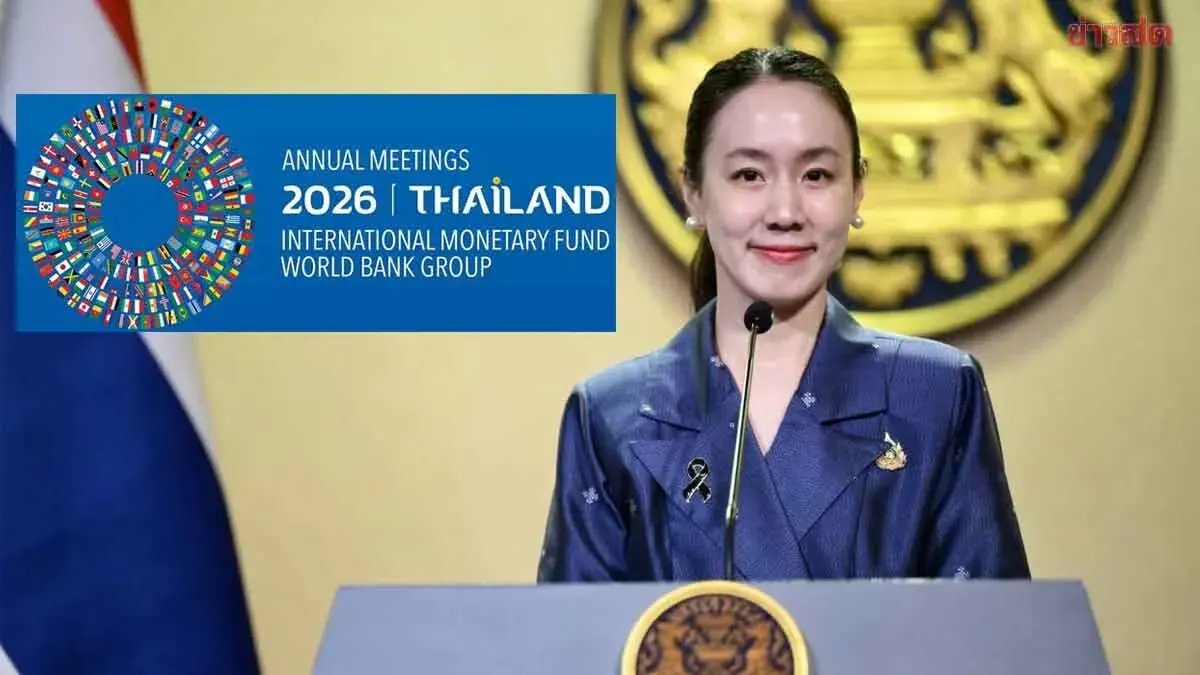
Deputy PM Launches AI Tool Aiding 1 Million Small Businesses
Finance Minister Ekajniti Nitithammaphas unveiled the 'Whispering Birds' AI model at the IMF-World Bank meeting in Bangkok, saying it helps boost profits for nearly one million small businesses. He outlined Thailand's three-part AI strategy—AI in All, All in AI, and AI for All—focused on productivity, skills, jobs, and broad access to AI benefits. The initiative also links transaction data to improve credit access for underserved merchants and includes workforce training programs to turn high-tech investments into Thai job opportunities.

Finance Minister Ekajniti Nitithammaphas showcased the 'Whispering Birds' AI model at the IMF meeting in Bangkok, saying it helps increase profits for one million small businesses. He spoke on 12 October 2026 at the World Bank Group seminar under the theme 'Small AI, More and Better Jobs', part of the IMF-World Bank Annual Meetings 2026 hosted by Thailand from 12–18 October at the Queen Sirikit National Convention Centre. He said Thailand is advancing AI through three approaches: AI in All, using AI to boost productivity of existing work and businesses; All in AI, creating skills and new jobs; and AI for All, ensuring everyone benefits from AI widely. The key to making AI deliver real results is making the technology accessible to small entrepreneurs, not just large corporations. The government has expanded fiscal measures to help shops cope with energy crisis impacts by developing 'Whispering Birds' (Noklasip), an AI assistant that acts as a business consultant for small enterprises, embedded in mobile commerce apps already used by stores to access government aid and subsidies. Currently, nearly one million small shops use Whispering Birds to manage inventory and calculate profits, reflecting an AI approach that goes beyond immediate relief to provide tools that improve merchants' business efficiency. Moreover, with entrepreneurs' consent, transaction data can help banks better understand business status, increasing access to credit for shops lacking collateral or formal credit histories. Regarding job creation, Thailand aims to turn investments in data centers, semiconductors, cloud services, and high-end electronics into opportunities for Thai workers through the Skill Bridge programme, which links investors with educational institutions to train skills matching employer demand, leading to actual employment, while also pushing to lower AI usage costs, including token costs, so that startups, SMEs, and universities can access the technology more easily. At the same time, the government emphasizes ensuring all population groups can adapt to change by connecting data through government digital infrastructure and fiscal programmes to design targeted assistance—income support, upskilling, and expanded credit access—while protecting people from risks such as online scams and deepfakes, and promoting international cooperation for responsible AI governance.