Immigration Police Rescue Chinese Student From Call Center Gang
Thai Immigration Police rescued a 19-year-old Chinese student from a call center scam gang in Pattaya that had lured him from Australia and demanded a 10 million baht ransom from his family. The student was forced to record fake abuse videos before police located and freed him within 30 minutes on November 14. He was reunited with his father two days later.
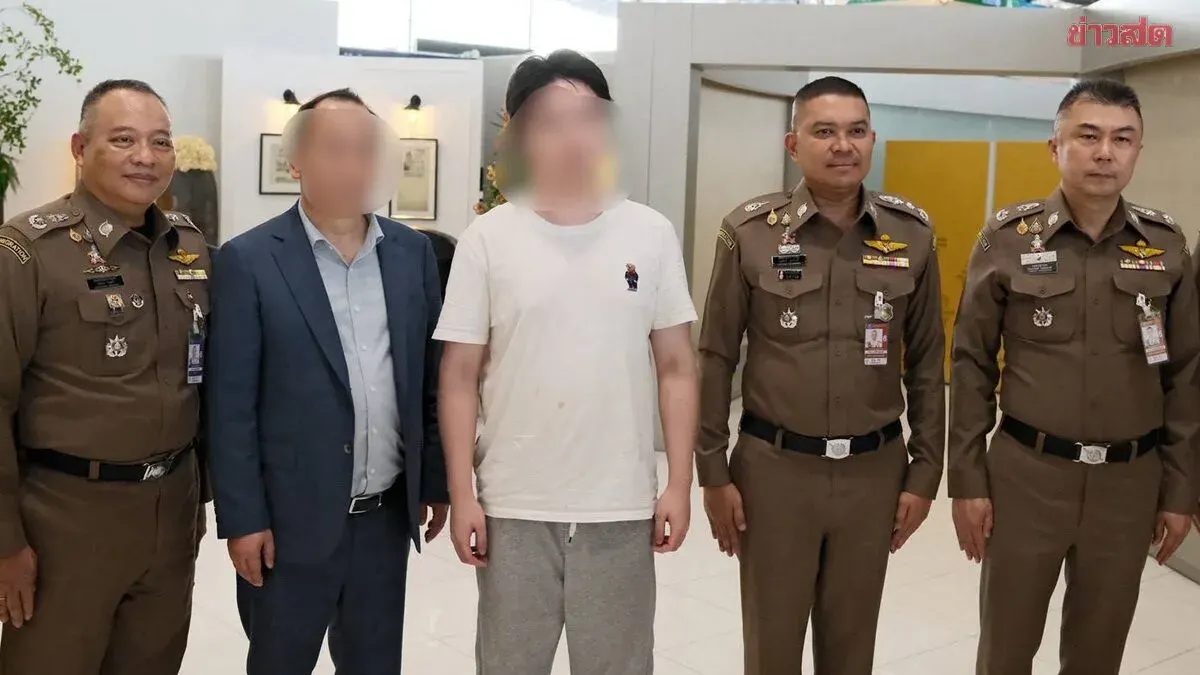
Immigration Police Chief Pol. Lt. Gen. Naphasin Poolsawat escorted a Chinese student back into his father's arms after the Immigration Bureau's mobile unit rescued him from a call center gang demanding a 10 million baht ransom, having been tricked into coming from Australia to Thailand.
From the Immigration Bureau's urgent operation to assist 'Mr. Yi, age 19,' a Chinese university student who fell victim to a call center gang. The gang deceived him into traveling from Australia to Thailand before extorting his family for a 10 million baht ransom, threatening physical harm if they refused to pay. The Immigration Bureau's mobile unit quickly traced and safely rescued him on November 14.
Most recently, on November 16, 2026, Pol. Lt. Gen. Naphasin Poolsawat, Commissioner of the Immigration Bureau, accompanied by Pol. Maj. Gen. Chernran Rimphadi, Deputy Commissioner and spokesperson; Pol. Maj. Gen. Thanit Thaiwacharamas, Deputy Commissioner; Pol. Maj. Gen. Kathan Kamthieng, Chief of Immigration Division 2; and immigration officers, jointly returned Mr. Yi to his family. His father, Mr. Jiacheng, had traveled to receive his son and return to China with a relieved smile after enduring fear and anxiety that his son might come to harm.
Pol. Lt. Gen. Naphasin revealed that questioning the victim showed the gang had planned the scam step by step. Starting on September 3, 2026, Mr. Yi traveled from Shanghai, China to study for a bachelor's degree in Sydney, Australia. On September 10, criminals contacted him, posing as Australian immigration officials, then transferred the call to someone impersonating Chinese police. They accused him of involvement in fraud and extortion cases, sending fake official documents to appear credible.
The gang then used threats and online control over several months, forcing him to keep his camera on 24 hours a day, report every movement, and forbidding contact with family. They tricked him into buying 30,000 yuan worth of USDT digital currency (approximately 150,000 baht), claiming it was bail money.
Later, the gang created a scenario that the victim was in danger and must urgently flee Australia for Thailand to hide. They paid all expenses including airfare and accommodation, leading the victim to believe them. He arrived at Suvarnabhumi Airport on November 13 and stayed at a hotel in Bang Rak, Bangkok.
On November 14, the gang ordered the victim to move to a hotel in Pattaya, Chon Buri, forced him to film a clip pretending he had been physically abused, then used his WeChat account to threaten his family, demanding 2 million yuan (approximately 10 million baht) and threatening to harm their son if they didn't transfer the money. After the family reported it to Chinese police, they urgently coordinated with Thailand's Immigration Bureau for immediate assistance.
Pol. Lt. Gen. Naphasin ordered the Immigration Bureau's mobile unit operating in the area to coordinate with Pattaya Immigration Police to urgently verify information and trace the victim's coordinates, prioritizing speed, thoroughness, and safety. They successfully reached and rescued the Chinese student safely within just 30 minutes of receiving the coordination.
Pol. Lt. Gen. Naphasin praised and thanked all immigration officers involved in this mission, especially the mobile unit and local officers, whose rapid coordination successfully rescued the victim. This reflects the Immigration Bureau's proactive approach, demonstrating that their duty extends beyond checking border crossings to serving as a vital force in preventing transnational crime and protecting the safety of those within the country.