Invasive Fish Species Confirmed in Lam Pao Dam, Scientists Warn of Regional Crisis
Invasive black-chin tilapia confirmed in Lam Pao Dam threatens the Mekong River basin and its 60 million people, with scientists blaming human activity—likely fish farm contamination or deliberate release—for spreading the prolific predator
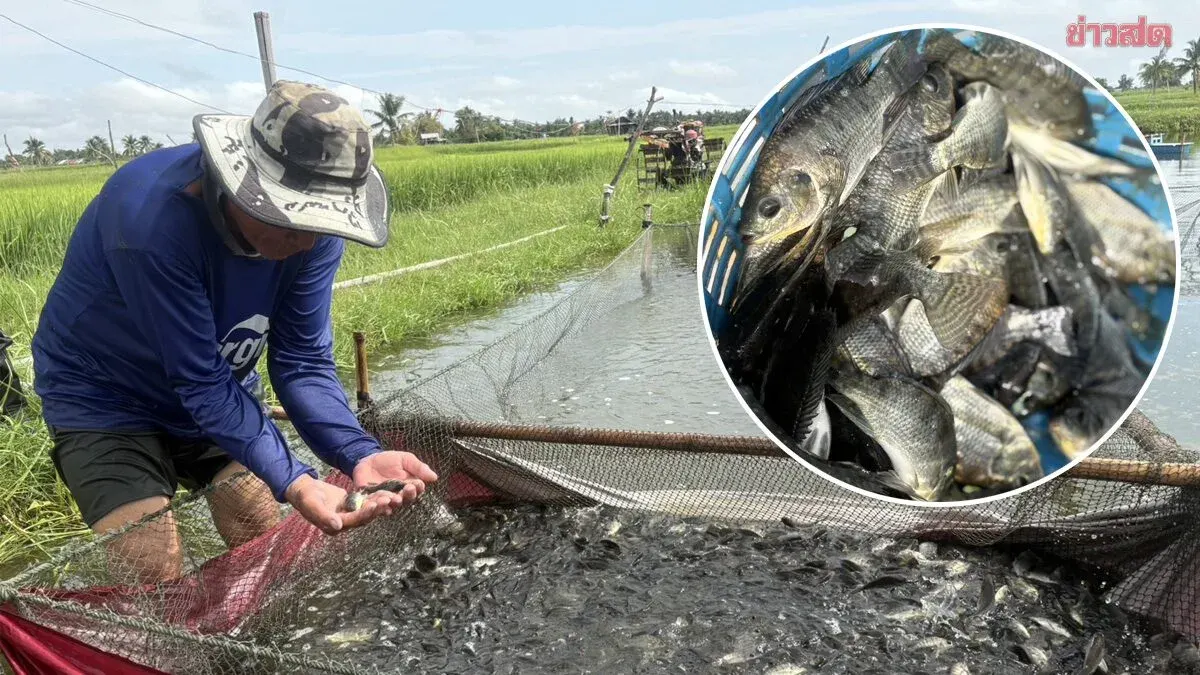
Academics gathered on September 10 at Kalasin University's fisheries building to discuss the proliferation of black-chin tilapia at Lam Pao Dam. The invasive species has already caused severe ecological and economic damage to coastal fishing communities in Samut Songkhram Province and has spread to the south, now emerging as a new national crisis. Confirmation of the fish at Lam Pao Dam, a key juncture of the Mekong River basin serving over 60 million people, raises fears of regional biodiversity catastrophe.
Associate Professor Chaiyanurak Satcareua from Mahasarakham University emphasized this is the most dangerous warning sign in a year, as the spread crosses river basins. Black-chin tilapia are both predators and prolific breeders, and native predator species are too few to control their population, especially in shallow waters where native fish cannot reach. The species therefore expands unchecked.
Prof. Satcareua stressed firmly that the Mekong River has many dams that would prevent the fish from swimming upstream naturally to Lam Pao Dam; therefore, human activity must be responsible. This could involve contamination with fingerlings raised in fish farms, or worse, deliberate environmental crime likening the release to introducing a computer virus into a system. Alarming further is the discovery of fully mature six-month-old breeding pairs at the dam, suggesting the spread extends beyond visible areas. Villagers catching individual fish for consumption remains insufficient to halt the outbreak.
Dr. Kasem Chetawan, lecturer at Kalasin University's fisheries branch and expert committee member, confirmed the academic consensus: human activity caused the introduction, divided into two behavioral categories: intentional, where certain groups deliberately release problem animals into waterways, and unintentional, where aquaculture operations unknowingly harbored black-chin tilapia mixed with fingerlings during nursery stages before escaping to natural waters.
Although edible, the species proves extremely difficult to control. It breeds monthly, has high survival rates, and schools defensively—behavior making it an efficient predator. The 5,000-square-kilometer Lam Pao Dam, with a watershed exceeding 5,000 square kilometers, allows the tilapia to disperse easily. Fishermen catch only large individuals trapped in gear; smaller fry and juveniles remain and continue spreading. Notably, while male fish carry eggs in their mouths, oxygenating them constantly, feeding demands force them to spit out some eggs, allowing eggs and fry to continually escape into public waterways.