Thailand Pushes IP Finance at Global IMF Meetings
Thailand’s Commerce Ministry promoted IP financing at the IMF‑World Bank Annual Meetings 2026, highlighting how intellectual property can be used as collateral for loans. Officials discussed building a reliable IP valuation ecosystem to bridge the gap between asset value and access to finance. The initiative aims to boost innovation, investment, and business growth by treating IP as a core business asset.

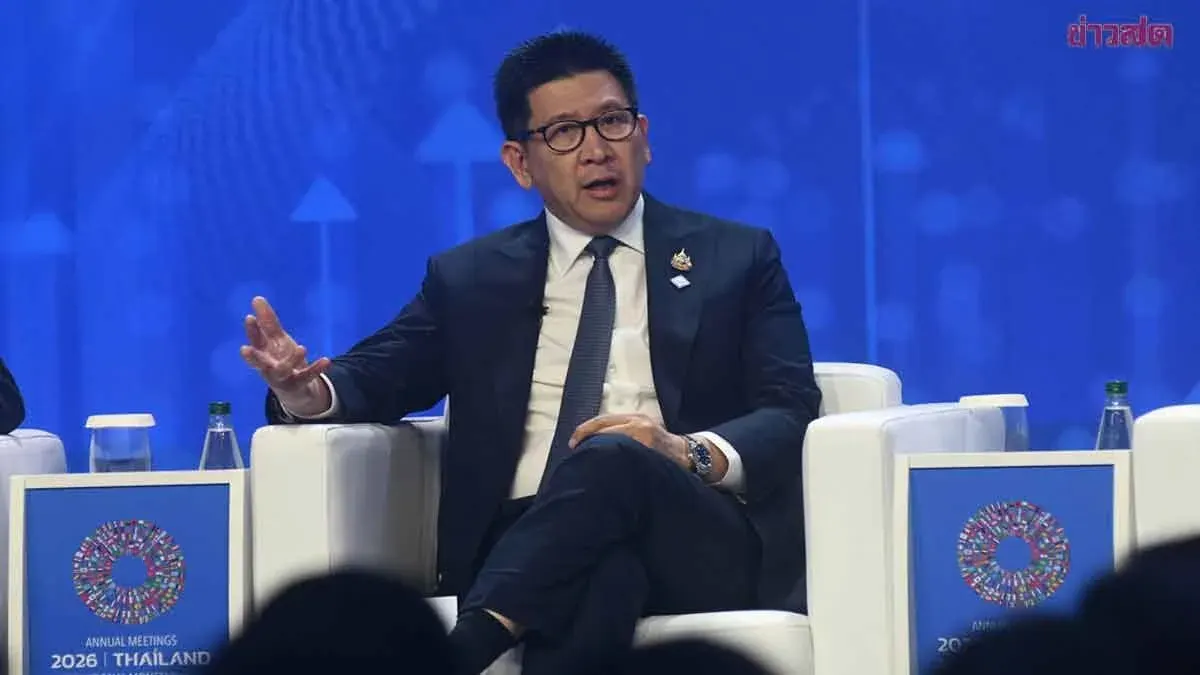
On October 13, 2026, Deputy Prime Minister and Minister of Commerce Supachai Sutthamphan assigned Dr. Kirida Bhaopichitr, assistant minister of Commerce, to attend a high‑level roundtable to discuss using intellectual property and intangible assets to support innovation, investment, and business growth. The event was organized by the EU Delegation to Thailand, the European Union Intellectual Property Office (EUIPO), and Thailand’s Department of Intellectual Property, under the framework of the IMF‑World Bank Group Annual Meetings 2026 (AM2026) at the Queen Sirikit National Convention Center.
Dr. Kirida participated in a discussion titled “Financing Innovation via Intangible Assets: Unlocking Growth through IP‑Backed Finance” with experts including Andrea Di Carlo (Deputy Executive Director, EUIPO), Ambroise Fayolle (Vice President, European Investment Bank), Malhar Nabar (Assistant Director for Europe and head of the Euro‑area delegation, IMF), and Nicolas Konialidis (Regional Director for Asia and Technical Director, Business Valuation Committee, International Valuation Standards Council). Over 150 participants from government agencies, international organizations, financial institutions from the EU and worldwide, the private sector, the ASEAN Secretariat, and ASEAN member state representatives attended.
Dr. Kirida said intangible assets, especially patents, trademarks, and copyrights, are vital for creating value and boosting competitiveness, particularly for innovation‑driven, technology‑ and creativity‑based businesses. Yet using these assets to obtain financing remains limited due to challenges in IP valuation, achieving shared understanding among rights holders, financial institutions, and appraisers, and incorporating such data into credit decisions. The current gap between IP value and its use in the financial system signals an opportunity to develop mechanisms that let IP benefit businesses more.
She added that the key challenge for Thailand and the region is bridging the gap between IP valuation and financing by building an “ecosystem of IP valuation” that enables intangible assets to be credibly valued and used as collateral for loans. This aligns with the policy of Deputy Prime Minister and Commerce Minister Supachai Sutthamphan, which aims to reduce constraints, remove obstacles, facilitate business operations, and elevate IP’s role as a business asset that can be utilized efficiently to create added value while increasing access to funding sources.