Thailand Pushes IP-Backed Finance Model at IMF-World Bank 2026
Thailand plans to push a model that turns Thai wisdom and intellectual property into usable capital at the upcoming IMF–World Bank 2026 meetings, which the country will host. Deputy government spokesperson Lalida Perthiwattana said discussions will focus on using patents, trademarks and other IP as collateral to help innovative businesses access financing. The outcomes will guide future policies to support innovative enterprises and improve funding access for Thai entrepreneurs.
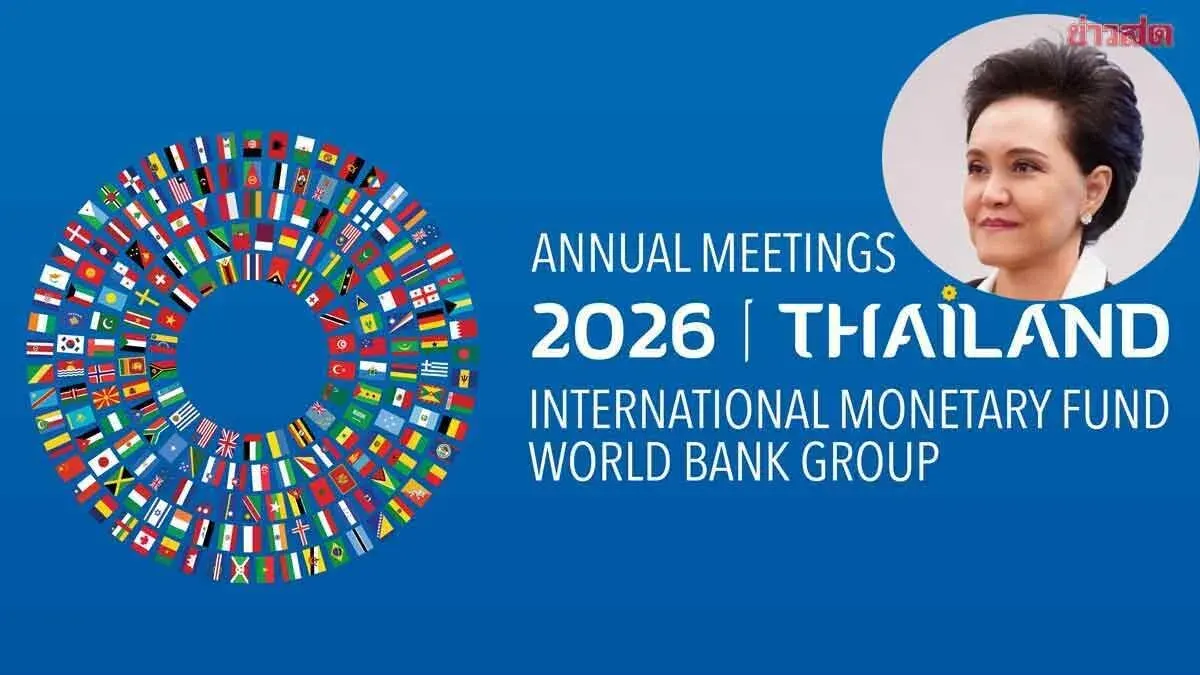
On October 11, 2026 at 10:16 a.m., Lalida Perthiwattana, deputy spokesperson for the Prime Minister’s Office, announced that the government, led by the Ministry of Commerce under Deputy Prime Minister and Commerce Minister Supajee Sutthamphun, is preparing to participate in a discussion on leveraging intellectual property to increase businesses’ access to funding. This will take place within the IMF–World Bank Annual Meetings 2026, which Thailand is hosting. The session aims to explore how the value of intangible assets—such as patents, trademarks, and other intellectual property—can be transformed into financial and investment opportunities to foster innovative business growth.
Lalida said the forum, titled “Financing Innovation via Intangible Assets: Unlocking Growth through Intellectual Property‑Backed Finance,” will be held on October 13, 2026 from 1:00 to 2:00 p.m. Participants will include Dr. Kirida Pheajitchit, assistant to the Minister of Commerce, who will exchange views with representatives from the European Union Intellectual Property Office (EUIPO), the European Investment Bank (EIB), and the International Monetary Fund (IMF).
A key point of discussion is that while many businesses possess intellectual property and innovations that can generate revenue and boost competitiveness, these assets are often not fully valued or accepted within financial systems, unlike tangible collateral such as land or buildings. Therefore, the challenge is how the financial system can incorporate the value of intellectual property when providing funding to businesses.
Lalida added that the dialogue offers Thailand an opportunity to share ideas and experiences with international organizations on valuing intangible assets and developing financial systems that support innovation‑driven enterprises, another dimension of expanding access to capital beyond traditional collateral.
She emphasized that participation in the forum is an exchange of approaches and knowledge, not an announcement of new loan measures or a guarantee that financial institutions will automatically accept intellectual property as collateral. The outcomes will inform future considerations for promoting innovative businesses and improving Thai entrepreneurs’ access to funding sources.