Network Urges Government to Halt Health Fund Amendment
The Network for Building Livable Local Communities, representing over 3,000 local communities nationwide, urged the Anutin-led government to halt amendments to the Health Promotion Fund Act, arguing that the alcohol and tobacco excise tax is essential for grassroots health. It cited a social return on investment of 7.53 baht for every 1 baht spent, highlighting the tax’s role in sustaining community‑driven health initiatives and local self‑reliance.
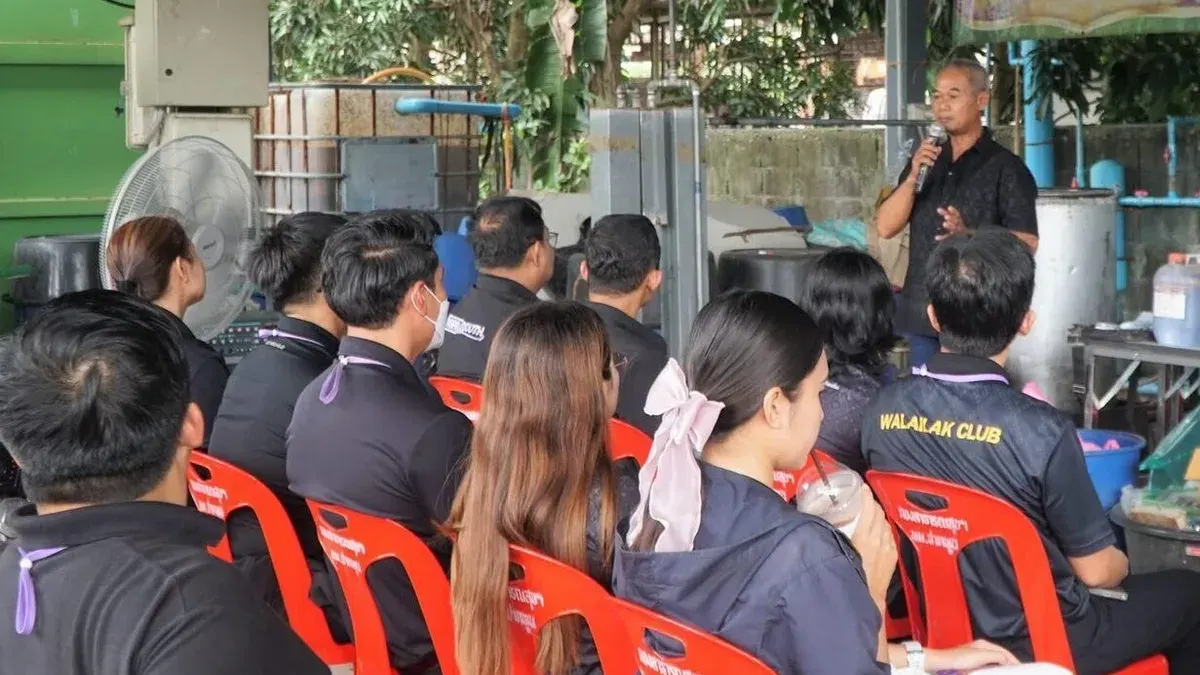
The Network for Building Livable Local Communities, which comprises over 3,000 local communities across all regions of the country, issued a statement opposing the draft amendment to the Health Promotion Fund Act. It called on the government to stop the amendment process of the Health Promotion Fund Act of 2001, arguing that the earmarked tax from alcohol and tobacco generates benefits ranging from sustained work that nurtures people and jobs to social returns as high as 7.53 baht for every 1 baht invested.
The network explained that its operations are driven by collaboration among four main groups: local leaders, local administrators, civil society and community organizations, and state agencies. Together they aim to strengthen and enable self‑reliance of local communities sustainably through learning, innovation, and advocacy of public policy from the sub‑district to district and provincial levels, supported strategically by the Community Health Plan of the Health Promotion Fund (ThaiHealth).
Drawing on royal principles such as “understand, access, develop,” “explode from within,” and the sufficiency economy philosophy as tools to raise quality of life, the network manages budgets according to regulations without favoring any particular group, thereby supplementing regular mission work.
The statement also noted that support from the Community Health Plan under the earmarked tax system has produced benefits and increased opportunities for local health promotion in at least six ways: it creates a process that extends to other developments while linking health considerations into all work and policies through continuous effort that cultivates people and yields tangible results; it shifts community members’ thinking and working methods, enabling them to set long‑term development goals aligned with community‑led directions, making local administrative bodies, local authorities, and community organizations the main coordinators of internal and external cooperation, reducing duplication and creating mechanisms to solve local health problems, enhancing community capacity to adapt and face new risks via data, academic tools, model areas, and innovations; it directs budgets straight to community hands according to jointly designed plans and approaches, reflecting genuine public access to state funds, as shown by a social return on investment (SROI) assessment that found every 1 baht invested returns 7.53 baht to society; it has enabled local administrative organizations in the network to use data for analysis, goal‑setting, and designing their own area development, resulting in model sites for health promotion and solving specific health issues, both in urban and rural settings.