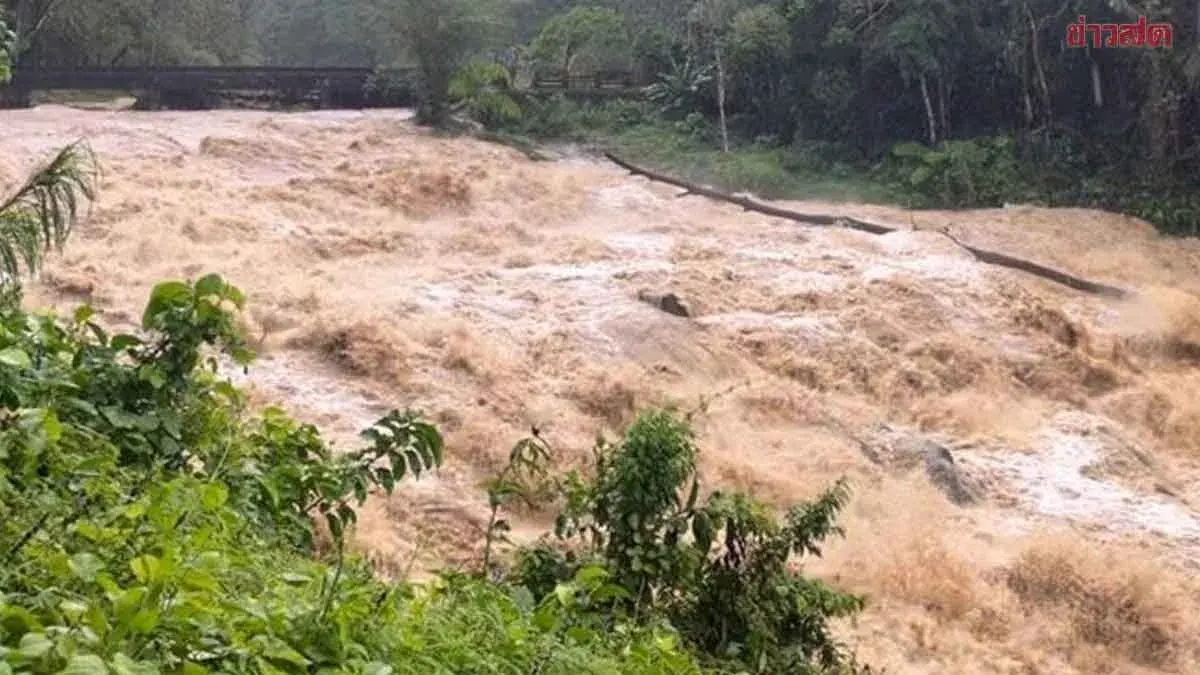
Irrigation Department Monitors Nationwide Water Levels, Braces for Heavy Southern Rain
The Royal Irrigation Department is monitoring national water levels, which stand at 83% of total reservoir capacity, while preparing for heavy rainfall and potential flooding in southern Thailand. Officials are reducing dam discharges in the Chao Phraya basin, accelerating drainage in low-lying farm areas, and coordinating with EGAT to align water and power management for the dry season. The Meteorological Department warns of heavy to very heavy rain in the South through November 22, with risks of flash floods and landslides.

On November 16, 2026, Thanet Sombun, Director-General of the Office of Water Management and Hydrology, chaired a meeting of the water situation monitoring and analysis working group with related agencies including the Meteorological Department, the Hydro-Informatics Institute, and the Electricity Generating Authority of Thailand (EGAT). The meeting was linked via video conference to the 17 Regional Irrigation Offices and the Mechanical Engineering Bureau at the Smart Water Operation Center (SWOC) at the Royal Irrigation Department headquarters in Sam Sen to monitor the national water situation and plan appropriate water management for each area.
The Smart Water Operation Center reported the current water situation as of November 16, 2026: large and medium reservoirs nationwide hold a combined 63,868 million cubic meters of water, or 83% of total capacity. The four main reservoirs in the Chao Phraya River basin — Bhumibol, Sirikit, Khwae Noi Bamrung Daen, and Pa Sak Cholasit — hold a combined 18,969 million cubic meters, or 77% of their combined capacity. The Royal Irrigation Department will manage water supplies cost-effectively to meet demand during the dry season.
Regarding the Chao Phraya basin, rainfall in upstream areas over the past week led to increased discharges, but water volumes are now returning to normal. The department has reduced the discharge rate through the Chao Phraya Dam to 600 cubic meters per second, with further gradual reductions planned. Water levels above the dam will be kept below +16.50 meters above mean sea level, while water diversion into the irrigation system is being maximized to store as much water as possible. This is coordinated with EGAT to adjust dam discharge plans in line with dry-season water management.
Simultaneously, the department is accelerating drainage from 11 low-lying areas in the Chao Phraya basin by deploying pumps and boosters continuously. Two areas have already been fully drained, and all are expected to be completed by the end of January 2027, allowing farmers to prepare land for the production season on schedule. In the Bang Pakong basin, discharges have been increased from the Khun Dan Prakan Chon Dam in Nakhon Nayok and the Nakhon Nayok Dam in Prachin Buri to help dilute polluted water, maintain water quality, and reduce impacts on public water use.
The Meteorological Department forecasts that on November 16–17, 2026, upper Thailand will experience thunderstorms and strong gusts, while the South will see heavy rain in some areas. From November 18–22, upper Thailand will see a temperature drop, while the South will experience increased rainfall with heavy to very heavy rain in some areas, risking flash floods, forest runoff, and landslides, especially on hillside slopes and low-lying areas.
The Royal Irrigation Department has therefore ordered irrigation projects in at-risk areas to closely monitor weather and water conditions, analyze data to adjust water management plans promptly, and prepare machinery, equipment, and staff to assist the public immediately if emergencies arise. This follows the directive of Agriculture and Cooperatives Minister Suriya Jungrungreangkit to minimize impacts on the public while ensuring efficient water management to build public confidence.